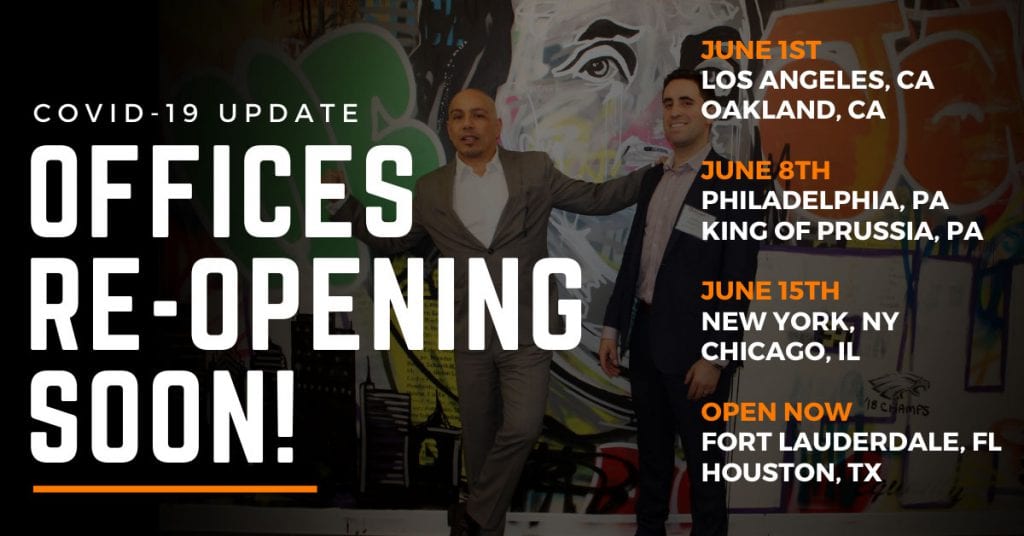
We are excited to announce that although we have been able to seamlessly transition to 100% virtual platforms for our end-to-end litigation services, we are beginning to reopen our offices across the United States in accordance with local and federal orders.
In accordance with local and federal guidelines, the following main Magna offices will be reopening on the following dates:
1635 Market St, 8th/9th Floors Philadelphia, PA 19103 June 8th
651 Allendale Rd King of Prussia, PA 19406 June 8th
320 W. 37th St, 12th Floor New York, NY 10018 June 15th
190 South LaSalle St, Ste. 1220 Chicago, IL 60603 June 15th
633 West Fifth St, 28th Floor Los Angeles, CA 90071 June 1st
130 Webster St, Ste. 100 Oakland, CA 94607 June 1st
110 SE 6th St, Ste. 1450 Fort Lauderdale, FL 33301 Open Now
700 Milam St, Ste. 1300 Houston, TX 77002 Open Now
COVID PRECAUTIONS
In order to follow the sanitizing procedures recommended by the Centers for Disease Control and Prevention (CDC) and the World Health Organization (WHO), we are taking the following precautions:
Magna will the maintain minimum necessary staff in each office to further prevent the spread of COVID-19. Any staff member who is not essential to office operations will continue to work from home.
A Magna staff member will be placed at each entrance with a thermometer to test all visitors. Any visitor or staff member exhibiting COVID-19 like symptoms will be barred from entering Magna offices.
All visitors and Magna staff must wear masks.
All visitors and Magna staff are required to take appropriate measures to wash and sanitize their hands. Magna offices will be outfitted with numerous motion-detected hand sanitizers.
All Magna conference rooms will be equipped with sanitizing wipes for easy visitor use.
All visitors and staff are required to maintain six feet of social distancing at all times.
Magna will also be providing glass dividers in every conference room to lessen the spread of any germs between attendees of depositions.
Beverage service such as coffee and soda will continue, as well as “grab and go” food items which are individually wrapped. Magna will not be providing the usual breakfast and lunch service during this time.
All conference rooms will be sanitized following the conclusion of every deposition.
Additional cleaning at Magna offices will be provided throughout the day with a deep clean nightly by a professional cleaning service.
With services like Nurse Review & HyperNav Records Navigator, Magna transforms complex medical records into useful, easy-to-work-with information, so you can focus on building a winning case.
Nurse Review
Our nurses will give you the litigation support and medical insight that you need to build your case. With a Nurse Review from Magna, you’ll receive your medical records with a summary, chronologically organized and prepared by a medical professional.
A Nurse Review will walk through the facts as they occurred, highlighting the key information and giving you an informed interpretation of the medical story at hand. Then, Magna’s Record Retrieval Portal will allow you to quickly and easily navigate through your documents.
Our experts will analyze all the medical records and get to the bottom of a difficult case efficiently and effectively. The Registered Nurses in our network have extensive experience with all medical specialties.
Summary & Index tables provide all key information in one place
Everything chronologically organized
No more searching: Receive one PDF file with hyperlinks and bookmarks throughout
Seamless navigation: Each occurrence of key terms and provider/facility names are hyperlinked in the index table and highlighted throughout the PDF
Input new records anytime they come in discovery
CHRONOLOGY All documents, summary table and index table are sorted by dates of service for easy navigation and a clear picture of the medical story at hand.
SUMMARY The Summary Table at the beginning of the document includes the dates of service, a list of all clinical/diagnosis codes and key terms found, as well as a list of all the facilities/providers discovered. Here, you will also find the CMS definitions for all referenced clinical/diagnosis codes and the National Provider Identifiers (NPI) for provider names.
INDEXING With data indexing, you’ll find all key information in one place. HyperNav will extract the below values from your documents, organize them in an Index Table, and highlight each occurrence throughout the PDF.
Dates of Service
Facilities/Providers
Key Terms
Clinical/diagnosis codes
NAVIGATION: BOOKMARKING & HYPERLINKING The HyperNav output combines everything into a single PDF file, with interactive hyperlinks and bookmarks throughout for quick and easy navigation.
No more scrolling:
Summary Table, Index Table and all individual documents are bookmarked
Page numbers and each key term occurrence are hyperlinked in the summary and index tables to bring you their respective locations
Return back to the Index Table at anytime with the link included in each page header
Record Retrieval & Discovery Support Services with Magna
The onset of the COVID-19 pandemic has changed the way that industries all over the world have had to operate, and the legal field is no exception. Judicial practice and the interpretation of law must continue regardless of the Coronavirus or any other emergency factor.
In response, law firms and legal entities must now pivot their focus from traditional methods to the latest in technological advancements in order to get the job done. That’s where Magna Legal Service’s LegalVision (MLV) online deposition platform comes into play.
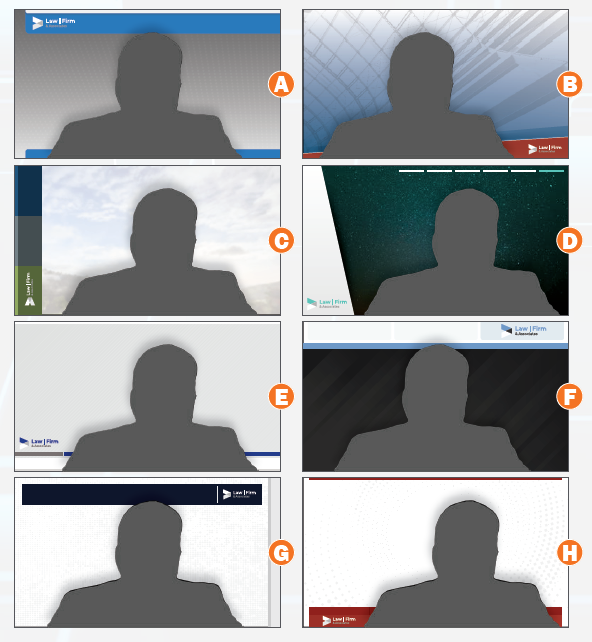
Magna is offering free video services, technical support, and custom virtual backgrounds for all April and May depositions, using Magna LegalVision.
What is Magna LegalVision?
With social distancing and widespread quarantines in effect across the country, law firms have had to get creative in order to carry out their duties. Fortunately, there is a virtual option available for conducting online witness depositions.
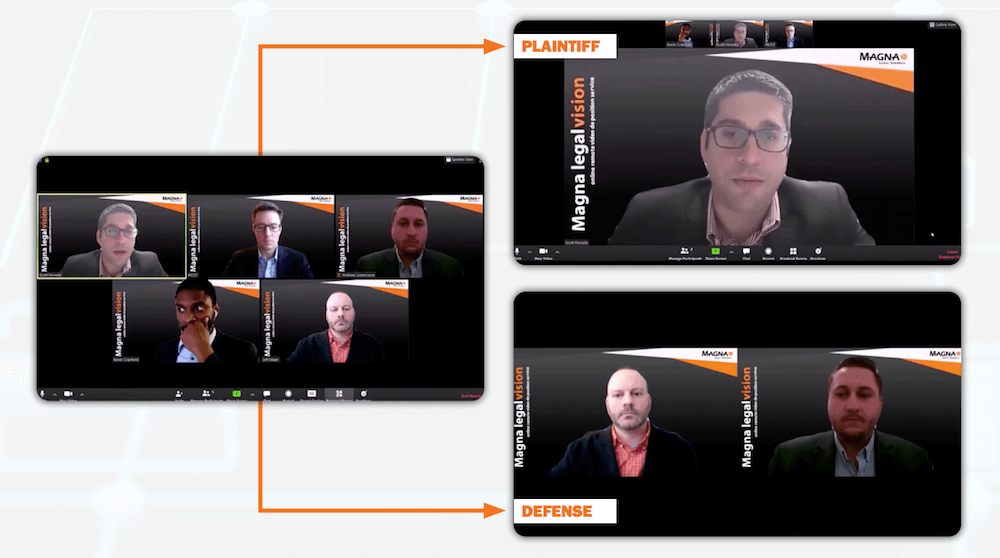
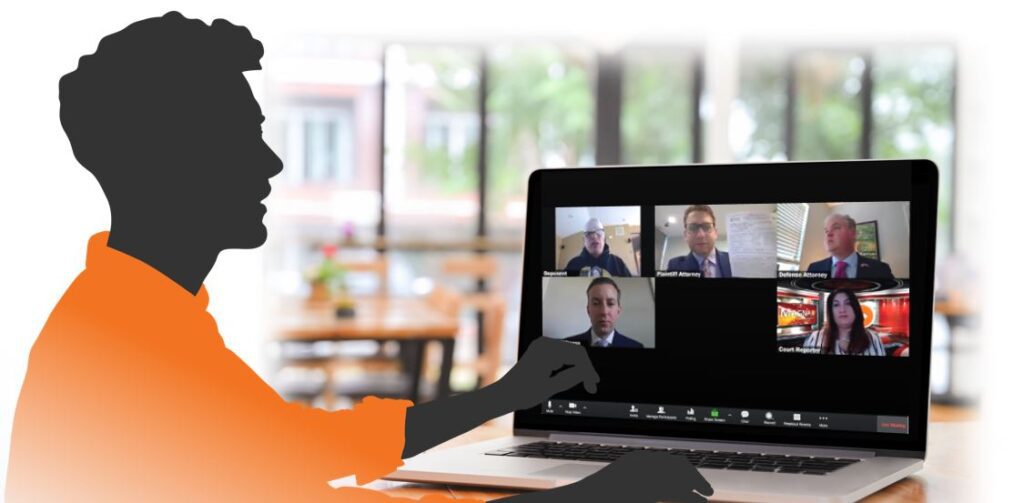
Magna LegalVision is a virtual solution that allows law professionals to conduct online witness depositions remotely. The LegalVision platform allows legal professionals to engage in real-time hearings, mediations, and depositions using nothing more than a laptop, PC, tablet, or even a mobile phone.
How Does LegalVision Work?
Magna’s LegalVision platform allows you to conduct your firm’s necessary business while keeping you and your clients safe and in compliance with state rules regarding social distancing. Our full suite of features helps your team work confidently and with peace of mind by employing safe and secure technology.
Our platform’s suite of features includes secure, fully-encrypted video streaming to assure your information stays confidential.
We take care of all the necessary staffing for your deposition. With Magna LegalVision, we can provide:
A remote court reporter
An online legal videographer with the ability to swear in witnesses
Online interpreters
A deposition manager, who will present your exhibits and demonstratives, manage annotations, and manage breakout rooms (moving people in between rooms, controlling room access and overseeing confidentiality)
Our tech support team will be with you throughout your entire hearing. Our platform provides a completely customizable experience where you can use a virtual background and dictate how the participants are displayed on screen. Our platform even allows you to chat securely and privately with other participants even while key witnesses are speaking.
Our tech services can also help to display evidence exhibits remotely and in real time. Your evidence is displayed in a format with legal professionals in mind. Using LegalVision’s powerful tools, participants are able to annotate and otherwise mark up evidence as it is presented and share those annotations with other participants securely using our in-app messenger function. Our IT services can build a database of your evidence and package it into an easy-to-decipher presentation format for those involved. We can even use the software platform to record the deposition for you and your client(s) to review.
With the included court reporter service, you’ll experience a near-instantaneous stream of your transcript even as testimony is happening. Our on-demand service provides your legal team with an indexed, searchable version of the transcript giving you powerful, remote tools that provide you with the leverage you need. You can rely on Magna Legal Services to keep your online deposition running smoothly and efficiently throughout the process.
Modernizing Your Law Firm
These are trying times for everyone. Businesses that fail to adapt to the changing climate, with its unique demands and difficult social constraints, run the risk of losing out. Your firm needs to differentiate itself from the rest of the pack. The Magna LegalVision online deposition platform is the point of differentiation that you need to rise above your competition.
We invite you to take advantage of Magna’s online deposition solutions with MagnaLegalVision. Schedule a remote video deposition via email or the website today.
Magna LitigationVision (MLV) provides clients with real-time access to depositions, meetings, hearings and mediations.
Connect using computers, tablets or even smartphones
Use a custom virtual background
Record entire session (mp4 format)
Display and annotate your exhibits
Schedule a court reporter, interpreter, or certified legal videographer to join remotely
The Magna Difference
We take care of our clients— you’ll feel the difference. We’re here for you 24/7, 365 days a year with client-focused customer service. When scheduling, you’ll get a confirmation of your event right away with all of the event details. We’ll provide the dial-in information to each participant and offer everyone training on how to use the Magna LitigationVision platform.
Unparalleled Tech Support
You can be confident in hosting your event remotely— Magna’s tech support will test each parties’ equipment before the session. A MLV technician will introduce himself at the beginning of the session and will be available from start to finish.
Help is always just a click away. You could use MLV’s chat feature to ask tech support any questions you have, and get immediate help.
Certified Legal Videography: CLV is available for all MLV depositions. The videographer will provide you with an official copy of the event, for both on and off record.
Equipment Rental: Don’t have the equipment? No problem! Magna offers a state-of-the-art flight pack system: iPad & stand, bluetooth speaker, conference phone, hotspot & extension cable. We ship these flight packs hundreds of times per year, often to last-minute depositions.
Complete Deposition Management
Magna LitigationVision Plus (MLV+) will provide you with full deposition management powered by one of Magna’s award-winning trial technicians. Combining years of courtroom tech experience with Magna’s virtual platform, our deposition managers are able to provide seamless support throughout the duration of your event. The deposition manager will handle:
Presenting exhibits, demonstratives and videos
Real-time management of annotations, zooming, blow-ups, highlights and markings
Creating and managing break-out rooms (moving people in between rooms, controlling room access and overseeing confidentiality)
Virtual Backgrounds
Put your best face forward. Magna’s team of talented designers will create custom virtual backgrounds tailored to your firm’s branding. Choose a design, and we’ll customize it with your firm’s logo and colors.
Jurors consider themselves experts on people, so the impressions made by a witness can strongly influence a jury’s decision making. This is especially true when such impressions are negative, which is why witness preparation is so important.
Witness communication training helps witnesses develop a deeper understanding of the themes, context, and purpose of their testimony.
In-person or online, witness preparation:
Reduces or eliminates witness anxiety
Clarifies the deponent’s role in the case
Helps deponents stay on message
Assists in developing a credible conversational tone
Identifies and mitigates any non-verbal issues, such as tics, fidgeting or eye-rolling
Provides techniques for effectively handling documents and exhibits
Consultants will also explain to witnesses jurors’ expectations for their testimony, and correct behaviors that get in the way of jurors’ positive perceptions.
Magna’s jury consultants help witnesses feel more in control of their testimony while adhering to the rules of testimony and to avoid being “advocates” for their side of the case. We develop “safe harbors” that give witnesses structure and tools to deal with tough cross-examination questions. The use of videotape feedback during witness communication training can often help a witness identify what the jurors may perceive. These tools will allow your witnesses the opportunity to learn and practice strategies in order to best respond to challenging questions and deliver the most effective message at trial.
We use videotape feedback to help witnesses identify what the jurors may perceive. These tools will allow your witnesses to practice strategies for responding to challenging questions and delivering the most effective message at trial.
Defending a Virtual Deposition?
Witness preparation eliminates the added layer of anxiety from the virtual setting by:
Practicing. Deponents can feel “alone” without counsel, so a practice session with the platform can help diminish this
Reviewing procedures for pauses, objections, and exhibits
Instructing deponents where to look for the most natural and effective presentation (particularly if being recorded)
Familiarizing participants with the remote platform’s features (chats, mute, viewing exhibits, etc.)
Coaching on attire and effective posture
Magna Legal Services has been facilitating remote depositions for over a decade. However, many people are just now taking and defending depositions for the first time in a virtual format. While the Magna LitigationVision (MLV) platform makes remote depositions easy, there are some tips and tricks to help witnesses and attorneys perform well.
Magna’s consultants are experts in preparing witnesses and attorneys for virtual depositions. They will share their practical tips and logistical considerations, explain how remote depositions work and the platform’s capabilities, and will provide advice to attorneys.
Magna consultants will work with your key witnesses and provide them with performance feedback in a non-threatening context making suggestions regarding style, language, and demeanor. .
The “new normal” of COVID-19 has changed our daily life, but Magna Legal Services remains in full operation, ready to handle any of your jury research and support needs. This is a time to work on pending cases because once the court systems adapt, cases could move at a rapid pace. Online mock trial services and case valuation studies can provide reliable, up-to-date feedback regardless of your location.
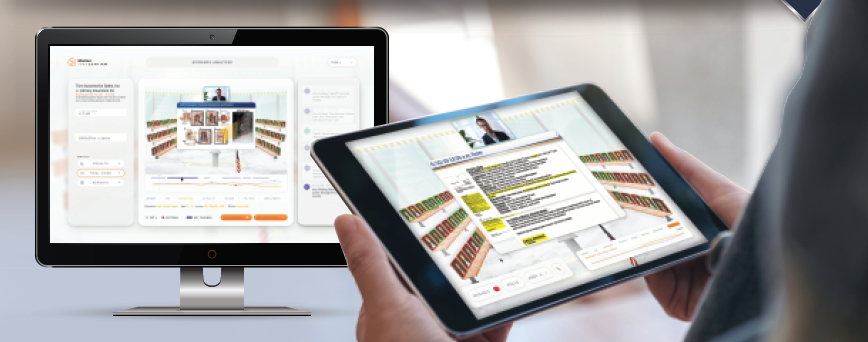
Magna is now introducing JuryConfirm 20/20 – the most powerful, efficient, cost-effective virtual jury research platform anywhere. It means jury research based on the most modern user interface, with cutting edge features:
Redesigned immersive courtroom with unlimited research methodologies
Live attorney presentations
Unlimited research methodologies
Limitless visual presentations with unrestricted video
More live jurors (up to 80)
Enhanced juror feedback with artificial intelligence-powered analytic tools
Live juror deliberations with more panels than ever available before (up to 6 panels of 12)
“Instant” reporting
Evidence analyzer – With smart logic and AI to automatically catalogue the highs and lows of presentations, always “taking notes” and “watching” jurors so you don’t have to
Magna is the nation’s expert in online jury research. Over the past decade we have conducted more online studies than anyone in the world – by far. We have run over 2,000 online jury research exercises, working with over 25,000 mock jurors.
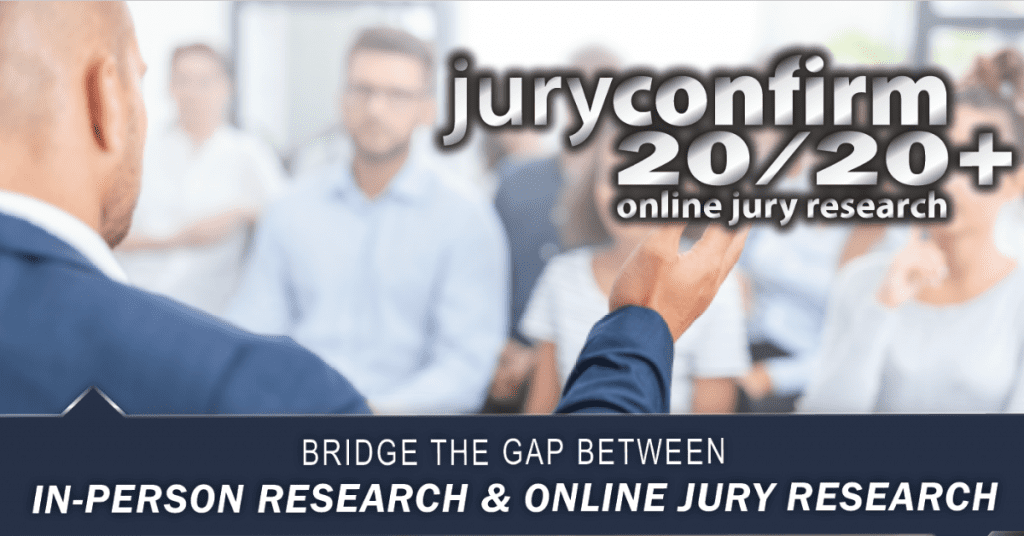
JuryConfirm 20/20 not only allows us to run half-day exercises as before, but long-format 6.5 hour “plus” sessions as well. Our enhanced JuryConfirm 20/20+ platform is far more robust in capability and duration than ever before. It allows you to conduct extended focus groups in which everyone – presenters, observers, and jurors – participate remotely from their location. Lawyers present their cases for up to 60 minutes and jurors deliberate at length in our virtual courtroom, using the methodology as with in-person research. JuryConfirm 20/20+ solves the challenge of social distancing.
With an extended session of 6.5 hours, longer presentations and more deliberations than our traditional platform, this format bridges the gap between in-person research and online jury research. As with JuryConfirm, you will make presentations via webcam in real time, testing key themes and demonstratives. Our new 20/20+ platform offers:
A longer research day, at 6.5 hours per session
Longer attorney presentations, at 60 minutes per side, plaintiff and defense
Longer deliberations – Jurors have more time to deliberate than in our standard JuryConfirm platform to mimic the amount of deliberation time in in-person studies
Juror rating system with real-time feedback that can be broken along demographic lines
Streamlined efficiency – By hosting research virtually, we save time by minimizing break lengths and juror down time. Managing the jurors more efficiently helps preserve the advantages of a full day’s research within the 6.5 hour time frame
Magna also offers a wide range of online legal services in addition to JuryConfirm 20/20 and 20/20+. Our online damages assessment tool, JuryEvaluator, provides you with an evaluation of potential damages by surrogate jurors. We also offer social media surveillance for plaintiffs / claimants (ClaimScout) and social media surveillance searches on prospective mock jurors (JuryScout).
Looking to learn more about our full suite of online legal services? Give us a call at 866-624-6221 or schedule a virtual deposition today.
On November 6-7, 2019, three-time mock trial winners Susan Metcalfe and Ted Schaer went head-to-head in a battle of the champions at Chopped for CHOP. This seventh annual convention was held in Atlantic City, NJ. After a panel workshop and reception to kick off the event, these two top attorneys presented their cases to win up to $20,000 to be donated to the Children’s Hospital of Philadelphia (CHOP).
Who broke the tie and emerged as the grand champion this year? Read on to find out, and to learn more about this incredible two-day event.
Day One
On the first day, Magna’s own Dr. Rachel York Colangelo moderated panels of attorneys and industry executives who took part in a workshop exploring effective deposition tactics. Teams of attorneys and industry executives took part in role plays and demonstrated effective skills in deposing difficult witnesses. A panel discussion was also led by Caryn Siebert, Vice President in the carrier practice team at Gallagher Bassett, along with fellow industry experts, that focused on strategies that can be used early in a case to improve outcomes. The panel discussed examples and case studies with the attendees, taking a closer look at preparing witnesses, researching the jury, and more.
Following the panel, attendees enjoyed a dinner reception at Indoor Pool at The Water Club before getting a good night’s rest in anticipation of the next day’s mock trial.
Day Two
The mock trial is the highlight of Chopped for CHOP, and in past years there have been numerous attorneys competing for the win. This year, Susan Metcalfe and Ted Schaer, each of whom have won this competition three times, competed alone against each other in a tie-breaking battle of the champions.
They presented their best case to a panel of judges made of claims executives and corporate counsel. Richard Fabian of the RiverStone Group generously donated his time to develop the topics and script and moderate the event. There was a lot at stake for our competing attorneys: bragging rights and $20,000 to be donated in their firm’s name to CHOP.
Competition
In the Chopped for CHOP mock trial, both attorneys received the facts of the case and presented their opening statements. They then had the opportunity to cross-examine a plaintiff and a defendant before presenting their closing arguments. After each round, the judges and the mock jurors, who were recruited and selected from the actual Atlantic City trial venue each cast a secret vote for the attorney they believed to have won the round. The judges also offered helpful feedback.
Of course, a jury trial is unpredictable and never easy, and we made sure to throw our competing attorneys a few twists and turns. Via instant feedback technology, our audience members voted on which distractions and difficulties they wanted the attorneys to face during the mock trial. For example, a new fact emerged during the trial that had not been available in the case information prior to the event, and a pizza delivery person wandered into the courtroom to deliver a large pie to the judge.
As expected, the attorneys handled it all with professionalism and grace, and when the competition ended, we were proud to announce the winner: Susan Metcalfe! She’s now a four-time Chopped for CHOP mock trial champion.
Chopped for CHOP is one of the many unique, interactive events we produce for attorneys, corporate counsel, and claims professionals. Among a variety of other services, from court reporting to language interpretation and document translation, we offer programs that aim to entertain and educate. We create memorable experiences and connect professionals with the opportunity to share best practices and learn from each other.
Feel free to contact us if you have any questions about our conferences or to schedule a deposition.
In light of COVID-19, we are all taking precautionary measures to protect ourselves and everyone around us by social distancing. This doesn’t mean you have to put your cases on hold. Completely remotely, you can continue to hold depositions, arbitrations, meetings, witness communication training, focus groups, mock trials, and other jury research sessions. Our remote services include:
Virtual Depositions & Other Proceedings
With Magna LitigationVision (MLV), you can depose a witness from anywhere in the world. MLV provides clients with real-time access to depositions, meetings, hearings and mediations.
Connect using computers, tablets or even smartphones
Use a free custom virtual background, created by Magna
Video feed your witness directly into a courtroom for live testimony
You can be confident in hosting your event remotely — Magna will test equipment before the session and our tech support will be available from start to finish. The MLV platform is fully encrypted and secure.
Certified Legal Videography: CLV is available for all MLV depositions. The videographer will provide you with an official copy of the event, for both on and off record.
Equipment Rental: Magna offers a state-of-the-art flight pack system: iPad & stand, bluetooth speaker, conference phone, hotspot & extension cable. We ship these flight packs hundreds of times per year, often to last-minute depositions.
Virtual Backgrounds: Magna’s team of talented designers will create custom virtual backgrounds tailored to your firm’s branding. For FREE. Choose a design, and we’ll customize it with your firm’s logo and colors.
Complete Session & Exhibit Management for Virtual Depositions
Magna LitigationVision Plus (MLV+) will provide you with full deposition management powered by one of Magna’s award-winning trial technicians. Combining years of courtroom tech experience with Magna’s virtual platform, our deposition managers are able to provide seamless support throughout the duration of your event. The deposition manager will handle:
Presenting exhibits, demonstratives and videos
Real-time management of annotations, zooming, blow-ups, highlights and markings
Creating and managing break-out rooms (moving people in between rooms, controlling room access and overseeing confidentiality)
Online Focus Groups with JuryConfirm
Magna’s JuryConfirm online jury research platform allows us to efficiently and cost-effectively test theories, themes and storylines in an abbreviated, yet still fully interactive jury research session.
Magna’s methodology and customized software provides clients with insight into the strengths and weaknesses of their case and an understanding of the jury’s potential thought process. JuryConfirm’s interface uses instant feedback technology, online polling, and moderated break-out deliberation rooms to create the benefits of in-person research in an online environment.
Key features:
Limitless visual capabilities: Present exhibits, videos & other visual aids
Virtual simulation of courtroom environment with interactive avatars representing live jurors
Live attorney presentations & jury deliberations
Real-time results: Fully-customized questionnaires & polling, including presentation feedback
Detailed reports featuring case evaluation, theme development, and jury profiles
Damages Assessment with JuryEvaluator
What is your case worth? A JuryEvaluator analysis provides you with an evaluation and perceptions of potential damages by surrogate jurors in your venue. The report includes a statistically reliable range, including economic, non-economic, and apportionment of liability.
Results based on your actual case, not similar cases
Live research captures current attitudes and biases of jurors
Research conducted in your actual venue
Research based on current media climate and attitude
Witness Preparation
Defending a remote deposition? The Magna LitigationVision (MLV) platform allows you to virtually depose a witness, or defend a deposition, from anywhere in the world. While MLV makes remote depositions easy, there are some tips and tricks to help witnesses and attorneys perform well in a virtual platform.
Magna Legal Services has been facilitating remote depositions for over a decade. However, many people are just now taking and defending depositions for the first time in a virtual format. Magna’s consultants are experts in preparing witnesses and attorneys for remote depositions. They will share their practical tips and logistical considerations, explain how remote depositions work and the platform’s capabilities, and will provide advice to attorneys on how to prepare themselves and their witnesses.
Assists in developing a credible conversational tone
Identifies and mitigates any non-verbal issues, such as tics, fidgeting or eye-rolling
Provides techniques for effectively handling documents and exhibits
Witness preparation eliminates the added layer of anxiety from the virtual setting by:
Practicing. Deponents can feel “alone” without counsel, so a practice session with the platform can help diminish this
Reviewing procedures for pauses, objections, and exhibits
Instructing deponents where to look for the most natural and effective presentation (particularly if being recorded)
Familiarizing participants with the remote platform’s features (chats, mute, viewing exhibits, etc.)
Coaching on attire and effective posture
Interpreting
With Magna, you can trust that your interpreter is a vetted professional with the necessary language skills and professionalism to ensure your success.
Language OnCall is an on-demand telephonic interpretation service that allows you to connect to an interpreter for any language in just seconds — 24 hours a day, 365 days a year! To request an interpreter, call 877.213.1193. The operator will ask a few basic questions and connect you to your interpreter instantly.
You can also schedule an interpreter to attend virtual depositions and other proceedings.
Magna Legal Services goes where no legal company has gone before. Instead of just focusing on juries or some other specific part of the litigation process, Magna handles everything from discovery to trial.
The Start of Something Great
Peter Hecht, Bob Ackerman, Jon Ackerman and Mark Calzaretta identified a hole in the legal services market. No litigation support companies offered true end-to-end legal services. Those that tried, did so by focusing in one area and contracting out others — sacrificing control and quality along the way. Magna integrates everything from start to finish.
The Magna Difference
To this day, no other company matches Magna’s range of services. Magna is the only company with organic roots providing services in both discovery, pre-trial and trial. The company’sJuryConfirm and patent-pendingJuryEvaluator software have completely disrupted how attorneys pick juries and tailor their cases to them. The reason Magna’s software has been so successful is because Magna developed it backwards from other companies. Instead of building a product and trying to find clients, Magna found what clients needed and built software to fit those needs.
However, Magna is much more than technology. Magna’s jury consultants have decades of bench strength, have seen what works and what doesn’t, and are educated in psychological profiles.
Our Philosophy
When their clients talk, Magna listens — and that’s their strong recipe for success. Magna is always looking for new ways to innovate, whether it’s improving tools like JuryConfirm and JuryEvaluator, or developing new products. Magna also continues to evolve their basic services, allowing them to always provide the most advanced, cutting-edge trial graphics.
One of the biggest sources of inspiration for Magna is the five-question survey every deposition client gets when they receive their transcript. The survey is designed to identify signs of unhappiness or dissatisfaction even when clients aren’t open about it. When a potential problem is identified, Magna proactively reaches out and works with the client to get things back on track.
Every action Magna employees take is driven by customer satisfaction. The company is sales-based, but the sales depend on relationships and repeat business. Relationship managers have strong incentives to keep their customers happy.
The Future of Legal
Trials will never lose the feel of Columbo and Matlock. It always has been and always will be about the story. The only difference will be in how the story is told. You can already see how new technology is used on modern shows like Law & Order, Bull and CSI. While these shows often stretch technology beyond current reality, that technology may very well be both reality and routine in the near future. Virtual reality and artificial intelligence are also ready to break out both to enhance trial presentations and to help cases settle sooner and clear docket backlogs.
Attorneys must adapt to this new technology, not just because judges and jurors will expect to see it, but because of the changing demands of the business. Better predictive technology directly aligns with the constant pressure to settle cases sooner and for less. Lawyers will also need the efficiency that comes with technology to free up time to continue providing the highest level of attention to their cases.
Mark Your Calendar
Magna hosts three major events each year in Atlantic City, Las Vegas, and Miami. They’re a combination of education, networking, and entertainment — what they like to call, “Edutainment” seminars. Attorneys and claims professionals can receive CLE or CE credits while having a great time. What’s truly unique is the opportunity to meet new people by way of their Magna rep. It’s not always easy to meet people at events, so having someone there looking out for you makes a world of difference. We also have opportunities to become a sponsor, moderator, or panelist. If you aren’t able to attend, you can always call them or speak to one of their representatives to bring a mini Magna CLE/CE to your local office.
Ready to get started with Magna Legal Services? Give them a call at (866) 624-6221 or schedule a deposition directly.
Social media continues to play an important role in trials as precedent-allowing social history as direct and indirect evidence grows. This not only includes public accounts, but also those whose owners had locked as private. A desire to protect these private accounts has led to sanctions against clients for the destruction of or failing to preserve evidence. Attorneys have also faced sanctions for telling clients to wipe accounts or for not instructing them to preserve their accounts. To avoid issues, attorneys must be aware of potential privacy concerns as well as the correct way to approach them.