Effective Ways a Court Reporter Can Assist in a Case

Savvy attorneys realize a court reporter can be an indispensable resource in evaluating a witness and trial prep in general. While at one time all courtrooms supplied a trained professional to document proceedings in detail, budget cuts and changing priorities have left many legal experts on their own when it comes to securing a reliable transcript of a trial or court hearing.

Court reports offer an unbiased, high-quality record of witness testimony, lawyer motions and objections, and judicial rulings that provide invaluable information as the trial continues or the verdict is appealed at a later date.

What an Experienced Court Reporter Does

Court reporters provide real-time access to a transcript of depositions, hearings and trial proceedings. Using modern technology, they create a written record of every word said during a legal proceedings, including witness questioning in front of a jury or judge. Court reporters are often present during depositions in order to capture the details of testimony as a case unfolds.

Many who work as court reporters are members of the National Court Reporters Association, a body that mandates a code of ethics. Trusted court reporters are unbiased recorders of information and prohibited from showing favor to one side or another. In addition, career court reporters maintain professional decorum by acting professionally at all times, showing little emotion during proceedings and remaining focused on the task at hand.

In cases where witness testimony is central to an attorney’s argument, court transcripts preserve and thus permit detailed cross-examination and impeachment of a witness with his or her own words. When the court record is absent, a witness can simply forget the precise account given during a previous day’s testimony. One person’s version of events may be contrary to another’s. Transcripts are an invaluable tool for lawyers who want to get to the core of what happened.

Talented court reporters offer language and translation services for live testimony and transcribed documents. All members of the profession receive training in legal proceedings and legal language in order to do their jobs efficiently. Multilingual court reporters have the added ability to translate from one language to another with the nuance of the legal environment. Also, an experienced court reporter learns the case and will build a database to make subsequent depositions to make a case run more smoothly.

Learn more about Magna’s language services.

How a Court Reporter Can Be a Difference Maker

Witnesses are often deposed before trial. This is a form of questioning that takes place outside of court, in the presence of attorneys from both sides. Witnesses are under oath and sworn to tell the truth, by the court’s agent- the court reporter, but lawyers can ask questions that may not be admissible under court rules. A deposition is an invaluable way for both sides to get at the information they are looking for and to plan trial strategy.

In order to use this deposition for maximum effect during a trial, lawyers want to present a witness with the testimony provided at a previous date. This is almost impossible without proof of previous testimony. Court reporting is more effective than a poor audio recording, since attorneys can zero in on certain words and phrases the witness used. In addition, relying on recording technology alone is actually time-consuming and more expensive, since a written transcript of an audio recording must still be produced. These written transcripts are also used in court briefs submitted by the parties.

In order to get a good deposition, court reporters can work with legal counsel to ensure the information is conveyed clearly. While remaining objective and professional, court reporters can request that parties refrain from talking over one another and speak clearly so no vital details are missed.

Court Reporters and Technology

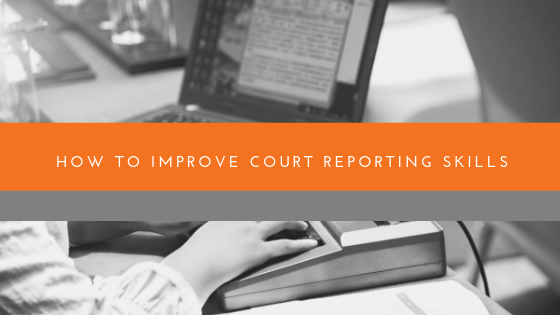
Although court reporting has existed for many decades, it has evolved as technology has changed. Many court reporters use a stenotype machine to transcribe proceedings, but it has many modern modifications. Recent advances include connecting the court reporter’s device to a laptop to create real-time closed captions of the testimony or for the benefit of those with hearing impairment.

Some court reporters do their jobs over an internet live stream, allowing them to provide the same services without being in the same room. This is invaluable for depositions taking place in remote areas where it may be difficult to set up proceedings. Use of internet streaming depositions can also be a cost saver as travel costs are not necessary as well as time for travel is saved.

In any event, modern court reporters have extensive training and experience in the technology that makes their job easier and more efficient. Unlike some industries where technology has lagged behind, court reporting has embraced new ways of transcribing and saving information so it can be used in a legal context.

Learn More About Court Reporting Services

Court reporters are respected members of legal teams and the court system. For most, the profession is a long-term career that involves ongoing training and skill development. As resources provided by courts decrease because of declining budgets, law firms and lawyers often have to step in to fill the gap and arrange for their own services.

Given the importance of court reporting, it is essential that you choose not only skilled and experienced individuals, but a firm with extensive resources and a history of taking on the most qualified members of the profession. To learn more about your options for court reporting, virtual depositions, translation and video services, contact Magna today.


Related Articles:

Next Level Court Reporting: Why A Video Deposition is Worth It

Whether it’s a civil or criminal matter, court reporting is an essential aspect of winning your case. When breaking down the duties of a court reporter, though, the deposition is often considered to be one of the most important. The deposition ensures that you preserve witness testimony while avoiding any surprises at trial, but not all depositions are created equal. Court reporters that seamlessly provide video deposition services are often the most cost effective providers and in many instances the memorialized video deposition greatly increased the attorney’s chance of success thanks to the numerous benefits provided.

Benefits of a Video Deposition

When it comes to deposition services, video testimony provides the greatest tool for both witness presentation and impeachment. Every litigator has been in the position of having to read deposition designations to point out inconsistent witness testimony or when a witness is unavailable. By and large, jurors can become bored by the monotony of this practice. Also, this does not capture the person who is speaking and thus leaves the “witness” to the juror’s minds eye.

This problem, however, doesn’t exist when a video deposition is available. When you can show the judge or jury the witness speaking clearly into a camera, it becomes much more difficult for said witness to claim they didn’t understand the question or context, or even claim that their words were twisted or misconstrued. Video also provides you the opportunity to protect your own witnesses’ credibility if opposing counsel tries to manipulate what they said.

Additionally, court reporters who provide video deposition services help you gain a more in-depth deposition than with just a transcript alone. Far too often, witnesses will get off track when speaking during a written deposition. Their and their attorney’s knowledge that jury members will never see the actual conversation sometimes results in getting off the subject and a meandering testimony. When everyone understands that the deposition will be recorded, though, they’re more likely to “stick to the script.”

This allows you to streamline the deposition and come away with a cleaner transcript for use at trial or briefing. Depositions can last as long as necessary, but having the ever-watchful eye of a video camera motivates everyone involved to focus on getting all of the pertinent facts committed to evidence in a timely manner.

Paper Depositions & Video Depositions

While video deposition services provide a variety of benefits on their very own, the actual power of video becomes far more apparent when compared to paper depositions. Science has shown that the human brain processes video 60,000 times faster than it does text.

What this means is that judges and juries will be able to get a deeper understanding of what’s going on instantaneously. Fortunately, this benefit doesn’t just extend to judges and jury members. You will also be able to review a deposition and prepare your case in a more time-efficient manner than if you tried to sit down and pore back through volumes of written statements. And as any attorney can rightly attest to, time is money in the legal field.

In addition to being more cost-efficient by allowing you to more effectively use your preparation time, video deposition services also save on costs thanks to the ability to present testimony from witnesses whose location or medical condition prohibits them from coming into court.

Maybe the biggest benefit of video depositions is the ability to gain a deeper understanding of testimony by viewing body language. If you read a statement that says “I didn’t owe her any money” in court, it doesn’t say nearly as much as seeing the witness saying the same thing while rolling their eyes, sucking their teeth, and acting otherwise dismissive or insulting.

No matter what, being able to view a witness’s body language in addition to their words can speak volumes. This is why good court reporters will always use high-quality video depositions — preferably with multi-camera views so courtrooms will have every vantage point possible.

Video Depositions Are at the Forefront of Technology

Like most great industry tools, video deposition services don’t stop at basic functions. As technology evolves, so do video depositions. At Magna, for instance, the most up-to-date technology is utilized to provide video teleconferencing (VTC) and/or internet streaming services when performing video depositions via the Magna Legal Vision platform.

Since businesses using VTC and similar services reduce travel expenses by 30 percent, these techniques are beneficial both economically and technologically. In addition to utilizing the most advanced aspects of video technology, Magna also offers multimedia depositions. This means that trial exhibits can be displayed directly to the deposed while they’re offering a statement.

On top of all of this, the multimedia advancements utilized by Magna allow witnesses to annotate exhibits as they’re being deposed. This can turn into a powerful tool later at trial when the court sees the witness writing their own words via touchscreen monitors in relation to the exhibit at hand. And if this wasn’t enough, just imagine how powerful these multimedia tools can be in the hands of expert witnesses.

Video Deposition Is the Right Move

After utilizing video deposition services, it’s highly unlikely that you’ll ever want to switch back to paper and ink. Benefits, which range from pretrial to closing arguments, are just too numerous to overlook. Make sure you find a court reporter who offers video depositions in addition to the other tools you’d expect from a professional legal service agency.

For full-service court reporting services that provide video depositions, contact Magna today.

Read More About Legal Video Services

5 Legal Responsibilities Beyond Your Pay Grade

As an attorney, your time is best spent interviewing witnesses, gathering vital evidence and planning strategic arguments to give your client the best possible representation. Your methods will in large part determine whether your client receives the desired outcome.

However, trials are not won or lost on legal minds alone. Many factors, including those that influence juries, are crucial to master in order to get the verdict you want. To make that happen, ensure you have these five areas covered — and consider obtaining an outside jury consulting service with the right expertise to take care of them for you.

1. Courtroom Reporter

Trial transcripts are essential tools for legal proceedings, especially those that go on to appellate court. As a lawyer, your job is not to transcribe the entire trial, but that document is key to future witnesses or arguments you make.

Specifically, a transcript is where you’ll memorialize issues for appeal due to the activities of the judge, jury or opposing counsel. At all levels, a transcript provides accounts of witnesses’ testimonial of crucial events, which you can use to bolster your cross-examination.

If you want to get help from the best, our court reporter are here to help.

2. Jury Surveillance

Ultimately, your client’s fate is in the hands of the jury. At every stage of the trial, from jury selection to closing arguments, you must keep their impressions of your case in mind.

Before the case even begins, you should do your best to select jurors who are most likely to see the case from your client’s perspective.

In order to choose the best jury, you should review their social media activity. This can provide insight into political or social biases that may prevent them from seeing your client’s case in the best light. Social media can also give a window into a juror’s points of view, allowing you to tailor your arguments in ways they will best understand.

Monitoring the social media feeds of jurors takes time that you just don’t have in your packed schedule. It also takes a certain amount of web savvy to successfully complete. Instead of taking it on yourself, consider hiring an outside jury consultation firm to monitor jury social media activity.

3. Trial Graphic Creation

Graphics are another important way you get your argument across to jurors. The right use of visual communication tools can simplify complex issues and help jurors zero in on what’s at stake. If jurors don’t understand your graphics, they miss a large part of your argument.

Surprisingly, it’s the little things that make your graphics hard to read, and the last thing you want is for jurors to feel frustration. Every member of the jury is essential to a successful verdict, and your case may turn on quality graphics, so small font sizes, too much detail or other factors can cost you.

Since you are a lawyer and not a graphic artist, you may want to hire an outside firm to take on the task. Come explore our trial graphics services.

4. Record Retrieval

Gathering records often comes with hassles, including fees to access records charged by hospitals and other institutions. As a lawyer, you may have additional concerns about the security of such records, especially when they involve your client. This is one task you can easily outsource to a company that has the resources and expertise to get the job done.

Magna, for example, has staff across the country to get the records you need for your case. The company provides record retrieval services not only in major cities, but in every ZIP code across the United States. That means Magna can acquire records from anywhere.

Learn more about our record collection services today.

5. Translation Services

Documents may come to you in a different language. It may be challenging and time-consuming for you to translate them to assess relevance, especially when a crucial legal point may rest on a small detail. Even if you speak a language fluently, you may want to offload the translation job to a team of trained experts.

At Magna, our linguists are fluent in countless languages. After their translations are complete, we certify them, so you receive additional assurance about their quality. In short, our translation and interpretation services simplify your working life so that you can focus on the other strategic issues.

Learn more about our legal translation services today.

Get in Touch for More Information

Teamwork is at the heart of a successful legal case. While you and your legal staff focus on the arguments that will bolster your client’s case, you can hire qualified individuals to perform other important tasks. You will be able to give your best legal work to your client while making sure no essential pieces of your case are missing.

Come explore our other jury consulting and discovery services, and request a free quote today.

How Jury Shadowing Can Solidify Your Victory

Empaneling a shadow jury is an effective method of providing your legal team with real-time feedback on the reactions of the actual jury. A shadow jury is a group of people whose personal characteristics match those of the real jurors on a case as closely as possible. This matching goes beyond mere objective demographics. Through a questioning process similar to voir dire, organizers select shadow jurors for their life experiences, attitudes and opinions that reflect those of specific jury members. The shadow jury attends every day of the trial, hearing the same arguments and seeing the same evidence as the real jury. At the end of each day, the jury consultant debriefs the shadow jurors to find out their reactions to that day’s trial proceedings, and they deliver that information to your team. Based on these ongoing responses, your team may adjust the emphasis, method or framing of your case. The following four points show the key benefits that a shadow jury can offer you:

1. Pinpoint Strengths and Weaknesses in Your Case

Even with the best planning, it’s not always possible to predict how jurors will react to the unfolding of a court case. The opposition presents witnesses that antagonize the jurors against your client, and you may find yourself scrutinizing the jury’s body language to glean what they’re thinking. Shadow juries are able to explicitly convey their responses to you, via the jury consultant, so you aren’t left guessing about the effects of the day’s proceedings. They help your team pinpoint areas that need more explanation or focus your presentation to make it more persuasive. Jury shadowing gives you a new interactive agility, tracking where your jurors’ sympathies lie on a daily basis. The American Bar Association’s Litigation News features an example of using a shadow jury, and points out, “Although the trial team did not know exactly what the real jury was thinking, they were able to make meaningful inferences from the shadow jurors’ reactions to the trial.”

2. Identify Strong Juror Opinions

Using a shadow jury helps you recognize which jurors remain undecided, as well as which ones have settled on a strong opinion early in the trial and are inclined to ignore further evidence. A good way to ensure that shadow jurors are not just telling you what they think you want to hear is to keep the shadow jury “blind.” (In other words, they don’t know which side hired them.) This practice enables your jury consultant to receive unvarnished opinions from the shadow jurors, and to recommend specific trial strategies to you based on each day’s feedback. For example, if you are working to defend a client and your shadow jury finds the plaintiff’s witnesses highly convincing, that may give weight to your recommendation that your client settle the case.

3. Keep an Objective Perspective on the Case Status

You are saturated with the facts of your case, and you may be so focused on presenting those facts in a certain light that you lose sight of how your arguments are perceived by the jury. Sharing a body of information in a coherent, persuasive manner can be surprisingly difficult, and has many hazards: You may inadvertently skip important explanations, because you assume your listeners already understand the underlying concept. Or, you might engage in a lengthy recital of details which seem relevant to you, but which are so dense that the jury loses the thread of your argument. A shadow jury will be able to give you feedback on what they understand, helping you fine-tune your delivery of information.

The jury consultant adds another layer of perspective, as he or she distills and condenses the shadow jury’s responses. With this expert assistance, you are provided with an actionable set of recommendations regarding the shaping of your argument, and your time is used effectively. The use of this type of intermediary also allows the shadow jurors to express their unvarnished opinions of each attorney’s presentations, and this provides you with valuable feedback. In some cases, jury consultants even bring shadow juries together to “deliberate” before your closing arguments, so that you can have a preview of actual jury deliberations.

4. Recognize the Emotional Cues that Resonate

Every juror (and every shadow juror) comes to the trial with their own emotional baggage. This creates a set of filters that influences how these individuals hear and understand the arguments you give. When you have daily feedback from your shadow jury, it’s easy to recognize when you’ve succeeded in eliciting emotions that will cause the actual jury to be sympathetic to your case. Other essential emotional cues concern the jury’s reaction to the personality of your witnesses and experts. For example, you may find that jurors have a negative response to an expert witness whom you’ve hired, and you may decide to minimize that witness’s time on the stand. Visual cues and graphic images also pack a strong emotional punch, and your shadow jury’s response may cause you to fine tune your use of these exhibits in upcoming sessions.

Shadow juries provide the closest insight you can get into the crucial “black box” of the actual jury. Using this valuable research tool can help you to shape your argument, and the feedback from a shadow jury may also be invaluable in persuading your client that a particular course of action will be in their best interest. Learn more about our jury consulting services and contact us today for a free quote.

Request a Complimentary Case Consultation

4 Secrets to Ensuring Court Reporting Expertise

secrets-to-ensureing-court-reportingLegal experts rely on information to make their case. It is therefore essential that all kinds of information, from historical documents to eyewitness accounts, be properly documented. Without proper documentation, lawyers may lose crucial pieces of the evidence puzzle. In addition, discovery that is not properly documented may not be admissible into a court or may introduce mistakes into the evidence analyzed by both sides in litigation.

Given the importance of court reporting, it’s no surprise that individuals who perform this work take their jobs seriously. Like any profession, however, court reporting firms and their personnel fall on all points of the spectrum of expertise. To make sure that your legal team gets the benefit of premier court reporting, to safeguard the strength of your case and protect your clients’ interests, ask these four questions before contracting for services.

Do They Use the Latest Technology?

Court reporting has evolved significantly over the past three decades. Expert reporters have remained up-to-date on the latest technology and use it to provide expedient, accurate and secure transcripts. While in the early days reporters would take manual shorthand or repeat testimony verbally into a machine, now they make use of digital recordings.

Court reporters may use a variety of high-tech methods. They may monitor and annotate digital recordings and ensure the accuracy of a transcript. Many court reporters do not need to be in the room while testimony is taken, as they stream the proceedings live over an internet connection. These kinds of innovations ensure there is a human being to confirm the content of the transcripts, while relying on the advances of modern technology. When hiring court reporters, you want them to be fast, reliable and accurate.

Are They Part of a Full Service Agency?

Law firms that contract for court reporting services have a full suite of needs. Complex litigation requires not only discovery, but all elements of investigating and building a case. Instead of undertaking a time-consuming and expensive process to find an agency that provides all necessary services, it’s preferable to contract with one company to supply everything you need.

Look for an agency that is not limited to court reporting services. Ask if they also go the extra mile and provide expert service in the areas of record retrieval, courtroom setup services, language translation services, video services and others. Knowing they offer everything you may need means you won’t be left scrambling before a tight court deadline to pull together essential evidence.

Are They a Member of the NCRA?

Dedicated court reporters understand the necessity of properly transcribing the spoken word. As evidence of this commitment, many court reporting firms and individuals are members of the National Court Reporting Association. This association has existed for more than a century and offers education and training programs to ensure members meet the highest standards of the profession.

In addition to high educational and training standards, members of the NCRA adhere to a Code of Professional Ethics. This sets out obligations for ethical conduct toward the public, the bench and the bar. A firm that hires a member of the NCRA, therefore, can rest assured the court reporting has been done in a fair and objective way that both legal counsel and the court can trust.

What Areas Do They Service?

Litigation work happens wherever evidence needs to be gathered. Often, this means lawyers drive many miles into remote areas or have to go to a trial location mandated by the court. Local court reporting services may not have the resources to get where you need them to be, especially on short notice. Even if they are able to fly into town or drive to the site of the deposition or trial, they will likely bill your firm for travel time and accommodation costs.

Ask whether the court reporting service has personnel ready and available within your state and city, so you don’t have to worry about delays. Magna has a broad reach throughout the U.S., so you can rest assured your professional court reporter will be on hand with reasonable notice.

Magna offers clients many benefits apart from its large reserves of professional talent. The firm has experienced people, having been in the industry for a number of years. It has kept pace with changing times in the court reporting industry, using up-to-date software and technology to offer premier services to clients.

Choose the Right Court Reporting Solution

As legal counsel, you have a responsibility to your client to provide the best possible representation. While in-depth legal research and solid arguments are fundamental to making the case for your client, it is also essential that every witness’s testimony is properly documented. In front of a jury or a judge, a case can turn on a single word, and you want to know that evidence has been deposed and recorded in a way that is accurate and objective.

The choice of a court reporting firm is an important one for your firm. With the right services, you can provide your best work to clients who rely on you to safeguard their interests. Learn more about our court reporting services to see if we’re the right solution for you.


View our court reporting services


CBS’ New Show “Bull” vs. Real Life Trial Consulting

CBS' Bull vs Real Life Trial Consulting

It has escaped precisely nobody that the new CBS drama “Bull” is playing a bit loose with the truth. In fact, that’s part of the joke. The title character is Dr. Jason Bull, played by Michael Weatherly, and he certainly looks quite a bit different than the real-life character he is based on: Dr. Phil McGraw. The idea is that he uses advanced technology and brilliant psychological insights to help the wrongly accused. Half CSI technology expert and half psychiatrist, he helps them develop bulletproof defense strategies and predict exactly how juries will react to the evidence and the testimony.

Continue reading

5 Things to Look for in the Jury Selection Process

Jury Selection Process

The jury selection process is an intriguing — and high stakes — venture into the subtle terrain of human nature. As you meet and interview all members of your venire, you’ll primarily be looking for reasons to de-select the individuals who bring a bias that will run against your case. Here are five factors that you should explore in the course of empaneling the most effective jury for your case. The jury pre-selection process is much more important than any post-trial juror activity, so you want to make sure you’re getting everything right the first time.

Continue reading

Trial Consulting Overview: How Technology Changed the Face of Trial Consulting

Trial Consulting Overview: How Technology Changed Trial Consulting

Much has changed in the world of trial consulting over the years. These changes have included large increases in overall services and even putting more focus on factors outside of the jury. When looking at the trial consulting over the last decade, however, it becomes obvious that technology has created the biggest shifts in trial consulting.

Challenges for Trial Lawyers

Before understanding how significant of an effect technology has had on trial consulting, you must first recognize why such technologies were necessary. Americans sometimes have a propensity for creating solutions for nonexistent problems, but this wasn’t the case in the trial consulting world. In fact, the major issues came directly from professional legal experts themselves.

Imagine how much you know about your case that the jurors simply don’t have the appropriate education to understand. Once this issue is recognized, you can start using technology to improve your trial outcomes.

Know Your Audience

One of the greatest ways technology has affected trial consulting is by helping you to understand your audience. Sure there are spectators, bailiffs and even an opposing attorney in the courtroom, but they’re not your main audience. The jury needs to be your primary focus, and since they’re not trained in the world of law, it’s your job to speak to them in a language they understand.

One great innovation in trial consulting came thanks to the World Wide Web: online focus groups. Instead of figuring out the logistics of getting a few dozen people into a room at the same time, programs like Jury Confirm can handle everything online while still creating a realistic courtroom environment for your “jurors.”

It’s this type of technology that can help you speak to jurors in that mutually understood language. Too many attorneys are left saying “I can’t believe that’s important to them” or “I’m surprised they don’t understand that argument” after using online focus groups. Fortunately, this shows you where your shortfalls are, and from that point, you can figure out exactly how to correct them.

Courtroom Setup: Helping Your Jurors See Clearly

The difference in legal knowledge between you and the jurors is obviously an issue, but even something as simple as courtroom setup can cause your best points — no matter how well explained — to get lost in translation. The ability for trial jurors to be able to quickly see and comprehend visual evidence can sometimes be removed entirely due to courtroom setup.

Thinking deep into your trials, imagine for a moment that a juror cannot comprehend a visual exhibit because it’s excessively detailed. Even something as simple as being unable to see every word on a slide can stop jurors’ learning in its tracks. Just considering these two examples is enough to understand how big of a part courtroom setup plays in your case’s success.

As technology developed, however, even these issues started to fade away. By using the video, image and document presentation software in our courtroom/war room setup, you can ensure that jurors see the full picture every time. The presentation screen allows for interaction with the exhibit, so you and your witnesses can get the point across even more effectively.

Take a moment to learn more about our courtroom setup services and graphics consulting services.

Justice Doesn’t Have to Be Blind

The American legal system prides itself on the claim that justice is blind, but being blind means your eyes are closed. It means you’re at the mercy of others. What could be more terrifying than putting your case into the hands of 6–12 people you have never met and know nothing about?

Fortunately, you don’t have to live out that frightening scenario. Litigation consultants use their expertise to provide legal professionals and their clients with a look inside the mind of potential jurors. These insights include case perceptions, relevant analogies that will help get the point across and understanding individual jurors’ life experiences to better comprehend what impacts their attitudes.

This trial consulting overview provides only a snippet of what technology has done for the profession. Learn more about our jury consulting services to see how you can make your message crystal clear for the jury. And when you’re ready to take happenstance out of your case’s equation, contact us for a free case consultation to see how you can benefit from a litigation consultant.

Request a Free Case Consultation


Related articles:

Legal Case Analysis: 3 Trial Strategy Tips for Improved Results

Legal Trial Strategy Tips

A chicago criminal lawyer learns a new language in law school. That language is dense with theory, legal jargon and even a few doses of Latin. While law students are encouraged to provide minute analyses of potential arguments or points at issue in every fact pattern, the legal practice areas are quite different, especially in a courtroom. In court, your audience is not a law professor, but a juror whose day-to-day life experiences may have little to do with the law or the subject matter of the case.

Lawyers must develop a rapport with jury members within the confines of trial rules, while clearly conveying their arguments to these decision-makers who may have no legal training. There may be only limited instruction on the technical aspects of the law. Understanding the unique perspective of jurors on a legal case is crucial to winning a verdict. To improve your chances for success, consider not only the strength of your argument but how to get your message across. To ensure that you are properly conveying your message, here are 3 trial strategy tips to consider.

Continue reading