
Lawyer Legal counsel presents to the client a signed contract.

How the Litigation Workflow and Process Works

Every lawsuit follows a series of organized steps that move a case from filing through resolution. Although every matter presents its own facts and legal issues, the basic litigation workflow remains consistent across most civil cases. Attorneys who understand each stage of the process can make better strategic decisions, avoid unnecessary delays, and provide stronger representation for their clients.

A successful litigation workflow depends on more than legal strategy. Court reporting, record retrieval, expert witnesses, medical chronologies, and trial support all contribute to keeping a case on schedule. Missing deadlines or working with incomplete information can create unnecessary setbacks that affect the outcome of a case.

Every Litigation Workflow Begins With Case Evaluation

The litigation workflow starts long before a complaint reaches the courthouse. Attorneys begin by evaluating the facts, reviewing available evidence, identifying legal claims, and determining whether litigation serves the client’s best interests. During this stage, lawyers also assess potential damages, applicable statutes, insurance coverage, and possible defenses.

Early case evaluation often requires obtaining documents from healthcare providers, employers, government agencies, financial institutions, and other third parties. Obtaining these records quickly gives attorneys a stronger foundation for evaluating liability and preparing a litigation strategy.

Filing the Lawsuit and Serving the Parties

Papers that have been stamped with the words you've been served.

Once an attorney determines that litigation should move forward, the plaintiff files a complaint with the appropriate court. The complaint outlines the legal claims, identifies the parties involved, and requests relief from the court. After filing, the defendant must receive proper service of process according to state or federal procedural rules.

Proper Service Keeps the Case Moving

Service of process establishes the court’s authority over the defendant and provides formal notice of the lawsuit. Errors during service can delay the litigation workflow by requiring additional attempts or creating disputes over jurisdiction. Professional process servers understand local rules and documentation requirements, helping attorneys avoid unnecessary delays while creating a clear record that service was completed correctly.

Discovery Builds the Foundation of the Case

Discovery often represents the longest phase of the litigation workflow because each side exchanges information and gathers evidence to support its claims and defenses. Attorneys use several discovery tools to obtain relevant facts before trial.

Written interrogatories require parties to answer questions under oath. Requests for production seek documents, electronic communications, photographs, contracts, and other evidence. Requests for admission narrow disputed issues by asking parties to admit or deny specific facts.

Depositions allow attorneys to question parties, witnesses, and experts under oath while creating testimony that may become important during trial.

Court Reporters Play a Critical Role During Discovery

Every deposition creates a permanent record that attorneys rely on throughout litigation. Experienced court reporters produce accurate transcripts that lawyers reference during motion practice, settlement negotiations, witness preparation, and trial.

Remote deposition technology has also become an important part of modern litigation. Attorneys can question witnesses from different locations while maintaining the same professional standards expected during in-person proceedings.

Record Retrieval Supports Better Case Preparation

Two company employees handing over papers to each other.
                                                                                                                                                                                                                                    Medical records, employment files, business records, educational records, and government documents often become central pieces of evidence. Delays in obtaining these materials can slow the litigation workflow and postpone depositions or expert review.

Working with a professional record retrieval provider helps attorneys obtain complete, organized records while reducing the administrative burden on their legal teams.

Motion Practice Shapes the Direction of Litigation

Many lawsuits involve motions before reaching trial. Attorneys may file motions to dismiss, motions to compel discovery, motions for summary judgment, or motions that address evidentiary issues. Successful motion practice depends on thorough legal research, organized evidence, and accurate citations to deposition testimony and documentary evidence. Every filing builds upon the work completed during earlier stages of the case. Courts often schedule hearings after significant motions. Proper scheduling, transcript preparation, and document organization help attorneys present persuasive arguments while meeting every court deadline.

Expert Witnesses Strengthen Complex Cases

Cases involving medical malpractice, engineering failures, financial disputes, product liability, or construction defects frequently require expert testimony. Expert witnesses explain technical subjects in language judges and juries can understand while connecting specialized knowledge to the facts of the case. Attorneys typically begin identifying qualified experts well before trial. Experts need sufficient time to review records, inspect evidence, prepare written reports, and participate in depositions.

Settlement Discussions Continue Throughout the Case

Many lawsuits resolve before trial through settlement negotiations, mediation, or other forms of alternative dispute resolution. Settlement discussions may occur shortly after filing or after significant discovery has taken place. Attorneys enter negotiations with a clearer picture of the strengths and weaknesses of each case after reviewing evidence, deposition testimony, expert opinions, and potential trial risks. Well-organized case materials allow legal teams to evaluate settlement offers more efficiently and advise clients with confidence. Successful settlements often save clients substantial litigation expenses while reducing uncertainty about trial outcomes.

Trial Preparation Requires Careful Coordination

Cases that proceed to trial require detailed planning long before jury selection begins. Attorneys organize exhibits, prepare witnesses, finalize demonstrative evidence, review deposition designations, and coordinate courtroom technology.

Trial Support Keeps Everything Organized

Trial preparation involves thousands of documents, multiple witnesses, strict filing deadlines, and constant communication among legal teams. Professional litigation support services help attorneys manage these moving pieces without overwhelming internal staff. Document management, exhibit preparation, courtroom presentation technology, and real-time transcription all contribute to a smoother trial experience.

Accurate Timelines Help Present the Story

Medical chronologies, document chronologies, and event timelines help attorneys present complicated facts in a clear sequence. Jurors often understand a case more easily when evidence follows a logical timeline instead of appearing as isolated documents. Carefully prepared timelines also assist attorneys during witness examinations and closing arguments by keeping important events organized.

Appeals May Extend the Litigation Workflow

A trial does not always mark the end of litigation. The losing party may appeal the court’s decision, asking an appellate court to review legal errors that may have affected the outcome. Appeals focus on the trial record rather than new evidence. Accurate transcripts, properly preserved exhibits, and organized court filings become especially valuable during appellate review. Legal teams that maintain detailed records throughout the case often find appellate preparation much more efficient because the necessary materials are already organized.

Build a Stronger Litigation Workflow With Magna Legal

Every stage of litigation requires careful coordination, reliable vendors, and accurate information. Magna Legal helps attorneys manage the litigation workflow by providing nationwide litigation support services that reduce administrative burdens and improve case efficiency.

Magna Legal offers:

Each service helps legal teams stay organized while meeting deadlines and preparing stronger cases from initial filing through appeal.

Working with one trusted litigation support provider also simplifies communication across every phase of a case. Instead of coordinating multiple vendors, attorneys can rely on Magna Legal for consistent service, experienced professionals, and nationwide coverage that supports matters of every size.

Build a More Efficient Litigation Workflow With Magna Legal

Every stage of litigation depends on organization, timely communication, and reliable support. From case evaluation and discovery through trial and appeal, delays or administrative bottlenecks can slow progress and increase costs.

Magna Legal helps legal teams streamline the litigation workflow with nationwide litigation support services, including:

  • Court reporting and remote depositions
  • Record retrieval
  • Process service
  • Jury research
  • Social media investigations
  • Legal translation and interpreting
  • Trial support and courtroom technology

By partnering with a single trusted provider, attorneys can reduce administrative burdens, improve coordination, and keep cases moving efficiently from start to finish. Contact Magna Legal to help you keep every case moving efficiently from filing through resolution.


Jury Consulting for High-Value Cases

Preventing Nuclear Verdicts with Jury Consulting

When your case has millions on the line, jury consulting can be instrumental in preventing your case from exploding.

What are some factors which can cause a nuclear verdict?

  • A case that makes jurors upset – either fearful, angry, or both
  • Highly sympathetic plaintiffs, or an entire family
  • A case involving gruesome injuries (such as burns) or particularly sensitive injuries – physical or mental/emotional
  • Bad company documents, internal memos
  • Bad optics surrounding company conduct
  • The appearance that a corporate defendant does not prioritize safety or puts profits over people
  • Evidence that a company violated its own policies

What does a Jury Consultant do?

A jury consultant assists parties during all phases of litigation to ensure they are presenting the most effective, compelling position possible given the available evidence and witnesses and considering the eventual audience – the jury.

Jury Consulting & Research Exercises for
High-Value Cases

A jury comes with a set of opinions, biases and prior knowledge of the parties that will no doubt influence their conclusions, even if they are advised to put those notions to the side.

The trial team must build their case strategy and construct their arguments with their audience in mind.

Early-Intervention Jury Research

Early-intervention jury research will answer:

  1. Where do we stand?
  2. What are the strengths and weaknesses of our position as well as our adversary’s position?
  3. How do we need to develop the case and build out our narrative?

These early-intervention exercises will take place during (and even pre-) discovery. They can include:

Witness Preparation

Witness training prior to key depositions as well as in preparation for trial is crucial to keep the case contained.

Prepare your key witnesses prior to their depositions to make sure they stay on message, remain faithful to their side of the story, and not fall prey to reptile tactics.

Preparing for Trial

When discovery is nearing an end or is closed, the trial team will benefit from more adversarial testing such as single or multi-day mock trials (online or in-person).

During the trial, Magna’s consultants can assist the trial team with:

  • Voir Dire & Jury Selection Consulting
  • JuryScout: prospective juror background and social media searches
  • Shadow Jury
  • Trial Monitoring & Consulting
  • Witness Preparation

Getting Started

Our experienced jury consultants use a multi-phase jury research methodology to ensure the statistical reliability and robustness of our findings

Request a free case consultation with Magna today to see how we can assist you in providing the best possible representation for your clients.

Request a Complimentary Case Consultation

Modern Jury Research Technology: Online Solutions for Increased Reliability & Convenience

Both modern and traditional jury consulting practices can help attorneys gain insight into how jurors are likely to respond to case facts before entering the courtroom. However, powerful advances in technology make jury research more statistically reliable, easier to conduct and more cost-effective than ever before.

In this article, we’ll break down how modern jury consulting services work and how they may benefit you ahead of your next big trial date. 


Benefits of Using Modern Jury Consulting Technology

Advanced technology in jury research increases the reliability and understanding associated with potential juror decisions. 

These solutions offer huge benefits when dealing with complex, high-value cases, so it is imperative attorneys understand every tool at their disposal. 

Benefits include:

  • Larger data pools
  • Increased statistical reliability
  • Robust findings
  • Convenient & time-efficient sessions
  • Quick turnaround of analysis
  • Cost-effective
  • Real-time polling
  • & more

Advanced Data Analysis with Modern Jury Research Solutions

With modern jury research, attorneys are able to access larger pools of data for analysis with increased convenience and efficiency.

This benefits legal teams looking to:

  • Gauge a reliable range of potential damages if the case went to a jury trial
  • Test themes, storylines & venue climate in order to prepare the most effective trial strategy
  • Use jurors’ social media & online activity backgrounds to discover potential biases & past experiences during jury selection and throughout the trial

A standard trial jury comprises individuals with diverse backgrounds and views, most without legal expertise. As such, they can be unpredictable. Technical consulting solutions provide a wide range of insights at every stage of the trial process. 


Online Tools for Reliable Jury Research

There are several solutions that offer powerful insight into potential jury outcomes ahead of an important trial date:

Online Focus Groups & Mock Trials with JuryConfirm

Featuring Evidence Analyzer Powered by AI

JuryConfirm is a highly comprehensive virtual jury research platform. Attorneys present their cases to jurors in their trial venue. Jurors then deliberate at length in the virtual courtroom, displaying their video feeds to preserve the ability to read emotions & body language. The Evidence Analyzer uses AI technology to assess juror reactions and provide related insights on your case presentation. 

Evidence Analyzer Powered by AI
Automatically takes notes & monitors jurors reactions & feedback to the presentations

Live Attorney Presentations with Limitless Capabilities
Display & annotate exhibits, videos & other visual aids in real-time

Simulated Courtroom Environment
Interactive juror profiles & live video feed of juror deliberations and attorney presentations

Real-Time Results
Fully customized questionnaires, polling & presentation feedback

Detailed Reporting
Featuring strategic recommendations and key take-aways

This comprehensive, technologically advanced framework provides all the benefits of both remote and in-person mock trials. 

Damages Assessment with JuryEvaluator

Magna’s patent-pending case valuation tool, JuryEvaluator®, offers a scientific and statistically significant damages assessment for your actual case from your actual jury pool.

This research considers the effect of current media climate to provide insight into your case risk, exposure & value.

  • Research conducted in your case venue using your actual case facts
  • Research captures present-day surrogate juror attitudes and biases
  • Statistical analyses provide a reliable range of potential damages if the case went to a jury trial (economic, non-economic & punitive)

Damages Assessment Report includes:

  • Methodology & Respondent Demographics
  • Juror Questionnaire Responses
  • Jury Simulation Data Analyses: Traditional & Pro-Plaintiff
  • Case Script
  • Juror Open-Ended Responses & Analysis with Key Takeaways
  • Damages Analysis & Allocation of Fault

Social Media Surveillance for Jurors with JuryScout

Interpret a juror’s or potential juror’s online activity to discover any past experiences or biases which can affect their perception of your case with JuryScout.

JuryScout uses include:

  • Jury Selection:
    As courts are limiting access to jurors during jury selection, online activity reports can provide additional information to show past experiences, political and religious affiliations & more.
  • Predicting Juror Behavior:
    By creating a personalized matrix of information for each potential juror, JuryScout provides insight into whether a juror has attributes that lead to bias.
  • Post-Verdict:
    Here’s an example: Following an unfavorable verdict on a high-profile case, JuryScout found cached information which located four jurors who violated the court’s instructions. Counsel was able to use this information as part of the appeal.

Which Jury Consulting Method is Right for Your Case?

Be confident in knowing how a jury is likely to approach your case.

Magna Legal Services offers a full array
of litigation consulting services, including risk assessment & strategic recommendations.

Our experienced jury consultants use a multi-phase jury research methodology to ensure the statistical reliability and robustness of our findings

Request a free case consultation with Magna today to see how we can assist you in providing the best possible representation for your clients.

Request a Complimentary Case Consultation


Using Social Media Surveillance to Support Your Case

Litigation Support: Social Media & Online Activity Monitoring

There are 2 main ways social media surveillance can help your case:

  1. Using a claimant’s, plaintiff’s, defendant’s, witness’ or expert witness’ online activity to determine how it meshes with his or her statements
  2. Interpreting a juror’s or potential juror’s online activity to discover any past experiences or biases which can affect their perception of your case.

Let’s look at the facts:

  • Utilizing social media surveillance is more beneficial now more than ever – the pandemic had more people spending time online for socializing, work, school and virtual events.
  • Approximately 72 percent of U.S. adults use some form of social media, making online platforms a great source of information to use during discovery, jury selection and throughout trial.
  • Between the recent election, shift in the economy, social justice movements and debates surrounding the pandemic, a person’s online activity can give you the insight you need concerning their views and any biases they might have.

What Is Social Media Surveillance?

            Social media surveillance is the process of collecting and interpreting information gathered from online platforms. This can be used to see the type of content someone posts or interacts with before, during and after a lawsuit or investigation. Social media surveillance can be used to see if the information a subject shares in court, aligns with the content they post on online platforms.

Online Activity Reports

Social media surveillance services such as Magna’s ClaimScout & JuryScout will gather information and compile detailed reports to obtain case evidence and/or enhance your trial strategy. Magna will also monitor the subject’s online activity throughout the duration of the trial and post-verdict.

ClaimScout & JuryScout Monitor:

  • Facebook, Instagram and other social networks
  • Blogs and journals
  • Online communities
  • Twitter and other microblogs
  • Message boards
  • Digg, Reddit and other social news sites
  • Business networks
  • Personal websites
  • & much more

Social Media Surveillance for Claimants (ClaimScout)

Scout out whether a claimant, plaintiff, defendant or witness is telling the truth about their claim. ClaimScout can be your online eyes and ears. Using our proprietary methodology, Magna can monitor a person’s internet activity to determine how it meshes with his/her claim.

Online activity reports help trial attorneys determine how the claims made in a case align with the subject’s online behavior and social media presence.

Social Media Surveillance for Jurors (JuryScout)

  • JuryScout can access information on jurors during jury selection, trial and post-verdict.
  • JuryScout can monitor a juror’s internet activity to ensure they are following court instructions, and also gain valuable insight into their thoughts and activities throughout trial as well as post-verdict.


Jury Selection

As courts are by and large limiting access to jurors during jury selection, social media research can be used as a compliment to traditional jury selection services (such as voir dire questionnaire development and public records searches). Social media information may provide additional information on venire panelists which when compiled, may show political and religious affiliations, biases, and more.

Predicting Juror Behavior

By creating a personalized matrix of information for each potential juror, online activity reports can provide additional insights into whether or not a juror has attributes that lead to bias. Additionally, jurors may be monitored during trial and/or post-verdict to see if they are posting about aspects of the case and/or communicating amongst one another during trial.

Post-Verdict

Here’s an example: Magna was retained post-verdict for a high-profile case involving sexual harassment of an employee. Following an unfavorable verdict, JuryScout was able to go back and look at cached information and located four (4) jurors who violated the court’s instruction not to research or discuss the case. Counsel was able to use this information as part of the appeal.

Social Media Surveillance with Magna Legal Services

Looking to use social media surveillance to support your case? Magna Legal Services’ award winning ClaimScout & JuryScout services are a click away. Click below to get started.

For more information or to request a free case consultation, contact us anytime at 866.624.6221, or email us at [email protected].


Additionally, ClaimScout & JuryScout reports can also include information regarding:

  • Address Summary
  • Others using SSN
  • Date/Locations where SSN Issued
  • Census Data
  • Bankruptcy Indicator
  • Property Indicator
  • Corporate Affiliations Indicator
  • Bankruptcy
  • Liens and Judgments
  • UCC Filings
  • People at Work
  • Driver Licenses
  • Vehicle Registrations
  • Property
  • Professional Licenses
  • Voter Registration
  • Hunting/Fishing Permits
  • Concealed Weapons Permits
  • Associates
  • Relatives
  • Neighbors
  • Criminal Records
  • Sexual Offenders
  • Phones

Related Articles:

Online Jury Research: COVID’s Effect on Juror Perspectives & Damages

How the Pandemic Affects Juror Perspectives
… and how to adjust your litigation strategy accordingly

By conducting a series of nationwide surveys, Magna consultants examined COVID-19’s impact on prospective jurors’ attitudes and beliefs. Let’s look at the facts:

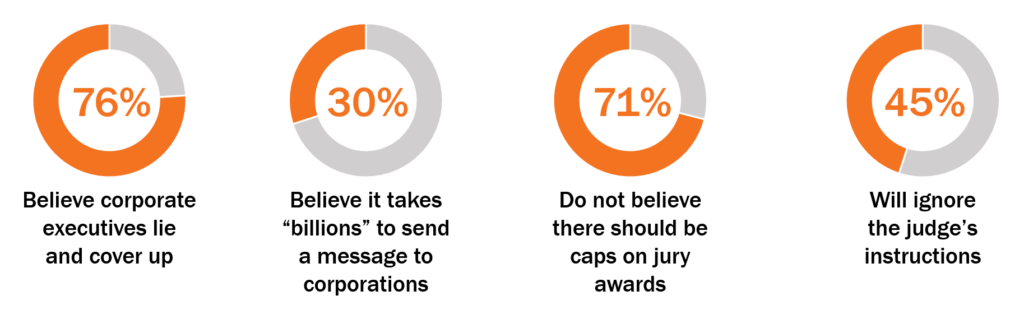
In today’s world, many jurors feel the need to be the “guardians of the community” by forcing companies to change their bad behavior with large damage awards. Litigators and those in the insurance industry refer to these as “reptilian jurors“, who are responsible for the increasing frequency of “nuclear verdicts”.

Our research has shown the below trend in recent juror perspectives:

Factors that drive up verdicts include:

  • Juror Vulnerability, Fear, Volatility, & Polarization
  • Rising Costs & Uncertainty of the Future
  • More Millennials on Juries
  • Bad Testimony or Misidentification of Corporate Representatives
  • Anti-Corporate Bias – “Profits over Safety”
  • Not Setting a Floor or Providing a Low Damages Anchor
  • Not Addressing Key Issues/Themes in Jury Selection/Opening

Now more than ever, it is important to know how juror perspectives changed in your specific venue for your specific case issues.

It’s not a question if the pandemic will affect your cases… it’s a question of how it will affect your cases.

In general, many potential jurors now are more vulnerable – both health-wise and financially – than pre-pandemic, which can make people more plaintiff-friendly. However, depending on the venue, the most vulnerable, most risk-averse (i.e., most plaintiff-friendly) may be less likely to show up for jury duty or to be seated on a jury at present.

Luckily, there are some research tools to give you the current data you need to adjust your litigation strategy.

Test Your Damages
with JuryEvaluator

What is your case worth now? JuryEvaluator offers a scientific and statistically significant damages assessment for your ACTUAL CASE from your ACTUAL JURY POOL. This research will consider the effect of COVID-19 and current media climate, to provide insight into your case risk, exposure and value.

  • Research conducted in your case venue using your actual case facts
  • Research captures present-day surrogate juror attitudes and biases
  • Statistical analyses provide a reliable range of potential damages if the case went to a jury trial (economic, non-economic & punitive)
  • Optional Juror Profiling analysis

Online Focus Groups
with JuryConfirm

How has COVID impacted juror perspectives in your venue? Test your themes, storylines, social climate & more with JuryConfirm, Magna’s patented online focus group platform.

  • Evidence analyzer powered by AI
  • Live attorney presentations with limitless capabilities
  • Simulation of court room environment with interactive avatars and live video feed of jurors and attorneys
  • Live (video) juror deliberations with more panels than ever available before
  • Real-time results: Fully-customized questionnaires, polling & presentation feedback
  • Detailed reports featuring case evaluation, theme development, and jury profi­les

Nationwide COVID-19 Study Results

Magna Legal Services conducted a series of nationwide surveys to assess evolving changes and shifts in juror perceptions in this brave new world.

Study includes 5,000 respondents
& 100+ questions about:

  • Technology
  • Finance
  • Law Enforcement
  • Insurance
  • Life Sciences

Learn about our findings:

  • Halo effect
  • Business Interruption Coverage
  • Reptilian Influence
  • Crisis Fatigue
  • Juror Vulnerability

Complete the form to download your FREE copy of Magna’s COVID Study results >>

Contact our 24/7 Hotline for a FREE Case Consultation: 877.220.1821

or, email us at [email protected], or fill out our contact form

Related Articles:

Analyzing & Monetizing Construction Defect Claims

Virtually all construction or property related decisions should be made with costs in mind. But some people are afraid of math.

Regardless of whether you’re an attorney, insurance professional, property owner, or manager, you need to be able to focus on the “vital few” issues, and virtually ignore the “trivial many.” This means knowing how much things cost – not to the penny, but rather a reasonable approximation. The best place to start, when working to make smart economic decisions, is on the BIG expensive issues. You begin by chopping a project into logical parts, and estimating the cost of those chunks, so you can see the forest AND the trees. The earlier in the process you do this, the better.

Magna Legal Services hosted a webinar on January 27, 2021 (recording below), which featured expert panelists explaining the framework behind analyzing and monetizing construction defect claims.

“There’s a lot of parties involved [in a construction defect case]. You have to understand the structure and you have to speak the language… whether it’s the folks on the ground or in the board room, you have to be able to do both,” said Paul Danner of Goldberg Segalla.

Aileen Schwartz of Hill International, Inc. says she makes sure to bring in experts early on to prevent dragging out litigation. “I’ve had cases that were brought in and there were no damages against us. If there are no damages, there is no case”, she said.

If the case ends up going forward, it’s important that it is not a jury trial, Aileen noted, saying “nobody on a jury wants to listen to your construction defect claim. They’re falling asleep. You really need a judge who knows what you’re talking about to hear the cases.”

Every party wants to get the case settled sooner to avoid costly and timely litigation. Magna’s Scott Horwtiz said “Magna’s jury consultants are getting involved more and more on the early side of things to test theories and test themes to see if a small amount of money up front could take care of all of this”.

When preparing your case, organization is key. Pete Fowler explained the importance of starting with “a discreet list of issues — whether its one issue, or hundreds of issues.” In conjunction with the list of issues, Fowler utilizes “a sensible list of costs associated with each issue, and a sensible list of all the people who might be involved with each of those issues.” “It gets to be this big horrible matrix,” he added.

Watch the full webinar recording below to hear our expert panel break down these complex cases.

This webinar originally aired live on 1.27.2021

Webinar details:

Panelists:
Pete Fowler, Founder, Pete Fowler Construction
Scott Horwitz, Esq., National Director of Graphics Consulting & Trial Presentation, Magna Legal Services
Aileen R. Schwartz, Senior VP, Sr. Corporate Counsel US & Privacy Officer, Hill International, Inc.

Moderated by:
Paul S. Danner, Esq., Partner, Goldberg Segalla

Presented by:
Peter Hecht, Partner & Executive Vice President of Sales, Magna Legal Services

Learn more about utilizing trial graphics & tutorials for complex cases here.

Click here to view a list of more upcoming webinars & conferences.

Why You Should Consider a Jury Consultant

Litigators leave nothing to chance, juries included. While most trial lawyers feel comfortable selecting and working with a jury, a jury consultant is an invaluable addition to your trial team. Magna jury consultants work hand in hand with your trial team to plan, refine, and retool arguments, evidence, and visual communication strategies in order to strengthen your case with the jury.

Continue reading

Debriefing in Law: Important for Your Future Performance

debriefing in law

Many legal professionals are aware of the importance of doing research before selecting members of a jury. That’s why jury focus groups are so beneficial prior to voir dire preparation. Importantly, it can be just as beneficial talking to jurors after a trial has concluded. Specifically, debriefing jurors after a trial can help both jurors gain closure on a case as well as help lawyers by providing valuable feedback and suggestions that can be utilized in future cases.  Here is how debriefing the jurors works and why it’s can be so important.

Continue reading

ClaimScout: What You Should Know About Social Media Surveillance

Research is a major part of any lawsuit, as having accurate facts on your side can make or break your case. So it stands to reason that the more information you can find out about a person, the better. When you consider that the vast majority of U.S. adults have a social media account — with 79 percent of internet users being on Facebook alone — it makes sense to look online for information you might not already have. If you don’t have the time or expertise to do this yourself, you can hire a company to perform social media surveillance for you. Here’s how this process works and ways it can benefit you.

Continue reading