Trial Consulting Overview: How Technology Changed the Face of Trial Consulting

Trial Consulting Overview: How Technology Changed Trial Consulting

Much has changed in the world of trial consulting over the years. These changes have included large increases in overall services and even putting more focus on factors outside of the jury. When looking at the trial consulting over the last decade, however, it becomes obvious that technology has created the biggest shifts in trial consulting.

Challenges for Trial Lawyers

Before understanding how significant of an effect technology has had on trial consulting, you must first recognize why such technologies were necessary. Americans sometimes have a propensity for creating solutions for nonexistent problems, but this wasn’t the case in the trial consulting world. In fact, the major issues came directly from professional legal experts themselves.

Imagine how much you know about your case that the jurors simply don’t have the appropriate education to understand. Once this issue is recognized, you can start using technology to improve your trial outcomes.

Know Your Audience

One of the greatest ways technology has affected trial consulting is by helping you to understand your audience. Sure there are spectators, bailiffs and even an opposing attorney in the courtroom, but they’re not your main audience. The jury needs to be your primary focus, and since they’re not trained in the world of law, it’s your job to speak to them in a language they understand.

One great innovation in trial consulting came thanks to the World Wide Web: online focus groups. Instead of figuring out the logistics of getting a few dozen people into a room at the same time, programs like Jury Confirm can handle everything online while still creating a realistic courtroom environment for your “jurors.”

It’s this type of technology that can help you speak to jurors in that mutually understood language. Too many attorneys are left saying “I can’t believe that’s important to them” or “I’m surprised they don’t understand that argument” after using online focus groups. Fortunately, this shows you where your shortfalls are, and from that point, you can figure out exactly how to correct them.

Courtroom Setup: Helping Your Jurors See Clearly

The difference in legal knowledge between you and the jurors is obviously an issue, but even something as simple as courtroom setup can cause your best points — no matter how well explained — to get lost in translation. The ability for trial jurors to be able to quickly see and comprehend visual evidence can sometimes be removed entirely due to courtroom setup.

Thinking deep into your trials, imagine for a moment that a juror cannot comprehend a visual exhibit because it’s excessively detailed. Even something as simple as being unable to see every word on a slide can stop jurors’ learning in its tracks. Just considering these two examples is enough to understand how big of a part courtroom setup plays in your case’s success.

As technology developed, however, even these issues started to fade away. By using the video, image and document presentation software in our courtroom/war room setup, you can ensure that jurors see the full picture every time. The presentation screen allows for interaction with the exhibit, so you and your witnesses can get the point across even more effectively.

Take a moment to learn more about our courtroom setup services and graphics consulting services.

Justice Doesn’t Have to Be Blind

The American legal system prides itself on the claim that justice is blind, but being blind means your eyes are closed. It means you’re at the mercy of others. What could be more terrifying than putting your case into the hands of 6–12 people you have never met and know nothing about?

Fortunately, you don’t have to live out that frightening scenario. Litigation consultants use their expertise to provide legal professionals and their clients with a look inside the mind of potential jurors. These insights include case perceptions, relevant analogies that will help get the point across and understanding individual jurors’ life experiences to better comprehend what impacts their attitudes.

This trial consulting overview provides only a snippet of what technology has done for the profession. Learn more about our jury consulting services to see how you can make your message crystal clear for the jury. And when you’re ready to take happenstance out of your case’s equation, contact us for a free case consultation to see how you can benefit from a litigation consultant.

Request a Free Case Consultation


Related articles:

Legal Case Analysis: 3 Trial Strategy Tips for Improved Results

Legal Trial Strategy Tips

A chicago criminal lawyer learns a new language in law school. That language is dense with theory, legal jargon and even a few doses of Latin. While law students are encouraged to provide minute analyses of potential arguments or points at issue in every fact pattern, the legal practice areas are quite different, especially in a courtroom. In court, your audience is not a law professor, but a juror whose day-to-day life experiences may have little to do with the law or the subject matter of the case.

Lawyers must develop a rapport with jury members within the confines of trial rules, while clearly conveying their arguments to these decision-makers who may have no legal training. There may be only limited instruction on the technical aspects of the law. Understanding the unique perspective of jurors on a legal case is crucial to winning a verdict. To improve your chances for success, consider not only the strength of your argument but how to get your message across. To ensure that you are properly conveying your message, here are 3 trial strategy tips to consider.

Continue reading

Deposition Procedure: Understanding the Process of a Deposition

Deposition Procedure

Crime drama shows would have you believe that surprise witnesses can be called whose testimony rocks the very foundation of the courtroom. In reality, the deposition procedure prevents this from happening. The deposing of a witness is part of the discovery phase, and it takes place when an individual who will eventually testify is interviewed under oath but before trial. You can learn about depositions here if you are truly unsure on the matter and looking for valuable knowledge on how they work.

The deposition occurs after the filing of a summons and it serves several purposes. The primary purpose of a deposition is to find out what the witness knows. Every piece of evidence to be presented should be known prior to the trial’s beginning, and this includes witness statements. And although depositions are considered hearsay and inadmissible in a trial, their second purpose is to preserve testimony.

Collecting depositions is an integral part of any trial. This is why legal professionals should fully understand every step in the deposition process.

Continue reading

Jury Selection Advice for Prosecutors

 COPENHAGEN (1)

Overwhelmed by the jury selection process? The American Bar Association encourages attorneys to use the expert services of jury consultants due to the subtle nature of determining inherent bias in potential jurors. But it is still the responsibility of the lead trial lawyer to choose and manage the experts, to question the prospective jurors and to make the final decisions about challenges and strikes. So here are a few things to keep in mind.

Continue reading

Realtime Court Reporting Benefits Uncovered

Realtime court reporting

Magna Legal Services provides real-time court reporting to help you review and refer back to a hearing or trial transcript instantly. With real-time court reporting, you don’t need to incur a delay waiting to note exactly what happened and how you should respond. Realtime court reporting allows you to work effectively and efficiently with your Austin attorneys. This service helps you keep your case on track and meet all necessary deadlines, and it minimizes the wait time for a resolution.

Continue reading

Behind The Scenes of Jury Consulting

Jury Consulting Discussion with Jury

If a case goes to trial, you can rest assured that there’s an arduous process ahead of you. After all, if the case was as “open and shut” as you sometimes hope, there would’ve likely been a plea deal or settlement before it ever got to trial. Once a case ends up in the courtroom, everyone is on an equal playing field. No matter how great an attorney is or how obvious the eventual verdict seems, there are no guarantees. This is why legal professionals around the world now utilize jury consulting services to gain the upper hand.

Continue reading

5 Unique Tips to Jury Selection for Civil Cases

Courtroom preparing for jury selection on civil case

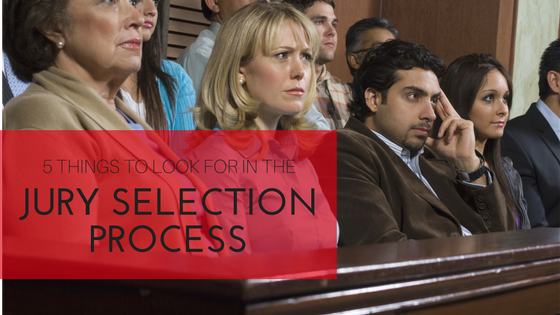
Jury selection is perhaps the single most important component of court proceedings, especially in civil cases. Any mistake during this early step can literally make or break your case. Even worse, you may not realize you’ve made the mistake until it’s far too late to rectify the issue — and save your verdict.

To avoid any common mistakes, use these five tips to improve your jury selection for civil cases.

Understand the Rules of Jury Selection

The last thing you want is to find out that your opponent has grounds for appeal because you made a mistake while selecting your jury. Even worse, since both parties can appeal a civil judgment, you’re not protected simply because you’re on the defending side of the courtroom, unlike in criminal cases.

Every state and local jurisdiction has its own set of rules for jury selection, but these are some of the most frequent and universally applicable:

Jury Size

In most cases the size of your jury will be 6 to 12 jurors, so make sure you’re planning your choices accordingly. Six is the de facto standard in most jurisdictions, but you’ll often have grounds to ask for a larger jury during negotiation with the presiding judge and your opponent counsel.

Alternates

You’ll usually have to designate a pool of alternate jurors who will only take their place in the jury if a primary juror is removed or excused from the proceedings for some reason. Accordingly, you want to make sure your alternates are just as good a fit for your side as the primaries are because it’s perfectly possible they’ll become primary jurors themselves.

Dismissals

Both sides of the case will have a chance to ask jurors questions that might reveal why they’re biased or otherwise unfit to serve as an objective observer of the proceedings. In that case, you’ll have a number of chances to dismiss a juror for cause.

However, you’ll also have a set number of chances to dismiss jurors with a peremptory challenge, effectively “because we want to.” Make sure you’re not wasting a peremptory challenge on a juror if you can argue they should be dismissed for cause instead.

Create a Juror Profile

A juror profile lets you create a statistical outline of your most probable beneficial and detrimental jurors. Juror profiles can include basic information like simple demographic data, but for the best results it should also include information that’s tailored to your specific case. For example, if your case involves a specific industry, you’ll want to make sure your juror profile can identify prospective jurors who are likely to be sympathetic or antagonistic to players in that industry.

Juror profiling is a complex endeavor. Learn more about how juror profiling research can help you with the jury selection process.

Show Appreciation for Pontential Jurors’ Time

Most of the jurors you’ll be in contact with are going to feel as if they’re suffering a burden because they were selected for jury duty. Accordingly, you need to ensure that you’re showing appreciation and respect for the time they’re being forced to give you. Doing so will establish a good relationship and can make them more likely to answer your questions honestly and openly.

Conversely, getting on a potential juror’s bad side can make them hostile to your case. In the worst scenario, they may even keep that hostility a secret and only reveal it by voting against you in the deliberation room.

Whatever the case, you’re going to struggle unnecessarily to elicit biases and disqualifying factors during juror questioning if they’re already hostile towards you.

Ask About Their One Degree Removed Experiences

In every jury selection process your goal is to find people who are clearly disqualified to objectively evaluate a case because they have some relation or connection to the case’s players or context. However, you also need to ensure you’re assessing their “one degree removed” experiences.

For example, if your case involves a large construction company, your first step is to find out whether a juror has any connection to the construction industry. But you’re not done there — you also need to find out how they’re connected to any one degree removed factors. For example, have they been involved in a civil lawsuit for a large company in any industry? Have they ever had a bad experience with home renovations, or plumbing, or even any contractor of any type?

Their answers to those questions could reveal a bias that’s worthy of dismissal.

Be Aware of Preconceived Notions

Always remember that you’re not just monitoring the jurors’ biases, you’re monitoring yours as well. Be aware of any stereotypes that might be blinding you to the actual opinions of jurors.

By monitoring your own perceptions in those areas, you can ensure that you’re genuinely finding the best jurors, and not simply those you’d expect to be the best.

With proper planning and good execution, you can ensure you pick the jury that’s most likely to rule in your favor.

Ready to start your trial?

Speak with a Magna Consultant to see how a jury consultant can assist you.

Request a Complimentary Case Consultation

with one of Magna’s expert jury consultants.


Related Articles:

Magna Legal Services Acquires Chicago-Based Lake Shore Reporting

Acquisition of 40-year-old Firm Enhances Magna’s Capabilities in Midwest

PHILADELPHIA, PA (May 20, 2016) — Magna Legal Services, the largest company in the nation providing a full suite of in-house services in Jury Research, Litigation Graphics, Language Services, Trial Presentation and Court Reporting, announced today that it has acquired Chicago-based Lake Shore Reporting, a well-established firm that specializes in managing complex multi-party cases and offers the full breadth of court reporting services. Lake Shore’s team is comprised of 20 court reporting professionals.

According to Magna Legal Services’ CEO, Tony Vaglica, “The addition of Lake Shore Reporting, along with our acquisition of Creative Counsel in Chicago in the fall of 2015, will crystalize our cross-marketing efforts as we integrate both firms under one business development strategy.” Further, “Lake Shore’s clients will now benefit from total support, from discovery to trial, and they will have access to Magna’s proprietary tools like JuryConfirm 2.0, Jury Evaluator and JuryScout.”

The acquisition was finalized on May 20, 2016, increasing the size of Magna’s court reporting group, strengthening its growing Chicago presence, and further solidifying the firm’s position as the largest company providing the full suite of in-house Jury Research, Graphics and Court Reporting services in the country.

According to Peter Hecht, Executive Vice President of Magna Legal Services, “Over the last 40 years, Lake Shore has built a solid reputation and has established itself as the go-to service in Chicago for particularly difficult cases. Teaming up with Magna’s nationally known and respected breadth of services beyond court reporting will add a whole new dimension of service options for their clients, and we are excited to see this partnership expand upon our other recent growth.”

About Magna:
Magna Legal Services is the country’s only company providing a full suite of jury research, litigation graphics and court reporting with end-to-end legal support services to law firms, corporations and governmental agencies nationwide. As an end-to-end service provider, Magna provides strategic advantages to clients by offering legal support services at every stage of legal proceedings. Magna’s mission is to ensure that all legal support needs are delivered in a high quality, reliable and responsive manner.

Magna Legal Services Acquires Chicago-Based Trial Graphics Company

Company’s Acquisition Marks Significant Midwest and West Coast Growth for the Only Provider of Full Suite of Trial and Jury Consulting Services

PHILADELPHIA, PA (PRWEB) NOVEMBER 05, 2015

Magna Legal Services, the largest company in the nation providing a full suite of in-house services in Jury Research, Litigation Graphics, Language Services, Trial Presentation and Court Reporting, announced today that it has acquired Creative Counsel, a firm that offers Visual Consulting, Exhibit Design and Presentation Technology Support to legal, insurance and corporate clients. Creative Counsel’s staff, led by Owner and President Denise Montiel, is comprised of top experts in visual design and presentation technology, servicing clients including Fortune 100 companies in four regional offices; Chicago, Pittsburgh, Philadelphia and Los Angeles.

According to Magna Legal Services’ President and Founder Bob Ackerman, “Our firm is in a continual growth mode, and bringing Creative Counsel into our organization is the next step in our development plan. Creative Counsel has an excellent reputation and client loyalty, so when the opportunity presented itself, we jumped at this chance to establish a solid footprint in Chicago and in turn, introduce their flagship customers to Magna’s extensive suite of services.”

The acquisition was finalized on October 30, 2015, increasing the size of Magna’s graphics group and solidifying the firm’s position as the largest company providing the full suite of in-house Jury Research, Graphics and Court Reporting services in the country. In her new role with Magna, Ms. Montiel will manage the company’s Chicago and Los Angeles offices and will oversee staffing and market growth.

According to Montiel, “Over the last 20 years, Creative Counsel has grown into a strong team with loyal clients throughout the country, and now we are ready to take the next step. Magna’s nationally known and respected breadth of services beyond graphics will add a whole new dimension of service options for our clients, and I am excited to see where our partnership takes us.”

Along with recent business development hires over the past few months, this acquisition “entrenches us in Chicago, and significantly enhances our west coast presence,” added Mark Calzaretta, Magna’s Executive Vice President of Litigation Consulting. “As we continue to work with more clients across the country, it’s essential for us to retain the most talented individuals possible, and Creative Counsel certainly represents the cream of the crop.”

Kenyon Group, LLC acted as exclusive advisor to Creative Counsel and arranged this transaction.

About Magna: Magna Legal Services is the country’s only company providing a full suite of jury research, litigation graphics and court reporting with end-to-end legal support services to law firms, corporations and governmental agencies from its 19 offices in 13 states throughout the nation. As an end-to-end service provider, Magna provides strategic advantages to clients by offering legal support services at every stage of legal proceedings. Magna’s mission is to ensure that all legal support needs are delivered in a high quality, reliable and responsive manner.

Creative Counsel, A Magna Legal Services Company