The Viability of Virtual Jury Trials

This webinar originally aired live on 7.1.2020

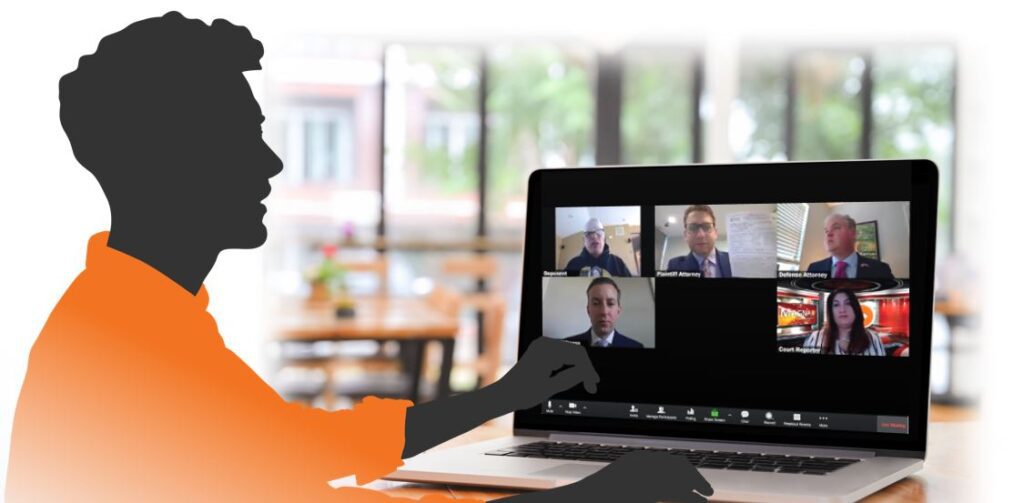
In May 2020, a Texas court held the nation’s first jury trial via Zoom.

Magna Legal Services held a panel discussion, “Viability of Virtual Jury Trials”, which featured Judge Emily Miskel, who presided over that case, as well as the Civil Jury Project and other expert panelists, as we explore the plausibility of virtual trials.

View the video above to watch our panelists debate the pros and cons of remote trials, and explain in practical terms how these virtual proceedings have actually been carried out.

Panelists:
Judge Emily Miskel, 470th District Court, Collin County, TX
Judge Mark A. Drummond, Circuit Court Judge, 8th Judicial Circuit of Illinois (Retired); Judicial Director, Civil Jury Project
Christine Carbo Marziotti, Senior Litigation Counsel, Phillips 66
Jeffrey Tillotson, Esq., Founder, Tillotson Law
Daniel Wolfe, J.D., Ph.D., Senior Director of Jury Consulting, Magna Legal Services

Moderated by:
Terrell W. Oxford, Esq. Partner, Susman Godfrey LLP

Produced by:
Peter Hecht, Partner & Executive VP of Sales, Magna Legal Services
Canby Wood, Esq., Business Development Manager, Magna Legal Services

You asked, we answered!
Here’s some questions that viewers raised during the program:

Are jurors ok with just using a smartphone in the virtual environment? Can they see exhibits? What about running out of battery and data on their plan?

A:  Yes, most of the jurors used a desktop, laptop or tablet but can use a smart phone if needed. They can see exhibits but understandably they will be harder to see given the size of the screen on most smart phones as compared to a computer, and we heard about exhibits being presented in couple different ways: through a document sharing application as well as through screen sharing. If jurors are using a smart phone we encourage them to have their charger handy so they can keep their phone charged, and if they are not using an unlimited data plan we encourage them to access wifi.

Will this virtual jury selection make it more likely for people with the proper access and data to be called for this type of jury duty?

A: Jury selection will still be conducted as it always has through the Jury Plan in each jurisdiction.  However, having access to technology and data is one of the biggest concerns to ensuring a representative cross-section of jurors for virtual jury trials.

How can we ensure that the jurors and/or parties are not messaging each other in private messages?
How can we ensure the jurors are not attending the trial on one screen and googling the issues being presented on another screen or their phone, and essentially introducing extraneous evidence and biases into their deliberation process? 
Furthermore, should the deliberation process be recorded and have it be available to the court for an in camera review in case of a juror misconduct complaint?

A: The thought is that regardless of whether the trial is being held in a building or virtually, these are human nature issues and they exist in both environments and should be addressed the same way: jurors are admonished and trusted unless evidence is produced otherwise. Also you can tell by watching the participants on zoom whether they are paying attention and focused on the trial, their behavior can be watched and there are tools to determine whether they are focused and participating.

What was used and the process of showing exhibits, arguing for and against the admissibility, and eventually publishing to the jury?

A: Document sharing sites were agreed to in advance and used. And it was important to make sure there was an “IT quarterback” who managed documents as well as participants moving in and out of “rooms”.

Did you find the jury voir dire to take a comparable amount of time or significantly longer/shorter?

A:  The process was actually more efficient but did not significantly differ than what would have likely occurred if in person.

Have any of your pandemic-era trials been hybrid with the attorneys and jury live and all or some witnesses remote?

A: Yes, and it’s the worst of both worlds. It required a lot of set up in advance to ensure technology for both, ensure social distancing, etc. Better to either do completely remotely, or all in-person.

Do we have any data that would help evaluate how long a juror could stay focused during a trial that goes beyond a few days?

A: Mr. Tillotson will be releasing the data from his survey projects in July and this is one of the issues he will address.  

Question to Christine Carbo Marziotti, do you think there is anything appealable based on process?

A: Yes, on due process grounds.

View Judge Drummond’s (Civil Jury Project) newsletter here

Thank you to everyone who tuned in!
Don’t miss any upcoming Magna webinars or conferences:

Witness Preparation for Virtual Depositions

Witness Communication Training

Jurors consider themselves experts on people, so the impressions made by a witness can strongly influence a jury’s decision making.  This is especially true when such impressions are negative, which is why witness preparation is so important.

Witness communication training helps witnesses develop a deeper understanding of the themes, context, and purpose of their testimony.

In-person or online, witness preparation:

  • Reduces or eliminates witness anxiety
  • Clarifies the deponent’s role in the case
  • Helps deponents stay on message
  • Assists in developing a credible conversational tone
  • Identifies and mitigates any non-verbal issues, such as tics, fidgeting or eye-rolling
  • Provides techniques for effectively handling documents and exhibits

Consultants will also explain to witnesses jurors’ expectations for their testimony, and correct behaviors that get in the way of jurors’ positive perceptions.

Magna’s jury consultants help witnesses feel more in control of their testimony while adhering to the rules of testimony and to avoid being “advocates” for their side of the case.  We develop “safe harbors” that give witnesses structure and tools to deal with tough cross-examination questions.  The use of videotape feedback during witness communication training can often help a witness identify what the jurors may perceive.  These tools will allow your witnesses the opportunity to learn and practice strategies in order to best respond to challenging questions and deliver the most effective message at trial.

We use videotape feedback to help witnesses identify what the jurors may perceive. These tools will allow your witnesses to practice strategies for responding to challenging questions and delivering the most effective message at trial.

Defending a Virtual Deposition?

Witness preparation eliminates the added layer of anxiety from the virtual setting by:

  • Practicing. Deponents can feel “alone” without counsel, so a practice session with the platform can help diminish this
  • Reviewing procedures for pauses, objections, and exhibits
  • Instructing deponents where to look for the most natural and effective presentation (particularly if being recorded)
  • Familiarizing participants with the remote platform’s features (chats, mute, viewing exhibits, etc.)
  • Coaching on attire and effective posture

Magna Legal Services has been facilitating remote depositions for over a decade. However, many people are just now taking and defending depositions for the first time in a virtual format. While the Magna LitigationVision (MLV) platform makes remote depositions easy, there are some tips and tricks to help witnesses and attorneys perform well.

Magna’s consultants are experts in preparing witnesses and attorneys for virtual depositions. They will share their practical tips and logistical considerations, explain how remote depositions work and the platform’s capabilities, and will provide advice to attorneys.

Magna consultants will work with your key witnesses and provide them with performance feedback in a non-threatening context making suggestions regarding style, language, and demeanor. .

Witness Prep with a Magna Consultant

To book a witness prep session, or any of Magna’s services, you can contact us here, at 866.624.6221 or [email protected]

Magna is platform agnostic! Please let us know if you have a preference for Zoom, Cisco, Webex, etc.

Virtual Deposition: Magna Legal Services

Why You Should Consider a Jury Consultant

Litigators leave nothing to chance, juries included. While most trial lawyers feel comfortable selecting and working with a jury, a jury consultant is an invaluable addition to your trial team. Magna jury consultants work hand in hand with your trial team to plan, refine, and retool arguments, evidence, and visual communication strategies in order to strengthen your case with the jury.

Continue reading

Is an Online Focus Group Right for My Case?

Thanks to courtroom dramas, the “CSI effect” and Netflix documentaries, there’s often an unrealistic evidentiary expectation in courtrooms. This makes it difficult for the average person to predict jury decisions in the modern world. By using online focus groups, it’s possible to remove some of this uncertainty. These focus groups provide the benefits of analytics in trial prep, and they can help you recognize and correct weaknesses in your legal strategy.

Continue reading

Jury Profiling: Multiple Levels of Jury Research

Jury “selection” does not exist in the United States. Attorneys choose individuals to serve on the jury by “deselecting” from jury service those individuals who they expect to be unfavorable to their side. Identifying and systematically eliminating pro-plaintiff or pro-defense jurors could be your secret weapon in winning a trial.

Traditional jury selection techniques are often based on stereotypical notions about the influence of juror characteristics on verdict behavior. If you’ve ever tried to connect a potential juror’s gender, race, occupation, social status, marital status, age, religion or demeanor to their tendency to vote guilty or award higher damages, then you’ve probably exercised some of these preconceptions. Needless to say, none of these stereotypes has any scientific basis.

In contrast, scientific jury profiling uses empirical techniques and systematic analysis to develop profiles of favorable and unfavorable jurors. In our experience, only multiple levels of research can predict how an individual will approach the case, evaluate evidence, and render a verdict. Statistical profiling ensures that you’re in the best possible position to seat the best jury.

Jury Research Data and Focus Groups

Trial attorneys often pride themselves on their ability to communicate complex legal theories in a simple way. But when you’re living and breathing a case for many months, it is easy for your objectivity to become compromised. Focus groups and other jury research exercises can help fine tune your arguments and begin to identify some trends in jury profiling.

A mock trial or focus group typically involves the observation of small group deliberation, based on the presentation of testimony that closely approximates an actual trial. By analyzing what mock jurors find significant, meaningful or memorable about the case, we can develop early stage profiles about whether certain attitudes and experiences are likely to be pro-plaintiff or pro-defense and helps us to advise the trial team on the effectiveness of their argument and ways to improve.

Mock jury data can be gathered in various ways, including full trial simulations, shadow juries, focus groups and online mock juries. At certain times, we favor some of these methods and/or combine two or more types of exercises in order to gain the fullest data set to prepare for a trial. It depends on the complexity and value of the case.

When gathering mock jury data, it is important to realize that the quality of the findings is wholly dependent on the quality of the methodology: Put simply, you’ll get better results if the research team is well-versed in the nature of advocacy, presentation, communication, psychology and small group behavior, and designs the study with these factors in mind.

Large-scale Juror Profiling

While traditional jury research data is extremely helpful, it is often based on a relatively small sample size, both in terms of the total number of participants and the number of focus groups. Sample size is a key determinant of how much weight to ascribe to research results. Generally, smaller sample size groups should be interpreted with caution since the group’s characteristics may have been the primary cause of the outcome; they are not predictive in the statistical sense. This is particularly important when evaluating damage awards or responsibility allocations, which are the least reliable types of data.

Because of these limitations, we recommend large-scale juror profiling studies. Massive community profiling allows us to validate the initial profiles developed through our jury research, and determine with statistical certainty what types of jurors are likely to favor the plaintiff versus the defense in your case.

Large-scale profiling is a multifaceted protocol. It starts with one or more large-scale community perception surveys, which we administer with the intent of uncovering community attitudes and biases to each party’s respective position in the case. Research consistently shows that pre-existing attitudes are more predictive of verdict behavior than the potential juror’s experiences; and experiences are significantly more predictive than demographics.

In other words, it is not enough to find out what experiences the potential jurors had, but also what they learned from these experiences. Essentially, we’re using big data about ordinary people, such as their social media activity, to develop a statistically reliable verdict-orientation model based on what motivates people to think the way they do.

The impressions we collect allow us to develop and gain a more nuanced understanding of the kinds of jurors who would be more receptive to the plaintiff’s position than they would be to the defense case. Correlated with mock jury data, this can help us narrow down potential voir dire questions to those which we know are reliable predictors of verdict orientation. The goal is to help the trial team effectively identify and deselect jurors who cannot and never will be persuaded.

Final Thoughts

“Almost every case has been won or lost when the jury is sworn,” legendary defense attorney Clarence Darrow once claimed. That may be an exaggeration, but getting even a small edge can turn the tables in a difficult case. Jury profiling can give you that edge — as long as it’s the right type of profiling. Piecemeal small-scale mock juries have less value than aggregated results gathered from multiple data points and deeper statistical analysis.

Just as you evaluate cases in a critical manner, evaluate the quality of the research service used with the same considered eye. Choosing a consultant who applies multiple layers of rigor to their analysis ensures the quality of your data and assigns a degree of much-needed confidence to the results you have obtained. It can make all the difference.

If you’re ready to learn more about Magna’s jury profiling services, contact Magna Legal Services today.

Request a Complimentary Case Consultation >>

Related Articles:

5 Legal Responsibilities Beyond Your Pay Grade

As an attorney, your time is best spent interviewing witnesses, gathering vital evidence and planning strategic arguments to give your client the best possible representation. Your methods will in large part determine whether your client receives the desired outcome.
However, trials are not won or lost on legal minds alone. Many factors, including those that influence juries, are crucial to master in order to get the verdict you want. To make that happen, ensure you have these five areas covered — and consider obtaining an outside jury consulting service with the right expertise to take care of them for you.

1. Courtroom Reporter

Trial transcripts are essential tools for legal proceedings, especially those that go on to appellate court. As a lawyer, your job is not to transcribe the entire trial, but that document is key to future witnesses or arguments you make.

Specifically, a transcript is where you’ll memorialize issues for appeal due to the activities of the judge, jury or opposing counsel. At all levels, a transcript provides accounts of witnesses’ testimonial of crucial events, which you can use to bolster your cross-examination.

If you want to get help from the best, our court reporter are here to help.

2. Jury Surveillance

Ultimately, your client’s fate is in the hands of the jury. At every stage of the trial, from jury selection to closing arguments, you must keep their impressions of your case in mind.

Before the case even begins, you should do your best to select jurors who are most likely to see the case from your client’s perspective.

In order to choose the best jury, you should review their social media activity. This can provide insight into political or social biases that may prevent them from seeing your client’s case in the best light. Social media can also give a window into a juror’s points of view, allowing you to tailor your arguments in ways they will best understand.

Monitoring the social media feeds of jurors takes time that you just don’t have in your packed schedule. It also takes a certain amount of web savvy to successfully complete. Instead of taking it on yourself, consider hiring an outside jury consultation firm to monitor jury social media activity.

3. Trial Graphic Creation

Graphics are another important way you get your argument across to jurors. The right use of visual communication tools can simplify complex issues and help jurors zero in on what’s at stake. If jurors don’t understand your graphics, they miss a large part of your argument.

Surprisingly, it’s the little things that make your graphics hard to read, and the last thing you want is for jurors to feel frustration. Every member of the jury is essential to a successful verdict, and your case may turn on quality graphics, so small font sizes, too much detail or other factors can cost you.

Since you are a lawyer and not a graphic artist, you may want to hire an outside firm to take on the task. Come explore our trial graphics services.

4. Record Retrieval

Gathering records often comes with hassles, including fees to access records charged by hospitals and other institutions. As a lawyer, you may have additional concerns about the security of such records, especially when they involve your client. This is one task you can easily outsource to a company that has the resources and expertise to get the job done.

Magna, for example, has staff across the country to get the records you need for your case. The company provides record retrieval services not only in major cities, but in every ZIP code across the United States. That means Magna can acquire records from anywhere.

Learn more about our record collection services today.

5. Translation Services

Documents may come to you in a different language. It may be challenging and time-consuming for you to translate them to assess relevance, especially when a crucial legal point may rest on a small detail. Even if you speak a language fluently, you may want to offload the translation job to a team of trained experts.

At Magna, our linguists are fluent in countless languages. After their translations are complete, we certify them, so you receive additional assurance about their quality. In short, our translation and interpretation services simplify your working life so that you can focus on the other strategic issues.

Learn more about our legal translation services today.

Get in Touch for More Information

Teamwork is at the heart of a successful legal case. While you and your legal staff focus on the arguments that will bolster your client’s case, you can hire qualified individuals to perform other important tasks. You will be able to give your best legal work to your client while making sure no essential pieces of your case are missing.

Come explore our other jury consulting and discovery services, and request a free quote today.

How Jury Shadowing Can Solidify Your Victory

Empaneling a shadow jury is an effective method of providing your legal team with real-time feedback on the reactions of the actual jury. A shadow jury is a group of people whose personal characteristics match those of the real jurors on a case as closely as possible. This matching goes beyond mere objective demographics. Through a questioning process similar to voir dire, organizers select shadow jurors for their life experiences, attitudes and opinions that reflect those of specific jury members. The shadow jury attends every day of the trial, hearing the same arguments and seeing the same evidence as the real jury. At the end of each day, the jury consultant debriefs the shadow jurors to find out their reactions to that day’s trial proceedings, and they deliver that information to your team. Based on these ongoing responses, your team may adjust the emphasis, method or framing of your case. The following four points show the key benefits that a shadow jury can offer you:

1. Pinpoint Strengths and Weaknesses in Your Case

Even with the best planning, it’s not always possible to predict how jurors will react to the unfolding of a court case. The opposition presents witnesses that antagonize the jurors against your client, and you may find yourself scrutinizing the jury’s body language to glean what they’re thinking. Shadow juries are able to explicitly convey their responses to you, via the jury consultant, so you aren’t left guessing about the effects of the day’s proceedings. They help your team pinpoint areas that need more explanation or focus your presentation to make it more persuasive. Jury shadowing gives you a new interactive agility, tracking where your jurors’ sympathies lie on a daily basis. The American Bar Association’s Litigation News features an example of using a shadow jury, and points out, “Although the trial team did not know exactly what the real jury was thinking, they were able to make meaningful inferences from the shadow jurors’ reactions to the trial.”

2. Identify Strong Juror Opinions

Using a shadow jury helps you recognize which jurors remain undecided, as well as which ones have settled on a strong opinion early in the trial and are inclined to ignore further evidence. A good way to ensure that shadow jurors are not just telling you what they think you want to hear is to keep the shadow jury “blind.” (In other words, they don’t know which side hired them.) This practice enables your jury consultant to receive unvarnished opinions from the shadow jurors, and to recommend specific trial strategies to you based on each day’s feedback. For example, if you are working to defend a client and your shadow jury finds the plaintiff’s witnesses highly convincing, that may give weight to your recommendation that your client settle the case.

3. Keep an Objective Perspective on the Case Status

You are saturated with the facts of your case, and you may be so focused on presenting those facts in a certain light that you lose sight of how your arguments are perceived by the jury. Sharing a body of information in a coherent, persuasive manner can be surprisingly difficult, and has many hazards: You may inadvertently skip important explanations, because you assume your listeners already understand the underlying concept. Or, you might engage in a lengthy recital of details which seem relevant to you, but which are so dense that the jury loses the thread of your argument. A shadow jury will be able to give you feedback on what they understand, helping you fine-tune your delivery of information.

The jury consultant adds another layer of perspective, as he or she distills and condenses the shadow jury’s responses. With this expert assistance, you are provided with an actionable set of recommendations regarding the shaping of your argument, and your time is used effectively. The use of this type of intermediary also allows the shadow jurors to express their unvarnished opinions of each attorney’s presentations, and this provides you with valuable feedback. In some cases, jury consultants even bring shadow juries together to “deliberate” before your closing arguments, so that you can have a preview of actual jury deliberations.

4. Recognize the Emotional Cues that Resonate

Every juror (and every shadow juror) comes to the trial with their own emotional baggage. This creates a set of filters that influences how these individuals hear and understand the arguments you give. When you have daily feedback from your shadow jury, it’s easy to recognize when you’ve succeeded in eliciting emotions that will cause the actual jury to be sympathetic to your case. Other essential emotional cues concern the jury’s reaction to the personality of your witnesses and experts. For example, you may find that jurors have a negative response to an expert witness whom you’ve hired, and you may decide to minimize that witness’s time on the stand. Visual cues and graphic images also pack a strong emotional punch, and your shadow jury’s response may cause you to fine tune your use of these exhibits in upcoming sessions.

Shadow juries provide the closest insight you can get into the crucial “black box” of the actual jury. Using this valuable research tool can help you to shape your argument, and the feedback from a shadow jury may also be invaluable in persuading your client that a particular course of action will be in their best interest. Learn more about our jury consulting services and contact us today for a free quote.

Request a Complimentary Case Consultation