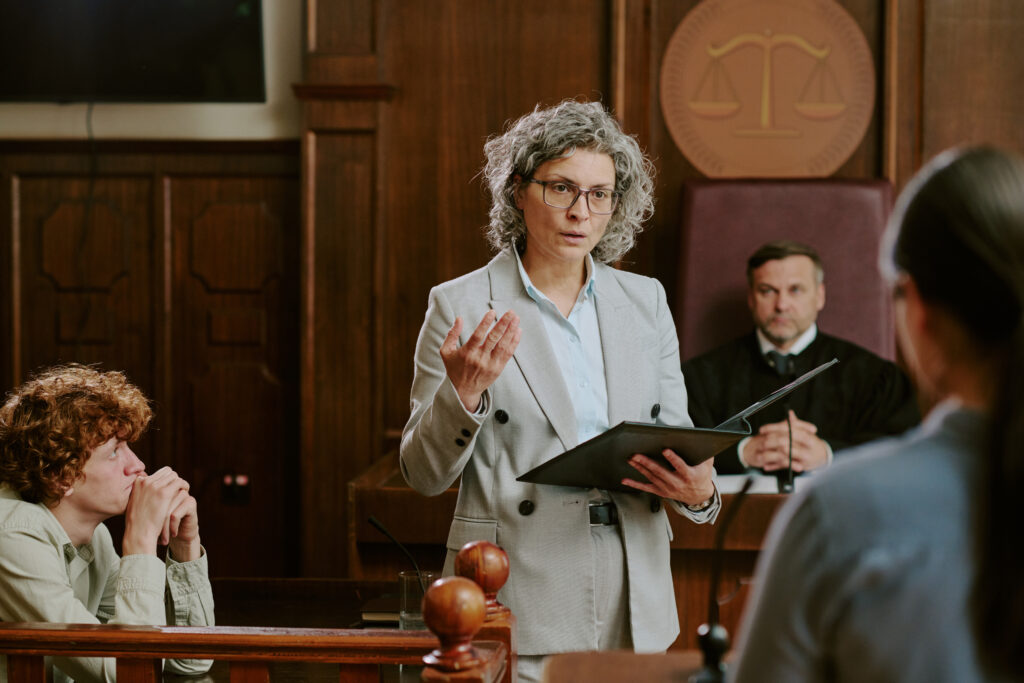

Attorney using catchy trial themes examples​

Trial Theme Examples

A compelling trial theme gives jurors a simple idea they can carry from opening statements through deliberations. Every witness, exhibit, and argument should reinforce that central message, making the evidence easier to organize and remember. Without a consistent theme, strong facts can lose their impact because jurors must decide for themselves how each piece of evidence fits together.

Many attorneys devote substantial time to discovery, depositions, and motion practice, yet trial themes sometimes receive far less attention until shortly before trial. A well-crafted theme creates a roadmap that guides every stage of the presentation. Reviewing examples of catchy trial themes early in trial preparation can help attorneys identify language that supports their theory of the case while remaining grounded in evidence.

Why Trial Themes Matter

Jurors rarely remember every exhibit number or every answer a witness gives on the stand. They tend to remember the story that connects those facts. An effective trial theme provides that story by giving jurors a clear reason why the evidence matters and how it supports your client’s position. Strong themes also create consistency throughout the trial. Opening statements introduce the idea, direct examinations develop it, cross-examinations reinforce it, and closing arguments remind jurors how each piece of evidence supports the same message. Repetition builds familiarity, making it easier for jurors to recall important facts during deliberations. The most effective themes stay true to the evidence. A memorable phrase may capture attention, but it only succeeds if every witness and exhibit continues to support that message throughout the case.

Catchy Trial Themes Examples for Different Case Types

Many attorneys review catchy trial themes examples as part of their brainstorming process. These examples should serve as inspiration rather than language to copy because every case presents different facts, witnesses, and legal issues.

Personal Injury Cases

Personal injury trials often focus on responsibility and preventable harm. Themes that emphasize accountability often resonate with jurors because they focus attention on the decisions that caused the injury.

Examples include:

  • “Safety should never take a day off.”
  • “One careless choice changed everything.”
  • “Rules exist because people matter.”
  • “Preventable harm deserves accountability.”

These themes work best when accident reconstruction, medical records, and witness testimony consistently reinforce the same message.

Medical Malpractice Cases

Medical malpractice cases often center on trust between patients and healthcare providers. Jurors expect medical professionals to exercise careful judgment, making trust and responsibility natural themes throughout the trial.

Examples include:

  • “Patients deserve careful decisions.”
  • “Trust requires accountability.”
  • “Every chart tells someone’s story.”
  • “Attention saves lives.”

Medical experts, treatment timelines, and clinical records should support these themes from beginning to end.

Employment Litigation

Employment disputes frequently involve fairness, honesty, and workplace responsibility. Jurors often evaluate how employers treated people just as carefully as they evaluate written policies.

Examples include:

  • “Respect belongs in every workplace.”
  • “Promises made should be promises kept.”
  • “Retaliation has no place at work.”
  • “Speaking up should never cost a career.”

Reviewing examples of effective trial themes in employment cases often helps attorneys develop language that fits their specific facts without overstating the evidence.

Building a Theme That Fits Your Case

Every successful trial theme begins with identifying the strongest fact in the case. Sometimes that fact appears in a deposition, a key document, or an admission made during discovery. Once that central point becomes clear, attorneys can develop a concise statement that ties the evidence together. Simple language usually creates stronger results than clever wording. Jurors should understand the theme immediately without needing additional explanation. If someone cannot repeat the theme after hearing it once, the message probably needs refinement. Testing the theme with colleagues before trial can reveal weak spots. Fresh feedback often identifies confusing language or highlights opportunities to make the message more memorable without sacrificing accuracy.

Every Witness Should Reinforce the Theme

Witness preparation should always support the trial theme. Each witness should contribute information that strengthens the same central message instead of introducing unrelated ideas. This consistency helps jurors recognize patterns across testimony instead of treating each witness as a separate source of information. Cross-examination offers another opportunity to reinforce the theme. Carefully planned questions can highlight admissions that support your theory while limiting attention on issues that distract from the strongest evidence.

Use Demonstratives to Reinforce the Story

Visual presentations can make a trial theme easier for jurors to understand and remember. Timelines, medical illustrations, accident reconstructions, financial summaries, and document callouts help jurors connect complicated evidence to a simple, consistent message. Every demonstrative exhibit should support the same story introduced during opening statements. Graphics that compete with the trial theme or introduce unrelated ideas can reduce the overall impact of the presentation. Clear visuals paired with consistent messaging give jurors another way to absorb and retain important evidence throughout the trial.

Turn Your Trial Theme Into a Persuasive Courtroom Strategy

A strong trial theme requires more than a memorable phrase—it requires preparation, organization, and courtroom execution. Every witness, exhibit, and presentation should support the same message while helping jurors understand the evidence.

Magna Legal Services helps attorneys strengthen trial presentations with jury consulting, trial presentation services, legal videography, court reporting, and record retrieval solutions. Our experienced teams help legal professionals refine case strategy, organize critical evidence, and present compelling arguments from opening statements through closing arguments.

Contact Magna Legal Services today to learn how our trial support services can help bring your case strategy to life.


photo of a jury box representing the importance of understanding jury decision making psychology​

How Jurors Think: Jury Decision Making Psychology

Every trial depends on more than the evidence presented in court. Jurors must evaluate testimony, weigh conflicting accounts, and decide which version of events they believe. Although attorneys spend significant time preparing legal arguments, the outcome often depends on how jurors process and interpret the information they receive.

That is why understanding jury decision making psychology deserves careful attention. Jurors bring their own experiences, beliefs, and expectations into the courtroom. Those influences shape how they assess credibility, organize evidence, and reach conclusions during deliberations. Attorneys who understand these patterns can build stronger case strategies from voir dire through closing arguments.

Why Jury Decision Making Psychology Matters

Jurors do not evaluate every piece of evidence in isolation. Instead, they naturally organize information into a story that explains what happened. As witnesses testify and exhibits are introduced, jurors continuously adjust that story based on new information. This process explains why a clear case theme matters so much. When evidence consistently supports one narrative, jurors have an easier time connecting facts and remembering important testimony. If a case lacks organization or presents conflicting messages, jurors may struggle to understand how individual pieces of evidence fit together. Research into jury decision making psychology shows that people often remember stories more easily than disconnected facts. Attorneys who present a logical sequence of events help jurors retain information throughout lengthy trials.

Mental Shortcuts Shape Juror Decisions

Every person relies on mental shortcuts to process large amounts of information. Courtrooms present an especially demanding environment, requiring jurors to process testimony, legal instructions, expert opinions, and documentary evidence over several days or weeks. One common pattern involves confirmation bias. Once jurors begin leaning toward a particular explanation, they may give greater weight to evidence supporting that view while paying less attention to conflicting information. Attorneys can reduce this risk by addressing weaknesses openly rather than hoping jurors ignore them. Anchoring creates another challenge. Early information often influences later decisions, even after jurors hear additional evidence. Strong opening statements and well-organized early testimony can establish reference points that remain influential throughout the trial.

First Impressions Influence Credibility

Jurors begin evaluating credibility almost immediately. They notice how attorneys present themselves, how witnesses answer questions, and how confidently each party communicates. Witness preparation plays an important role in building credibility. Jurors generally respond well to witnesses who answer naturally, remain consistent, and acknowledge reasonable limits in their knowledge. A witness who appears overly rehearsed or defensive may lose credibility even when the underlying testimony remains accurate.

Emotion and Logic Work Together

Jurors strive to follow the law and base their verdicts on evidence. Even so, emotional responses naturally influence how people remember testimony and evaluate credibility. Effective trial presentations connect emotional themes directly to the facts of the case. Personal stories supported by reliable evidence often leave stronger impressions than technical explanations alone. Attorneys should never rely on emotion instead of evidence, although presenting the human side of a case helps jurors understand why the facts matter.

Voir Dire Provides More Than Jury Selection

Many attorneys view voir dire primarily as an opportunity to identify potential bias among jurors. It also serves as one of the best opportunities to learn how prospective jurors think. Open-ended questions encourage meaningful conversations that reveal attitudes toward lawsuits, corporations, law enforcement, medical providers, or personal responsibility. Those discussions often uncover experiences that influence decision-making throughout the trial. Patterns across multiple jurors frequently prove more valuable than isolated responses. Shared attitudes may identify themes that deserve attention during opening statements, witness examinations, and closing arguments.

Witnesses Often Matter More Than Documents

Documents and expert testimony remain critical pieces of many cases, yet jurors often place greater emphasis on witness credibility. They evaluate confidence, honesty, consistency, and demeanor alongside the substance of the testimony itself. Witnesses who communicate clearly without exaggeration generally earn greater trust. Jurors appreciate honest answers, including admissions when a witness does not know something. That type of authenticity often strengthens credibility rather than weakening it. Attorneys should prepare witnesses to explain complicated subjects using everyday language whenever possible. Clear communication helps jurors stay engaged and improves retention during deliberations.

Visual Evidence Strengthens Retention

Visual exhibits help jurors organize information more effectively than spoken testimony alone. Timelines, diagrams, photographs, and demonstrative exhibits reinforce key points while making complicated facts easier to understand. The strongest visuals support witness testimony instead of distracting from it. Every exhibit should reinforce the central narrative and help jurors connect important pieces of evidence.

Jury Research Improves Trial Preparation

Many successful trial teams test their cases before appearing in court. Mock trials, focus groups, and jury consulting allow attorneys to observe how potential jurors react to evidence, witnesses, and legal arguments before trial begins. Participants frequently identify confusing testimony, weak themes, or exhibits that fail to communicate effectively. Those observations give attorneys an opportunity to refine their presentations well before entering the courtroom. Jury decision making psychology becomes much more practical through jury research because attorneys receive feedback from people who closely resemble the actual jury pool. Rather than relying on assumptions, trial teams can adjust their strategy based on measurable reactions and thoughtful discussion.

Turn Jury Psychology Into a Trial Advantage

Understanding jury decision making psychology gives attorneys an advantage long before opening statements begin. Strong trial preparation combines legal analysis with an appreciation for how jurors process information, evaluate credibility, and make decisions during deliberations. Attorneys who recognize these patterns can develop stronger themes, prepare witnesses more effectively, and present evidence in a way that is easier for jurors to follow and remember.

Build a Stronger Jury Strategy With Magna Legal Services

Understand Your Jury Before Entering the Courtroom

Successful trial preparation requires more than strong arguments—it requires understanding how jurors may interpret evidence, evaluate witnesses, and respond to case themes.

Magna Legal Services helps attorneys make informed trial decisions through comprehensive jury research and consulting services, including mock trials, focus groups, juror investigations, social media research, and case strategy testing.

By gaining insight into potential juror reactions before trial begins, legal teams can refine their arguments, strengthen witness preparation, and approach jury selection with greater confidence.

Whether you are preparing for jury selection or refining your overall trial strategy, Magna Legal’s jury consulting services provide the research and analysis needed to approach the courtroom with greater confidence. Contact Magna Legal Services today to learn how jury consulting services can help your team prepare a stronger trial strategy.

Attorney providing litigation risk management in court.

What is Litigation Risk Management? How to Mitigate Litigation Risk

Litigation creates uncertainty for every client, but attorneys can reduce many of the risks that threaten a case with careful planning and consistent execution. Missed deadlines, incomplete evidence, and disorganized discovery often increase costs and weaken legal strategy long before trial begins. Taking a proactive approach helps legal teams stay organized, make informed decisions, and avoid preventable setbacks throughout a case.

Effective litigation risk management focuses on identifying potential issues early and putting processes in place to reduce their impact. From preserving evidence to managing discovery and working with trusted litigation support providers, every step contributes to stronger case preparation and better client service.

What Is Litigation Risk Management?

Litigation risk management is the process of identifying, assessing, and reducing legal risks that could affect the outcome of a dispute. The process begins before litigation formally starts and continues through discovery, depositions, settlement negotiations, trial, and post-trial proceedings. Managing litigation risk involves much more than developing legal arguments. Attorneys must preserve evidence, monitor deadlines, prepare witnesses, manage discovery obligations, and anticipate procedural issues before they become costly problems. Strong internal processes help law firms maintain consistency while reducing avoidable errors, controlling costs, and improving case outcomes.

Why Litigation Risk Management Matters

Small mistakes can have serious consequences during litigation. Missing a filing deadline, producing incomplete discovery responses, or failing to preserve important evidence can delay a case, increase costs, and damage credibility with the court. Strong litigation risk management allows attorneys to identify potential obstacles before they interfere with case strategy. Early planning also improves communication with clients by setting realistic expectations about timelines, costs, and potential outcomes. Clients benefit from a legal team that remains organized and prepared throughout every phase of litigation.

How to Mitigate Litigation Risk

Preserve Evidence Early

Evidence preservation should begin as soon as litigation becomes reasonably anticipated. Emails, text messages, business records, medical records, surveillance footage, and other relevant materials can disappear if they are not preserved promptly. Issuing litigation hold notices and working closely with clients to protect relevant information helps prevent accidental destruction of evidence. Courts expect parties to preserve evidence that may become relevant to litigation, making early action one of the most effective ways to reduce unnecessary risk.

Strengthen Discovery Processes

Discovery often shapes the direction of a case, making organization essential. Missed deadlines, inconsistent document production, and incomplete responses frequently create disputes that increase costs and slow litigation. Clear workflows, document management systems, and regular communication with clients help attorneys produce accurate responses while keeping discovery on schedule. Organized discovery also gives legal teams a clearer picture of the strengths and weaknesses of their case before depositions and trial preparation begin.

Use Reliable Litigation Support Services

Many firms strengthen litigation risk management by partnering with experienced litigation support providers. Reliable court reporting, record retrieval, and legal translation services help attorneys manage critical tasks efficiently while maintaining accuracy. Accurate deposition transcripts provide dependable references during motion practice and trial preparation. Timely record retrieval allows attorneys to evaluate evidence more efficiently, while certified legal translations help eliminate misunderstandings in multilingual matters. Administrative delays, incomplete records, and inaccurate transcripts can create unnecessary obstacles that distract attorneys from developing case strategy. Working with experienced professionals allows attorneys to spend more time developing case strategy instead of managing administrative responsibilities.

How Magna Legal Can Help

Magna Legal Services supports attorneys with nationwide court reporting & virtual depositions, record retrieval, legal translation, jury consulting, and trial support services. Accurate deposition transcripts provide reliable references for motions and trial preparation, while timely record retrieval gives legal teams faster access to the documents they need to evaluate claims. Certified legal translation services help ensure that multilingual evidence and testimony remain accurate, reducing the risk of misunderstandings that could affect the case. Medical record summaries also allow attorneys to review large volumes of healthcare records more efficiently, helping them identify important facts without spending valuable billable hours sorting through hundreds of pages.

Reduce Litigation Risk With the Right Support

Effective litigation risk management requires more than sound legal strategy. It depends on accurate information, organized records, reliable vendors, and consistent execution throughout every stage of a case.

Magna Legal Services helps attorneys reduce administrative burdens and minimize litigation risk with nationwide litigation support services, including court reporting, remote depositions, record retrieval, legal translation, medical record summaries, jury consulting, and trial support.

By partnering with a single trusted provider, legal teams can stay organized, meet critical deadlines, and focus more time on developing successful case strategies. Contact Magna Legal Services today to learn how our litigation support solutions can help reduce risk and strengthen your next case.

A group of jurors sitting in the courtroom

What is Jury Sympathy? How Jury Sympathy Impacts Verdicts

Attorneys spend countless hours preparing legal arguments, reviewing evidence, and building case strategy, yet one powerful factor often shapes outcomes in ways that go beyond statutes and case law. Jury sympathy plays a significant role in how jurors interpret facts, assign credibility, and ultimately decide verdicts. A clear grasp of how jury sympathy works allows attorneys to better prepare for trial and present cases that resonate without losing focus on the law.

What is Jury Sympathy?

Jury sympathy refers to the emotional response jurors feel toward a party in a case, which can influence how they evaluate evidence and testimony. While jurors receive instructions to remain impartial, human nature does not switch off at the courtroom door. Personal experiences, values, and emotional reactions often guide how jurors process information, sometimes as strongly as the facts themselves.

How Jury Sympathy Develops During Trial

Jury sympathy does not appear suddenly. It builds over time as jurors observe witnesses, listen to testimony, and form impressions about the people involved in the case. Attorneys who recognize these moments can shape how jurors connect with their client’s story.

The Role of Storytelling in Building Connection

Jurors often understand and retain information more effectively when it is presented as a coherent narrative.  A well-structured case presentation helps jurors understand not just what happened, but why it matters. When attorneys present a clear and relatable story, they give jurors a framework that encourages empathy. This emotional connection often strengthens jury sympathy, especially when jurors see a party as vulnerable, wronged, or acting in good faith.

Witness Credibility and Demeanor

Jurors closely watch how witnesses behave on the stand. A calm, honest, and consistent witness often earns trust, while a defensive or evasive witness can weaken a case. Jury sympathy often grows when a witness appears sincere and relatable. Attorneys should prepare witnesses carefully, focusing on clarity and authenticity rather than scripted responses.

Visual Evidence and Presentation Style

Exhibits, demonstratives, and even courtroom demeanor influence how jurors feel about a case. Photographs, timelines, and medical records can humanize a party’s experience and make complex facts easier to understand. A thoughtful presentation style helps reinforce credibility and encourages jurors to stay engaged, which can strengthen jury sympathy over the course of the trial.

How Jury Sympathy Impacts Verdicts

Jury sympathy can shape how jurors interpret evidence, weigh testimony, and apply legal standards. Attorneys who ignore its influence risk losing control of the narrative, even when the legal arguments remain strong.

Shaping the Interpretation of Facts

Jurors do not evaluate facts in a vacuum. They filter information through their emotional responses, which means two jurors may view the same evidence differently based on how they feel about the parties involved. Jury sympathy can influence how jurors evaluate testimony and resolve close factual questions, particularly when credibility plays a central role in the case. 

Influencing Damage Awards

In civil cases, jury sympathy often plays a direct role in determining damages. Jurors who feel a strong emotional connection to a plaintiff may award higher compensation, especially in cases involving serious injury or hardship. Defense attorneys must address this possibility early, working to balance emotional appeal with factual clarity.

Affecting Deliberation Dynamics

Jury sympathy does not operate in isolation during deliberations. Jurors discuss their impressions openly, and emotional viewpoints can influence group consensus. A juror who feels strongly about a party’s situation may persuade others, even if the legal issues remain complex. Attorneys should consider how their case will resonate not just individually, but within a group discussion.

Strategies Attorneys Can Use to Address Jury Sympathy

Attorneys cannot eliminate jury sympathy, but they can guide how it develops and ensure it supports rather than undermines their case.

Present a Clear and Credible Narrative

A consistent narrative helps jurors stay grounded in the facts while still connecting emotionally. Attorneys should align opening statements, witness examinations, and closing arguments so that jurors receive a unified message. Consistency builds trust, which often strengthens favorable jury sympathy.

Prepare Clients and Witnesses Thoroughly

Clients and witnesses represent the human side of a case. Their behavior, tone, and clarity all affect how jurors respond. Preparation should focus on honesty, composure, and clear communication. Jurors tend to respond positively to individuals who appear genuine and respectful.

Anticipate Opposing Emotional Appeals

Opposing counsel may attempt to generate jury sympathy through compelling storytelling or emotional testimony. Attorneys should prepare to counter these efforts by highlighting inconsistencies, reinforcing key facts, and redirecting attention to the legal standards that govern the case.

Use Voir Dire to Identify Potential Bias

Voir dire offers an opportunity to uncover juror attitudes that may influence how they respond emotionally. Attorneys can ask targeted questions to identify individuals who may lean heavily on sympathy rather than evidence. Thoughtful juror selection helps create a panel that remains open to both facts and fair reasoning.

Turn Courtroom Strategy Into Trial Success

Jury sympathy will always play a role in trial outcomes, whether attorneys address it directly or not. Legal teams that recognize its influence can shape stronger, more persuasive cases that connect with jurors on both an intellectual and emotional level. Through Magna’s Jury Research & Consulting services, attorneys gain valuable feedback on how potential jurors may react to case themes, witness testimony, and emotional appeals before stepping into the courtroom. Mock trials, focus groups, community attitude studies, and jury selection consulting can reveal how jury sympathy may influence decision-making and identify arguments that resonate most effectively with a target jury pool. By combining data-driven jury research with experienced trial consulting, Magna helps legal teams develop stronger trial strategies, anticipate juror reactions, and present cases with greater confidence.

Connect with Magna LS to strengthen your next trial and ensure every detail supports a compelling, credible argument before the jury.