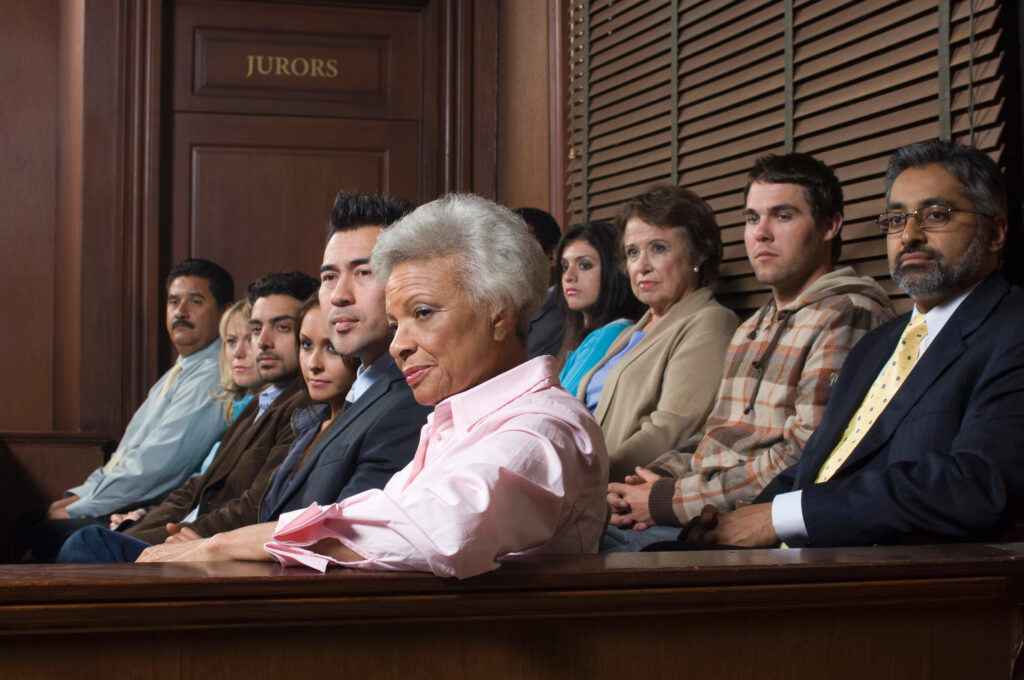

a women being interviewed for jury selection to detect jury bias

6 Ways To Prevent Jury Bias In Your Trial

Jury bias can lead to unfair verdicts based on personal beliefs rather than the facts. Even jurors who seem neutral may have unconscious biases that shape their decisions. Attorneys must take steps to identify and manage these biases before and during trial. Failing to do so can put a case at risk. Here’s how to prevent jury bias in your trial.

1. Conduct Thorough Jury Selection (Voir Dire)

Ask the Right Questions

Voir dire gives attorneys the chance to uncover jury bias before the trial begins. To do this effectively, ask case-specific questions that go beyond basic demographics. A juror’s stance on law enforcement, corporate responsibility, or medical malpractice can influence their judgment.

Encourage Honest Responses

Jurors may hesitate to admit personal biases, especially in a courtroom setting. Make voir dire feel like a conversation rather than an interrogation. When jurors feel comfortable, they’re more likely to share honest opinions.

Use Open-Ended Questions

Avoid questions that lead to yes-or-no answers. Instead of asking, “Can you be fair?” ask, “How do you define fairness in a case like this?” Responses to open-ended questions reveal more about a juror’s thinking and potential biases.

2. Use Social Media and Background Research

Identify Hidden Biases

Jurors may not always disclose personal views in court, but their online activity often tells a different story. Social media, blog posts, and public comments can reveal opinions on topics relevant to the case.

Check Public Posts and Affiliations

A juror’s memberships, shared articles, or past statements can provide clues about their viewpoints. If a case involves corporate negligence, an individual who frequently posts anti-corporate opinions might struggle to remain neutral.

Avoid Ethical Pitfalls

Attorneys should follow all legal and ethical guidelines when researching jurors online. Courts have rules about how attorneys and their teams can gather this information. Improper research methods can create legal issues and damage credibility.

3. Challenge Biased Jurors with Peremptory Strikes and Challenges for Cause

Know When to Use Challenges for Cause

If a juror openly admits bias, an attorney can request their removal. Courts grant these challenges when a juror’s views could prevent them from deciding the case based solely on evidence.

Use Peremptory Strikes Strategically

Attorneys can remove jurors without giving a reason, but there are limits. Striking jurors based on race, gender, or other protected categories is not allowed. Use peremptory strikes to eliminate jurors who show subtle signs of bias, even if they don’t openly admit it.

Watch for Patterns in Juror Behavior

Body language, tone of voice, and facial expressions can hint at bias. A juror who avoids eye contact when discussing certain topics may hold unspoken views that could affect their judgment.

4. Educate Jurors on Implicit Bias

Explain Bias Without Accusations

Many jurors don’t realize their own biases. Instead of confronting them directly, frame the discussion in a neutral way. Explain that bias is a natural human tendency and that the goal is to focus only on the evidence.

Use Expert Testimony if Necessary

Bias experts can help jurors recognize their own thought patterns. When a case involves sensitive topics, expert testimony on unconscious bias can help jurors make fairer decisions.

Provide Clear Jury Instructions

Judges should give jurors clear instructions about setting aside personal opinions. Written instructions and verbal reinforcement can help ensure that jurors stay focused on the facts.

5. Monitor Jury Behavior During Trial

Observe Juror Reactions

Jurors who appear disengaged or overly reactive to certain evidence may already have a leaning. Watch for changes in facial expressions, note-taking habits, and overall attentiveness.

Request Judicial Intervention if Needed

If a juror’s behavior suggests bias, attorneys can ask the judge to address it. In some cases, the court may issue a reminder about impartiality or, in serious situations, dismiss the juror.

Consider a Mistrial in Extreme Cases

If jury bias becomes obvious and affects the fairness of the trial, requesting a mistrial may be necessary. This is a last resort, but it can prevent an unjust outcome.

6. Leverage Jury Bias Analysis Tools like JuryScout

What is JuryScout?

JuryScout, a service from Magna Legal Services, helps attorneys uncover potential biases through digital research. By analyzing jurors’ public online activity, it provides a clearer picture of their views and potential leanings. Some biases are easy to hide in court but become clear online.

How It Helps Your Case

JuryScout finds patterns in jurors’ public statements, helping attorneys make better-informed jury selection decisions. Eliminating biased jurors from the start reduces the risk of unfair decisions. JuryScout provides attorneys with valuable insights before seating a jury, making it easier to ensure a fair trial.

Take Control of Jury Bias Before It Hurts Your Case

Jury bias can shape verdicts before the first witness even takes the stand. Waiting until the trial begins to address it is too late. Magna Legal Services offers the tools and expertise to help attorneys identify, challenge, and eliminate biased jurors. Contact us today to learn how we can strengthen your case by ensuring a fair and impartial jury.

Planning, teamwork and documents with business people in office for legislation, privacy policy and lawyer. best litigation consulting firm

How the Best Litigation Consulting Firms Strengthen Legal Strategies

Legal teams handle high-stakes cases where every decision can shape the outcome. The best litigation consulting firms provide the expertise, technology, and resources needed to build stronger arguments, analyze juror behavior, and present evidence effectively. Winning a case takes more than legal knowledge. It requires strategy, preparation, and the right support. Litigation consultants help attorneys refine their approach, anticipate challenges, and present compelling cases that resonate with judges and juries.

Find The Right Voice with Expert Witness Consulting

Strong testimony can make or break a case. The best litigation consulting firms connect legal teams with highly qualified expert witnesses in medicine, finance, engineering, and other specialized fields. These experts provide clarity on complex issues, reinforcing arguments with credible, fact-based testimony. Matching an expert to a case is only the first step. Consultants prepare witnesses to ensure their testimony is clear, confident, and aligned with case strategy. Opposing attorneys will look for inconsistencies, but a well-prepared expert can hold up under cross-examination.

Understand the People Who Decide the Case with Jury Consulting

A well-argued case means little if the jury doesn’t understand or trust the argument. Jury consultants help attorneys analyze juror behavior, conduct mock trials, and refine their approach based on real feedback. Mock trials and focus groups provide valuable data on how jurors may react to different arguments, evidence, and witness testimony. This process helps legal teams adjust their strategies before stepping into the courtroom. Jury selection services also play a critical role, identifying individuals who may hold biases or lean toward one side of the case.

During trial, real-time feedback from consultants allows attorneys to make adjustments based on juror reactions. This data-driven approach helps lawyers connect with the people who will ultimately decide the case.

Get Accurate Court Reporting and Record Retrieval

Verbatim transcripts and accurate records ensure attorneys have reliable information for depositions, motions, and trial preparation. The best litigation consulting firms offer real-time court reporting, giving legal teams instant access to transcripts for review and analysis. Fast and secure record retrieval is just as important. Medical records, business documents, and other key evidence must be obtained quickly to meet tight deadlines. Litigation support teams handle this process, ensuring attorneys receive the documents they need without unnecessary delays.

Turn Complex Information into Clear Arguments with Trial Graphics and Presentation Support

Jurors absorb information better when they can see it. Litigation consulting firms design trial graphics, animations, and demonstrative exhibits that help simplify complex legal and technical issues. A well-crafted timeline, medical illustration, or financial chart can clarify a point more effectively than pages of written testimony. Consultants work with attorneys to develop visuals that support key arguments and keep jurors engaged.

Beyond graphics, litigation support teams provide full trial presentation services. From organizing exhibits to managing courtroom technology, these professionals ensure attorneys can focus on arguing the case rather than troubleshooting equipment.

Prevent a Language Barrier with Legal Translation and Interpretation

International cases or those involving non-English speakers require precise translation services. The best litigation consulting firms provide certified legal translators who ensure documents are accurately translated without losing critical details. Courtroom interpreters help witnesses communicate clearly during depositions and trials. Misinterpretations can lead to misunderstandings that weaken a case. Professional interpreters ensure testimony is accurately conveyed, maintaining the integrity of the legal process.

Why Magna Legal Services Stands Out

Magna Legal Services provides expert litigation consulting across multiple areas, helping legal teams build stronger cases. The company’s reputation speaks for itself—ALM Publications readers selected Magna Legal as the “Best of 2021” in 67 categories. This recognition reflects its excellence in court reporting, jury consulting, record retrieval, and more.

Attorneys trust Magna for its expertise, reliability, and commitment to high-quality litigation support. Whether preparing a witness, analyzing jury behavior, or managing courtroom presentations, Magna delivers the services needed to strengthen legal strategies.

Take Your Legal Strategy to the Next Level

Winning cases requires more than legal expertise—it demands strategic preparation, reliable resources, and the right litigation support. The best litigation consulting firms help attorneys refine their arguments, anticipate challenges, and present cases with confidence.

Magna Legal Services provides the tools and expertise that give legal teams an advantage. Don’t leave your case to chance. Work with a trusted litigation consulting firm that delivers results. Contact Magna today to see how expert litigation support can strengthen your next case.

empty jury Box in a new court room

What is a Mock Jury?

Attorneys don’t like surprises in the courtroom. A strong legal strategy can fall apart if a jury reacts in an unexpected way. Mock juries are a valuable tool that can prevent this. By testing legal arguments with a group of people who mimic real jurors, attorneys can see how their case might play out before stepping into the courtroom.

How a Mock Jury Works

A mock jury is a test run of a real jury trial. Attorneys present their case to a group of individuals who represent the type of jurors likely to be selected for trial. These participants hear evidence, discuss the case, and deliver feedback. Unlike actual jurors, mock jurors do not decide a real case. Their job is to provide reactions, opinions, and decision-making patterns that attorneys can analyze. Their responses help lawyers refine arguments, strengthen witness testimony, and anticipate challenges before the case reaches a real courtroom.

Selecting the Right Participants

Mock jurors should resemble the people who might serve on a real jury. Attorneys and consultants select participants based on demographics, experiences, and other factors that match the trial’s venue. This ensures feedback comes from individuals similar to those who will ultimately decide the case.

Presenting the Case

Legal teams present key elements of the case, including opening statements, arguments, evidence, and witness testimony. Some presentations involve live interactions, while others use recorded video. Attorneys focus on delivering their case the way they would in court.

Deliberation and Feedback

After hearing the case, mock jurors discuss their opinions just like a real jury. They debate evidence, evaluate witness credibility, and work toward a verdict. Their discussions provide critical feedback on how an actual jury might think and decide. Attorneys use this information to adjust their strategy before trial.

The Benefits of Using a Mock Jury

Testing Arguments Before Trial

Legal teams don’t always know how jurors will react to certain arguments. A mock jury helps uncover which points are persuasive and which fall flat. If an argument confuses jurors or doesn’t land as intended, attorneys can adjust their approach.

Identifying Weaknesses in a Case

Mock jurors often raise concerns attorneys hadn’t considered. They might find a witness untrustworthy, question a key piece of evidence, or misinterpret a legal point. Attorneys can use this feedback to strengthen weaker areas of their case.

Understanding Jury Perception

Jurors bring their own experiences, beliefs, and biases into the courtroom. A mock jury helps attorneys see how different people interpret the case. This information allows them to refine their arguments to be clearer and more compelling.

Expert Support for Mock Juries and Jury Research from Magna Legal Services

Legal success depends on understanding how jurors think. Magna Legal Services provides industry-leading jury research, offering attorneys the insights they need to refine their trial strategy.

Mock Juries & Jury Focus Groups

Magna Legal organizes realistic mock trials and jury focus groups to test legal strategies with JuryConfirm. Over the past decade, Magna Legal has conducted more online studies than anyone in the world – by far. We have run over 2,000 online jury research exercises, working with over 25,000 mock jurors. Attorneys get direct feedback from potential jurors, helping them anticipate challenges before trial.

Jury Consulting & Trial Strategy

Experienced jury consultants analyze mock jury results, providing attorneys with data-driven recommendations. This helps legal teams adjust their approach, from witness preparation to jury selection.

Jury Research with JuryEvaluator

Magna Legal takes jury research a step further with JuryEvaluator. This advanced service uses nationwide jury panels and statistical analysis to predict case outcomes. Attorneys gain a clear understanding of how different types of jurors might respond to their case.

Refine Your Legal Strategy with Magna Legal Services

Success in the courtroom starts long before trial. A mock jury gives attorneys the advantage of knowing how real jurors might think, react, and decide. Magna Legal Services provides the tools, research, and expert analysis to help legal teams build stronger cases. Don’t leave jury decisions to chance. Contact Magna to get the most effective trial preparation possible.

male lawyer standing in front of jury during opening statement

6 Opening Statement Examples and Tips

An opening statement sets the stage for a trial, shaping how a jury or judge views the case. It’s your first opportunity to make an impression and outline your case’s narrative. Understanding the art of crafting a persuasive opening statement can dramatically influence your case’s success.

Why Opening Statements Matter in Court

An opening statement gives you a chance to introduce the facts of the case and outline your argument. It’s not about presenting evidence or making legal arguments just yet—it’s about painting a picture of what the jury can expect.

A strong opening statement helps:

  • Establish credibility with the jury.
  • Frame your case in a way that aligns with your goals.
  • Simplify complex legal or factual issues.

Failing to deliver an effective opening statement risks losing the jury’s attention or allowing the opposition to dominate the narrative.

How to Structure an Effective Opening Statement

A strong opening statement does more than outline your case—it provides the jury with a clear lens through which to view the evidence and arguments they’ll encounter. By crafting a thoughtful and organized statement, you can build credibility, engage your audience, and set the stage for the narrative you want to unfold during the trial. Here are the basic elements you should include.

Introduction

Start by addressing the jury or judge warmly and professionally. Briefly introduce yourself, your client, and the purpose of the trial. Avoid legal jargon at this stage; focus on connecting with your audience.

Tell the Story

After introductions, transition into your case’s story. Highlight the key facts, introduce important parties, and set the tone. Use clear, relatable language that resonates with the jury.

Outline the Evidence

While you won’t be presenting evidence in detail, give the jury a roadmap of what to expect. Explain how the evidence will prove your case and align with the story you’ve introduced.

Conclude with Purpose

End your statement by reinforcing the key takeaway you want the jury to remember. Tie it back to the case’s main theme and set up your closing argument.

Tips for Crafting Persuasive Opening Statements

Creating a persuasive opening statement is as much about preparation as it is about delivery. This section provides actionable advice to help you refine your statement and connect effectively with your jury or judge.

Know Your Audience

Diverse group of jurors sitting in jury box of a courtroom during opening statements

The jury is the most critical audience for your opening statement. Speak to their common sense and experiences while staying grounded in facts. Avoid overly technical language that could alienate them.

Start Strong

Begin with a compelling first sentence that grabs attention. This might be a key fact, an emotional appeal, or a simple, direct statement of your case’s theme.

Focus on Clarity

Simplify your case into a theme that the jury can follow. If you’re defending a client in a personal injury case, for example, the theme might be “responsibility” or “fairness.”

Use Plain Language

A conversational tone keeps the jury engaged and makes your message memorable. Avoid being overly theatrical or dramatic; focus on sincerity and confidence.

Maintain Eye Contact

When addressing the jury, look at them directly. This fosters trust and shows you’re confident in your case. Avoid reading word-for-word from notes, as it can come across as rehearsed or disconnected.

Stay Organized

Your opening statement should flow logically. If you jump around or include unnecessary details, you risk losing the jury’s focus. Stick to the main points and expand on them as the trial progresses.

Anticipate Opposition

Be mindful of what the opposing side might argue and address it subtly in your statement. This shows confidence and preparedness without turning your statement into an argument.

Practice Delivery

Rehearse your opening statement multiple times to ensure smooth delivery. Practice in front of colleagues or mentors who can provide constructive feedback.

6 Opening Statement Examples

male lawyer standing up in front of court room giving his opening statements

The following examples are meant to serve as inspiration and a foundation for creating your own opening statements. They are not one-size-fits-all solutions but rather starting points to help you craft a statement that aligns with the specifics of your case and resonates with your audience.

Example 1: Personal Injury Case

“Ladies and gentlemen of the jury, this case is about accountability. On June 10, my client, John Doe, was driving home from work when his life changed forever. The defendant, distracted and reckless, ran a red light, crashing into John’s car and leaving him with permanent injuries. Over the next few days, you will hear testimony from doctors, eyewitnesses, and even the defendant themselves. By the end of this trial, you will see that justice demands holding the defendant accountable for their actions.”

Example 2: Criminal Defense Case

“The prosecution wants you to believe my client committed this crime. But the evidence will tell a very different story. You’ll hear from experts, see surveillance footage, and learn about witnesses who contradict the prosecution’s claims. This case is not about assumptions or hasty conclusions; it’s about facts—and the facts will show that my client is innocent.”

Example 3: Employment Discrimination Case

“This case is about fairness in the workplace. My client, Sarah, worked tirelessly for her employer, only to be passed over for promotion time and time again because of her gender. Over the course of this trial, you will see evidence of discriminatory practices and hear testimony from coworkers who witnessed this unfair treatment. At the end, we believe you will agree that everyone deserves a workplace where merit, not prejudice, determines opportunity.”

Example 4: Business Litigation

“This is a case of broken promises. The defendant entered into a contract with my client, knowing they would not fulfill their obligations. You’ll see emails, signed agreements, and financial records that make it clear the defendant breached the contract, causing significant harm to my client’s business. At the end of this trial, we’ll ask you to ensure those promises mean something.”

Example 5: Medical Malpractice Case

“Ladies and gentlemen of the jury, imagine trusting a professional with your life only to be let down by their negligence. My client sought medical care to address a routine concern, but the outcome was anything but routine. You will hear from experts and see evidence that demonstrates the preventable mistakes that caused my client unnecessary pain and suffering. By the end of this trial, justice will demand accountability for these actions.”

Example 6: Property Dispute Case

“This case is about protecting what’s rightfully yours. My client, a long-time homeowner, has faced constant encroachments on their property by the defendant. Despite repeated efforts to resolve the issue amicably, the defendant has ignored legal boundaries and disregarded my client’s rights. Throughout this trial, you will see clear evidence of these violations and hear testimony proving that upholding property rights is essential to justice.”

The Role of Storytelling in Opening Statements

People connect with stories. Instead of presenting a dry recitation of facts, weave those facts into a narrative. Use real-life examples or anecdotes to make the case relatable. A well-told story helps jurors see your client’s side clearly and sympathetically. For instance, in a wrongful death case, you might highlight the human impact:
“Mary was a loving mother of two, a devoted nurse, and a cornerstone of her community. Her death wasn’t just a loss for her family but for everyone she touched.”

Common Mistakes to Avoid

  • Overloading with Information: Too much detail can overwhelm jurors. Stick to the essentials and save the deeper dive for later stages of the trial.
  • Being Overly Aggressive: Avoid attacking the opposing side too strongly in your opening statement. You want to appear reasonable and focused on facts, not combative.
  • Forgetting the Theme: Every effective opening statement has a theme. Stay consistent with it throughout to ensure the jury remembers your message.

Contact Magna Legal for Litigation Support

An impactful opening statement can be the key to a successful trial, but it takes preparation and skill to craft one that resonates. At Magna Legal Services, we help legal professionals sharpen their strategies through services like mock trials, jury consultations, and more. Let us support you in delivering powerful, persuasive arguments that give your case the edge. Contact us today to learn how we can assist with all your litigation needs.

Request Rates & Info

stack of medical records sitting on a desk after record retrieval in lawyers office

Why Medical Record Retrieval Services Are Worth It

Law firms often juggle multiple priorities, but accessing medical records quickly and efficiently is essential for case preparation. Requesting, organizing, and managing these records can be time-consuming and tedious. Medical record retrieval services offer solutions that save time, reduce stress, and ensure accuracy. Here’s why these services are worth the investment.

Saving Time and Streamlining Workflows

Law firms rely on quick access to medical records to build strong cases. Handling record requests in-house can lead to delays caused by miscommunications, incomplete forms, or follow-up calls. A medical record retrieval service eliminates these inefficiencies. Professionals who specialize in medical record retrieval understand how to navigate complex healthcare systems. They know how to request, follow up, and securely deliver records in the shortest possible time. For law firms managing high caseloads, this streamlined process frees staff to focus on legal strategy instead of administrative tasks. With the medical record retrieval services, your team won’t lose valuable time chasing down paperwork. Instead, they’ll have reliable access to accurate records whenever they’re needed.

Ensuring Accuracy and Compliance

Retrieving medical records involves more than just a simple request. Records must comply with strict privacy laws like HIPAA, and small mistakes can result in delays or legal consequences. Medical record retrieval services specialize in compliance and ensure that every request adheres to regulations. Accuracy is equally critical. Missing information or poorly organized files can harm case outcomes. Record retrieval professionals carefully review all records to ensure completeness. They also organize files so attorneys can easily locate vital information without sifting through disorganized data.

Cost-Effective Solutions for Law Firms

Some law firms worry that outsourcing medical record retrieval will increase expenses. However, managing retrieval internally often costs more in the long run. Staff members spend hours on phone calls, emails, and document tracking. That time could be better spent on billable activities. Outsourcing to a professional service reduces these hidden costs. By freeing your team to focus on their core responsibilities, you’ll improve efficiency and profitability. Additionally, the fixed costs of a retrieval service are predictable, helping firms better manage their budgets.

Improving Case Outcomes with Organized Records

Well-organized medical records play a significant role in winning cases. Attorneys must have access to detailed, structured information to build compelling arguments. Manually organizing records takes time and increases the risk of errors. A retrieval service delivers records in a user-friendly format, often integrating them with case management software. This level of organization empowers legal teams to quickly identify critical facts, strengthen arguments, and anticipate opposing counsel’s strategies.

Why Magna Legal Services Is the Right Choice

Magna Legal Services provides unparalleled expertise in medical record retrieval. Our team handles every step of the process, from submitting requests to organizing records for easy review. With deep experience in the legal field, we know exactly what law firms need. Our services prioritize speed, accuracy, and compliance. Whether your firm handles personal injury, medical malpractice, or worker’s compensation cases, we tailor our approach to meet your needs. We understand the pressure attorneys face, and we work tirelessly to ensure you have the records you need when you need them.

Contact Magna Legal for Medical Record Retrieval

Don’t let medical record retrieval slow your firm down. Partner with Magna Legal Services and experience the benefits of working with industry leaders. Contact us today to learn how we can simplify your record retrieval needs and help your team succeed.

Our experts are ready to assist—let us show you how easy it can be. Call or visit our website now to get started.

close up on a person's hands using a laptop and referencing a notebook on the table working for a court reporting company

What To Look For In the Best Court Reporting Company

Selecting the right court reporting company is crucial for the success of your legal proceedings. The best court reporting companies provide accurate, timely, and professional services that meet the specific needs of your case. Here’s what to consider when making your choice.

Experienced and Certified Court Reporters

A court reporting company should have a proven track record in the legal industry. Experienced companies employ court reporters who are certified and skilled in transcribing complex legal jargon accurately. Look for firms that have handled a variety of case types, from personal injury lawsuits to intellectual property disputes. Their expertise should also include familiarity with specific court rules and procedures in your jurisdiction. Choose a company that invests in ongoing training for its court reporters. Legal terminology evolves, and reporters must stay current with industry standards. Experienced professionals help minimize errors and ensure transcripts are precise and reliable.

Advanced Technology Integration

The best court reporting companies integrate cutting-edge technology into their services. Real-time reporting, for instance, allows attorneys to view live transcripts during a deposition or hearing. This tool can be invaluable for strategizing on the spot. Check whether the company offers remote deposition services. Virtual options ensure that everyone can participate without needing to be in the same room. Additionally, look for companies that provide easy access to digital transcripts, exhibits, and other case materials through secure online portals. Technology also extends to the recording equipment used during proceedings. High-quality audio and video recording ensure nothing gets missed, even in complex or fast-paced cases.

Comprehensive Legal Support Services

Beyond court reporting, the best companies offer a suite of legal support services, including:

  • Videography Services: High-quality video recordings of depositions and other proceedings.
  • Transcription Services: Accurate and timely transcription of legal proceedings.
  • Interpretation and Translation: Services to accommodate non-English speakers or those requiring sign language.

A company that provides comprehensive services can be a one-stop solution for your legal support needs.

Nationwide Availability and Scheduling Flexibility

If your case spans multiple jurisdictions, you’ll need a court reporting company with nationwide reach. Companies with a broad network of skilled reporters ensure you receive consistent service no matter where your case takes you. This is especially important for large-scale litigation or cases involving multiple depositions across state lines. Scalability is another critical factor. Can the company handle a single deposition as effectively as they manage a multi-day trial? The best court reporting companies are flexible enough to adapt to your needs, whether the project is small or large.

Commitment to Client Satisfaction

Good customer service sets the best court reporting companies apart. From scheduling to delivery, the company should make the process seamless and stress-free. Look for firms with dedicated account managers who serve as your main point of contact throughout the engagement. Clear communication is essential. A reliable court reporting company will keep you informed every step of the way, addressing any concerns promptly and professionally. Exceptional support ensures that your focus remains on your case rather than logistical details.

Why Magna Legal Services Stands Out

Magna Legal Services exemplifies the qualities of the best court reporting companies. They offer nationwide court reporting with 24-hour scheduling, ensuring reliable service at competitive rates. Their team is comprised of experienced and certified court reporters skilled in real-time reporting and familiar with complex legal terminology.

Magna integrates advanced technology into their services, providing virtual deposition platforms that allow attorneys to depose witnesses remotely from anywhere in the world. Their platform, Magna LitigationVision (MLV), offers real-time access to depositions, mediations, arbitrations, hearings, and meetings, enhancing flexibility and efficiency in legal proceedings.

In addition to court reporting, Magna offers a comprehensive suite of legal support services, including digital videography, transcript synchronization, and interpretation/translation services. Their commitment to client satisfaction is evident through their dedicated account management teams, custom production protocols, and a focus on delivering high-quality, reliable services tailored to client needs.

Contact Magna Legal Services for Your Court Reporting Needs

Choosing the right court reporting company can significantly impact your legal proceedings. Magna Legal Services combines experience, advanced technology, comprehensive services, and a commitment to client satisfaction, making them a top choice for legal professionals. Reach out to Magna today to discuss how their services can support your case effectively.

woman investigator at a crime scene taking photos of evidence to use in trial exhibit

What Is Exhibit Evidence? | A Key Element in Trials

Exhibit evidence plays a central role in trials by offering tangible proof to support a case. It helps judges and juries understand the facts more clearly, connecting legal arguments to real-world objects, documents, or data. But what exactly is exhibit evidence, and how is it used in court?

What Is Exhibit Evidence?

Exhibit evidence refers to physical or digital items presented in court to prove or disprove an argument. These items can range from documents and photographs to physical objects or even electronic data. Each exhibit must directly relate to the case and follow strict rules of admissibility.

Courts use exhibit evidence to establish facts and provide a visual or physical representation of key arguments. This type of evidence is essential in building a persuasive case because it allows the judge and jury to evaluate material proof rather than relying solely on witness testimony or verbal arguments.

Types of Exhibit Evidence in Court

Exhibit evidence can take many forms, but it generally falls into these main categories:

Physical Evidence

Physical evidence includes tangible objects that can be seen and touched. Examples include weapons, clothing, tools, or any item directly involved in the events of the case. For example, in a personal injury case, a damaged vehicle or defective product might serve as physical evidence.

Documentary Evidence

Documents, contracts, emails, receipts, and other written records fall under this category. These items help demonstrate agreements, communications, or financial transactions relevant to the case.

Photographic or Video Evidence

Images and videos provide a visual representation of events. A surveillance video, for instance, might show the sequence of actions leading to an incident.

Digital Evidence

This includes data from electronic devices, such as text messages, emails, social media posts, or metadata. As technology advances, digital evidence is increasingly common in both civil and criminal cases.

Demonstrative Evidence

Although not a direct piece of the case, demonstrative evidence explains or illustrates other evidence. Examples include charts, models, or diagrams created to help clarify complex information.

How to Present Exhibit Evidence in Court

Proper presentation of exhibit evidence involves several critical steps:

Obtaining Admissibility

Before presenting exhibit evidence, you must ensure it meets legal standards. The evidence must be relevant, authentic, and free from undue prejudice. Attorneys often use witnesses or experts to authenticate items.

Organizing Exhibits

Exhibits must be carefully organized for easy reference during trial. Labeling each piece with a unique identifier, such as “Exhibit A” or “Exhibit 1,” helps keep things clear.

Introducing the Evidence

When presenting an exhibit, the attorney must formally introduce it during the trial. This often involves describing the item, establishing its relevance, and asking the court to admit it as evidence.

Court Exhibit Handling Procedures

Courts have strict protocols for handling exhibit evidence. These rules ensure the evidence remains unaltered and its chain of custody is intact.

  • Securing Evidence: Evidence must be stored in a secure location to prevent tampering or loss.
  • Chain of Custody: A record of everyone who handles the evidence must be maintained. This prevents claims of manipulation.
  • Marking and Tracking: Each piece of evidence receives a unique identifier to ensure it’s tracked throughout the trial.

Failure to follow these procedures can lead to evidence being excluded, which may weaken a case.

Best Practices for Exhibit Evidence Presentation

Effectively presenting exhibit evidence requires more than simply following rules. It involves strategic planning and clear communication.

  • Keep It Simple: Focus on exhibits that directly support your case. Avoid overloading the court with unnecessary evidence.
  • Use Visual Aids: Charts, graphs, or other demonstrative tools can make evidence more understandable, especially in cases involving technical or detailed information.
  • Practice Presentation: Rehearse how you’ll introduce and explain each exhibit. Clear, concise delivery is key to maintaining credibility.

Physical vs. Digital Exhibit Evidence

As technology evolves, courts are seeing a shift from physical to digital evidence. Both types have distinct advantages and challenges.

Physical Evidence

Physical evidence has a tangible presence, making it easier for jurors to relate to and assess. However, storing and transporting physical items can be logistically challenging, especially for large or delicate objects.

Digital Evidence

Digital evidence is often easier to collect and share. It’s especially valuable in cases involving electronic communications or online activity. However, authenticity and privacy concerns can complicate its use. Courts require specific steps to prove that digital evidence hasn’t been altered.

Exhibit Evidence Matters in Every Trial

Exhibit evidence serves as a cornerstone of any trial. Whether it’s a physical object, a document, or digital data, this type of evidence helps the court connect legal arguments to concrete proof. Understanding the different types of exhibit evidence and the rules for presenting it can make a significant difference in the outcome of a case. By staying organized, following court procedures, and choosing the right tools for the job, attorneys and litigants can effectively use exhibit evidence to strengthen their arguments.

How Magna Legal Can Help Gather Exhibit Evidence

Magna Legal offers comprehensive investigative services to support your legal needs. By conducting detailed asset investigations, medical canvassing, and premium social media investigations, Magna helps uncover critical information that can be presented as powerful exhibit evidence. Whether it’s verifying key details through surveillance or locating essential witnesses through skip tracing, these services ensure your evidence is not only credible but also compelling. With Magna’s support, attorneys can build stronger cases by integrating well-sourced and verified exhibit evidence into their arguments. Contact us today for a free case consultation.

Young professional wearing headphones working on laptop in modern office environment while learning how to become a legal transcriptionist

How to Become a Legal Transcriptionist: Career Path Explained

Legal transcription is a growing field that offers flexibility, stability, and the opportunity to work in the legal industry without needing a law degree. If you’re interested in how to become a legal transcriptionist, this guide will break it down step by step.

What Does a Legal Transcriptionist Do?

Legal transcriptionists convert audio recordings from legal proceedings, such as depositions, court hearings, and client meetings, into written documents. These documents must be accurate, formatted correctly, and delivered promptly. The role requires a mix of listening skills, legal knowledge, and the ability to type quickly and accurately.

Essential Skills for Legal Transcription

  • Typing Proficiency: A high words-per-minute (WPM) rate is critical. Most professionals average 65-75 WPM or higher.
  • Attention to Detail: Legal transcription demands flawless accuracy. Even minor errors can change the meaning of a legal document.
  • Understanding Legal Terminology: Familiarity with legal terms and procedures is crucial for transcribing correctly. This knowledge helps identify jargon and avoid misunderstandings.

Steps to Become a Legal Transcriptionist

If you’re ready to begin, here’s how to become a legal transcriptionist in a few clear steps:

1. Research the Role and Requirements

Before beginning, it’s important to understand what the job entails. Legal transcriptionists often work as independent contractors or employees of legal support companies. You’ll need reliable computer equipment, transcription software, and a quiet workspace. Some employers may also require prior transcription experience or training in legal terminology.

2. Gain the Necessary Education

While a college degree isn’t mandatory, completing a transcription certification program can give you a competitive edge. These programs cover legal vocabulary, formatting, and transcription techniques. Many online courses are affordable and can be completed in a few months.

If you prefer a more formal approach, consider legal studies courses offered by community colleges. These classes often focus on the basics of the legal system, which can help build your understanding of court processes and legal writing.

3. Build Typing and Listening Skills

Male hands typing on laptop keyboard. Man working at home office and using lap top. Close up. of legal transcriptionist working

Typing speed and accuracy are non-negotiable in this profession. Use online tools and games to improve your WPM rate. At the same time, practice listening to audio files and transcribing them. Start with clear audio and progress to files with background noise or multiple speakers, which mirrors real-life scenarios.

4. Get Familiar with Transcription Software

Professional transcription requires more than a word processor. Popular tools like Express Scribe, Dragon NaturallySpeaking, and Otter.ai streamline the transcription process. Learn to use these tools effectively, as they can significantly increase your productivity. However, legal transcription requires human proofreading and attention to ensure accuracy, as even minor errors can significantly impact the meaning of legal documents.

5. Understand Legal Formatting Standards

Legal transcription documents follow strict formatting guidelines. For example, court transcripts often use numbered lines and specific headers. Study sample legal documents to familiarize yourself with these standards.

6. Apply for Jobs or Start Freelancing

Once you’ve developed your skills, it’s time to find work. Search for job opportunities with legal transcription companies, law firms, or platforms like Rev, TranscribeMe, or LegalProofs. Create a professional profile highlighting your skills, training, and experience.

7. Continue Learning and Advancing

The legal field evolves constantly, and staying informed will help you stay competitive. Attend webinars, read legal updates, and consider joining professional associations for transcriptionists. These steps can help you access networking opportunities and new clients.

Why Certification Matters

Although certification isn’t always required, earning a credential can set you apart. Certifications such as those offered by organizations like the American Association of Electronic Reporters and Transcribers (AAERT) or NCRA (National Court Reporters Association) can help demonstrate your expertise and commitment to the profession. Certifications demonstrate your commitment to the profession and reassure employers of your expertise.

Tools and Technology for Legal Transcription

Legal transcriptionist wearing a headset while working diligently on a laptop at a modern office desk. Professional work environment.

Investing in the right tools can make your work more efficient and enjoyable. A quality headset ensures you hear recordings clearly, while a foot pedal allows hands-free control of audio playback. Choose a reliable computer with enough processing power to handle transcription software and large files.

Voice recognition software is another valuable tool. It can transcribe basic speech, reducing your workload. However, you’ll still need to proofread and edit the text for accuracy.

Common Challenges and How to Handle Them

Legal transcription isn’t without its difficulties. Audio files may include poor sound quality, overlapping voices, or heavy accents. Developing strategies to address these challenges can make the job less stressful:

  • Invest in Good Equipment: A noise-canceling headset can make a world of difference when audio quality is subpar.
  • Request Clarifications: When possible, ask clients for additional context or a list of key names and terms before starting the project.
  • Keep Learning: Exposure to different accents and dialects through practice will improve your ability to transcribe difficult recordings.

Become a Legal Transcriptionist

Legal transcription offers a variety of perks, especially for those seeking a flexible career. You can work remotely, set your own hours, and enjoy a steady demand for your services. Whether you’re entering the workforce or looking for a career change, transcription can provide stability and growth opportunities.

By following these steps and honing your skills, you’ll know exactly how to become a legal transcriptionist and build a successful career in this rewarding field.

If you’re ready to get started or have questions, contact Magna Legal today to learn more about opportunities in legal transcription.

Young woman judge in courtroom legal transcription documents while talking on phone, surrounded by legal books and scales of justice on desk.

What Is Legal Transcription? | A Look into Courtroom Records

Legal transcription is the process of converting spoken words in legal settings into accurate, written records. These documents play a crucial role in the legal system by preserving testimony, depositions, and courtroom proceedings in an easy-to-reference format. If you’ve ever wondered how legal professionals access detailed records of what happens during a trial or deposition, legal transcription is the answer.

What Is Legal Transcription?

Legal transcription involves listening to audio or video recordings from legal events and typing them into a precise, text-based document. Transcriptionists ensure that every word of the dialogue is captured, maintaining accuracy and clarity.

Professionals often rely on recordings from depositions, trials, arbitrations, and client meetings. Transcriptions help attorneys prepare cases, judges review trial proceedings, and legal teams ensure compliance with procedural requirements. Accuracy is non-negotiable because even minor errors can lead to misunderstandings or legal disputes.

The Key Elements of Legal Transcription

To understand what legal transcription involves, it’s helpful to break it down into its core elements:

  • Audio Clarity: Clear recordings are vital for accurate transcription. Background noise, overlapping speech, or low-quality recordings can make the process more challenging.
  • Legal Terminology: Transcriptionists must have a strong grasp of legal terms and phrases to ensure the final document is correct. Misinterpreting these terms can cause errors that impact a case.
  • Attention to Detail: Legal transcriptionists must catch every word, whether it’s spoken in a calm tone or a heated exchange. Every detail matters in legal settings.

Why Is Legal Transcription Important?

Legal transcription is essential because it creates a reliable written record of spoken proceedings. Courts, attorneys, and law enforcement agencies depend on these records for accuracy, accountability, and clarity.

Without written transcripts, legal teams would have to rely solely on memory or incomplete notes. Transcripts also make it easier to reference specific portions of a proceeding, saving time and ensuring that everyone involved has access to the same information.

Supporting the Legal System

Legal transcription supports justice by providing:

  1. Transparency: Written records offer a clear and unbiased account of events, ensuring fair evaluations in trials and legal arguments.
  2. Accessibility: Transcripts make complex legal discussions easier to review and understand for everyone, including clients, jurors, and legal teams.
  3. Efficiency: Attorneys can quickly find critical information in transcripts, streamlining case preparation and reducing errors.

Types of Legal Transcription

There are several types of legal transcription, each tailored to specific needs in the legal system. Below are a few examples:

Courtroom Transcription

Courtroom transcription focuses on creating an official record of trials, hearings, and other legal proceedings. These transcripts are vital for appeals, legal reviews, and public record purposes.

Deposition Transcription

Depositions involve interviewing witnesses under oath outside the courtroom. Legal transcription ensures these interviews are captured in full, helping attorneys identify key details or contradictions in testimony.

Dictation Transcription

Attorneys often record memos, case notes, or other documents as audio files. Legal transcriptionists turn these recordings into polished, professional documents that save time and improve organization.

How Does Legal Transcription Work?

Legal transcription begins with a recording. This might come from a digital court recording system, a lawyer’s dictation, or a video conference. Skilled transcriptionists use specialized software and equipment to listen to the audio and type the words into a structured document.

Tools Used by Transcriptionists

  • Headsets and Foot Pedals: These tools allow transcriptionists to control playback speed and improve focus.
  • Transcription Software: Advanced software helps manage audio files, adjust sound quality, and format documents.
  • Legal Dictionaries: These resources ensure accuracy when transcribing technical legal language.

After creating the initial document, the transcriptionist carefully reviews and edits it for any errors or omissions. This ensures that the final transcript meets the highest standards of accuracy.

Who Uses Legal Transcriptions?

Legal transcription serves a wide range of professionals in the legal field:

  • Attorneys: Transcripts provide a detailed resource for case preparation, cross-examinations, and trial strategies.
  • Judges: Having a written record of proceedings helps judges make informed decisions during and after trials.
  • Clients: Legal transcription helps ensure fairness and transparency, giving clients confidence in the legal process.
  • Law Enforcement: Investigators and police officers use transcripts from interrogations and depositions as part of their cases.

The Skills of a Legal Transcriptionist

Legal transcriptionists need more than fast typing skills. They must have a sharp ear, knowledge of legal procedures, and the ability to work under tight deadlines. Many also undergo rigorous training and certifications to specialize in this field.

Accuracy Above All

Accuracy isn’t just a preference in legal transcription—it’s mandatory. Transcription errors can lead to confusion, misinterpretation, or even legal consequences. This is why legal professionals often rely on trusted transcription services rather than handling this task internally.

Get Professional Legal Transcription Services

Professional legal transcription services ensure high-quality transcripts that meet the exacting standards of the legal system. These services use skilled transcriptionists with expertise in legal terminology and procedures, as well as secure systems to protect sensitive data.

Working with a professional service saves time, reduces errors, and ensures the documents meet legal standards. Whether you’re a lawyer, judge, or law enforcement officer, professional transcription services provide a level of reliability that’s hard to match.

For professional assistance with your legal transcription needs, contact Magna Legal today. Our team is dedicated to providing accurate and reliable transcription services to support your legal requirements.

Attorney meeting client in office to discuss witness coaching

Is Witness Coaching Illegal? | What Attorneys Should Know

Witness preparation is a key part of building a strong case. However, the line between ethical preparation and illegal coaching can sometimes blur, leading to serious legal and ethical questions. So, is coaching a witness illegal? Let’s break it down.

What Is Witness Coaching?

Witness coaching happens when an attorney or legal professional influences a witness to alter or fabricate their testimony. This goes beyond teaching a witness how to present their honest recollection effectively and veers into territory that can mislead the court. Coaching a witness to lie or omit key facts is unethical and, in many cases, outright illegal.

Ethical witness preparation focuses on familiarizing the witness with the courtroom process and helping them articulate their truthful recollections clearly. For example, reminding a witness to answer only what is asked or explaining how to respond calmly during cross-examination is perfectly acceptable. However, suggesting that a witness change their testimony to align with a specific narrative crosses the line.

Legal and Ethical Boundaries

Attorneys have a duty to advocate zealously for their clients while maintaining ethical standards. Witness coaching becomes illegal when it involves any form of perjury, subornation of perjury, or tampering with a witness. These are serious offenses that carry legal consequences, including fines, disbarment, and even imprisonment. It is important to note that the rules for witness coaching are different for each jurisdiction.

Key Terms to Understand:

  • Perjury: Encouraging or instructing a witness to lie under oath is a criminal act. It can undermine the integrity of the entire legal process.
  • Subornation of Perjury: If an attorney knowingly persuades a witness to commit perjury, this constitutes a separate criminal offense.
  • Witness Tampering: Any effort to influence a witness to withhold truthful testimony, lie, or provide false evidence is strictly prohibited.

What Makes Coaching a Witness Illegal?

To answer the question, “is coaching a witness illegal?” you need to examine the intent and actions behind the preparation. Coaching becomes illegal when it involves deceit, coercion, or deliberate manipulation of testimony. Courts take these matters seriously because witness credibility is the foundation of a fair trial.

Examples of Illegal Coaching:

  1. Scripted Testimony: Providing a witness with specific words or phrases to use that do not reflect their actual recollection.
  2. Omitting Key Details: Advising a witness to leave out relevant information to create a misleading impression.
  3. Fabricating Facts: Suggesting or creating entirely false accounts to bolster a case.

Courts recognize the importance of ensuring that witness testimony remains authentic. Violating these principles can lead to significant consequences for both the attorney and their client.

How Attorneys Can Prepare Witnesses Ethically

Effective witness preparation ensures that the witness understands the legal process and feels confident presenting their truthful account. Attorneys should focus on building trust and clarifying the witness’s role in the case while steering clear of unethical behavior.

Strategies for Ethical Preparation:

  • Review Facts: Go over evidence with the witness to refresh their memory without leading them toward specific answers.
  • Explain Procedures: Familiarize the witness with the format of depositions, trials, or hearings so they feel comfortable and prepared.
  • Practice Testimony: Conduct mock questioning to help the witness articulate their recollection clearly and confidently.
  • Discuss Common Challenges: Teach the witness to avoid speculation, exaggeration, or volunteering unnecessary information.

Consequences of Illegal Coaching

If an attorney engages in illegal witness coaching, the consequences can be severe. Courts may impose sanctions on both the attorney and their client, ranging from monetary fines to adverse rulings. In extreme cases, attorneys may face criminal charges or lose their license to practice law.

For clients, illegal coaching can damage their credibility and weaken their case. Opposing counsel will likely seize the opportunity to highlight unethical behavior, potentially turning the court against the offending party.

How Courts Detect Witness Coaching

Courts, opposing counsel, and even jurors are often alert to signs of witness coaching. A witness who appears rehearsed or overly reliant on specific language may raise red flags. Cross-examination is designed to reveal inconsistencies and expose dishonesty, so coached testimony is usually discovered.

Judges may also scrutinize attorney behavior during witness preparation. Clear evidence of coaching, such as leading questions during depositions or unusual phrasing in testimony, can prompt immediate intervention.

Why Ethical Practices Matter

Upholding ethical standards in witness preparation is not just about avoiding legal trouble. It’s about maintaining the integrity of the legal profession and ensuring a fair trial. Attorneys who prioritize ethical practices build stronger cases and gain the trust of judges, juries, and their peers.

Contact Magna Legal today to learn more about how we can support you with ethical and effective witness preparation.