
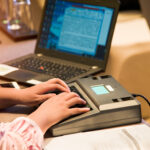
Stenographers play a vital role in the courtroom and many legal settings. They create a real-time, accurate record of everything said during legal proceedings. When people ask, what is a stenographer, the answer is simple: a trained professional who captures spoken words with speed and precision so nothing gets lost. But there is more to their role.
Courtrooms, depositions, and hearings all depend on this skill. Without stenographers, lawyers and judges would have no reliable way to review testimony or statements. Let’s look at how stenographers work, why they matter, and how they help keep legal processes moving smoothly.
How Stenographers Work
Stenographers use a special machine called a stenotype. This device looks like a small keyboard but works differently from a regular one. Instead of typing each letter, stenographers press multiple keys at the same time to record sounds, words, or phrases in shorthand. This method helps them keep up with fast speakers, overlapping conversations, and technical language.
The stenotype machine produces shorthand notes that look like code to most people. After the proceeding, stenographers translate those notes into a readable transcript. Some stenographers also provide real-time transcription, showing text instantly on screens in the courtroom. This helps attorneys and judges follow along without delay. A professional court reporter must train for months or even years to master the stenotype.
Where You’ll Find Stenographers
Many people think stenographers only work in courtrooms. In truth, their skills help in many settings. Depositions, arbitrations, and hearings all rely on precise records. Attorneys often schedule depositions outside the courthouse. During these sessions, a stenographer documents every statement made under oath. Businesses, government agencies, and healthcare providers also use stenographers for meetings and conferences. In these situations, the stenographer’s transcript can serve as an official record or reference point.
Remote proceedings have become more common in the past few years. Many stenographers now work virtually, connecting by secure video platforms. This change makes scheduling easier and helps clients avoid travel.
Why Accuracy Matters So Much
Stenographers must focus and listen closely to every word. A missed statement or error can cause confusion later. For example, in a medical malpractice case, a single inaccurate word in the transcript could impact an attorney’s argument or a judge’s ruling.
When you ask, what is a stenographer, you learn that it’s a profession built on trust. Attorneys, judges, and clients all rely on a stenographer’s record as the single source of truth. That’s why certified court reporters follow strict guidelines and standards. Professional stenographers also know how to manage complex situations. Witnesses might speak quickly or mumble. Attorneys might interrupt each other. Skilled stenographers maintain clarity in the transcript so nothing gets misrepresented.
Stenographers and Real-Time Reporting
Real-time reporting has become a popular service among legal teams. In real-time reporting, the stenographer’s shorthand instantly converts into plain text on connected screens. Attorneys can follow testimony as it happens and flag sections for review.
This tool helps lawyers prepare questions and spot inconsistencies without waiting for the final transcript. Judges also benefit by referencing testimony in the moment. When clients wonder what a stenographer is doing during real-time reporting, the answer is simple: delivering immediate, accurate text so everyone stays on the same page.
How Stenographers Differ from Digital Recorders
Some courts and firms use digital audio recorders to capture proceedings. However, stenographers bring more skill and reliability. Machines can malfunction or pick up background noise that makes recordings hard to understand. A stenographer listens carefully and clarifies speakers when needed. They can ask someone to repeat or spell a term on the record. This attention ensures a clear, accurate transcript every time.
Finding a Qualified Stenographer
Not every stenographer has the same training or experience. Certified reporters often complete rigorous programs and pass exams to earn credentials. They also keep their skills current through ongoing education. Magna Legal Services works with skilled stenographers across the country. Whether you need help with a complex trial or a straightforward deposition, you can expect professionalism and precision. When considering what a stenographer brings to your case, think about the peace of mind that comes from having a trusted professional keeping track of every detail.
Let Magna Legal Support Your Case Every Step of the Way
If you’re preparing for a trial, deposition, or hearing, you deserve the best support available. Magna Legal Services delivers reliable stenographers who bring accuracy and confidence to every legal proceeding. Our court reporting and virtual deposition services make the process smooth, whether you need real-time reporting or certified transcripts. Reach out to our team today to schedule a stenographer and learn how we can help you protect your case with precision and care.