
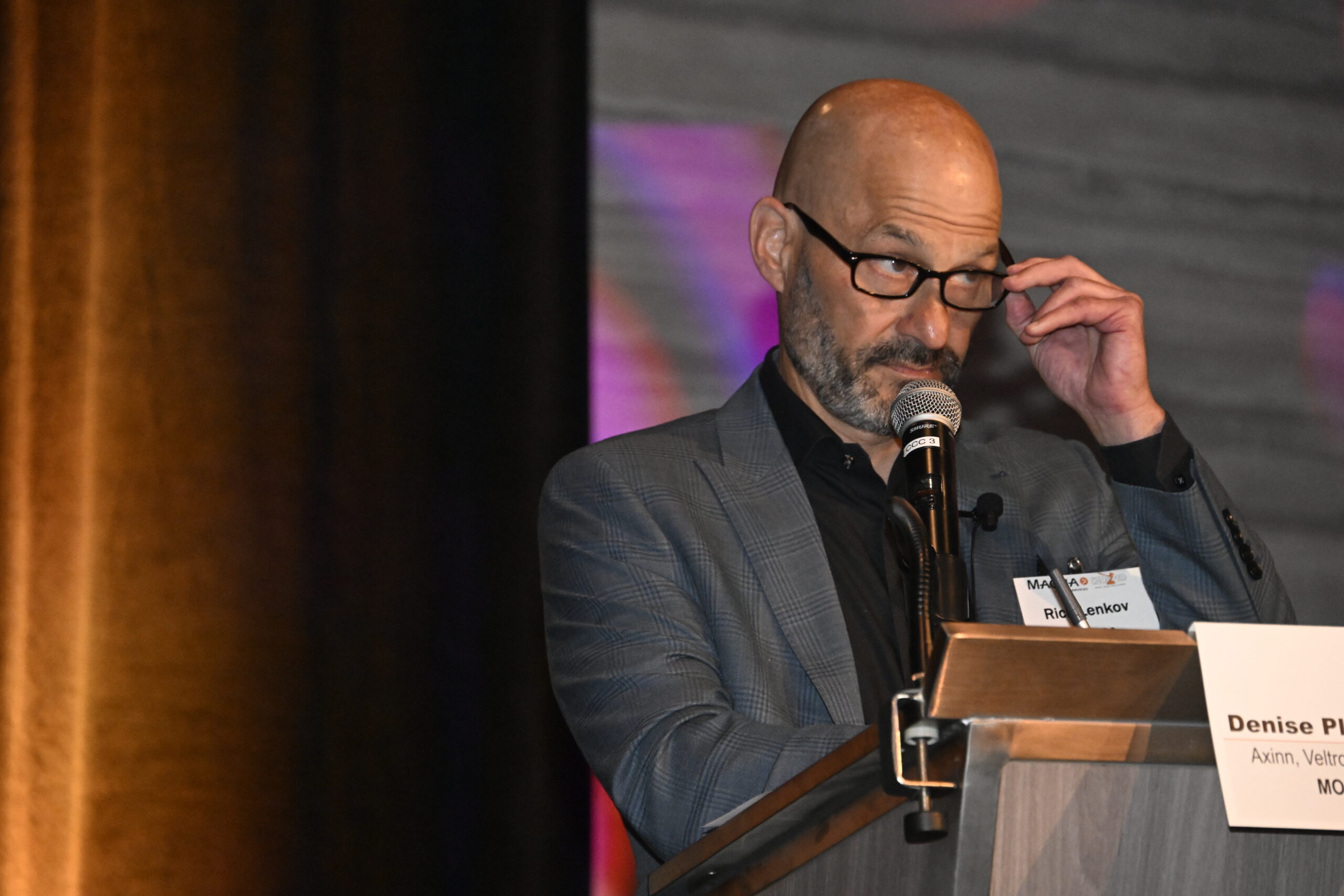
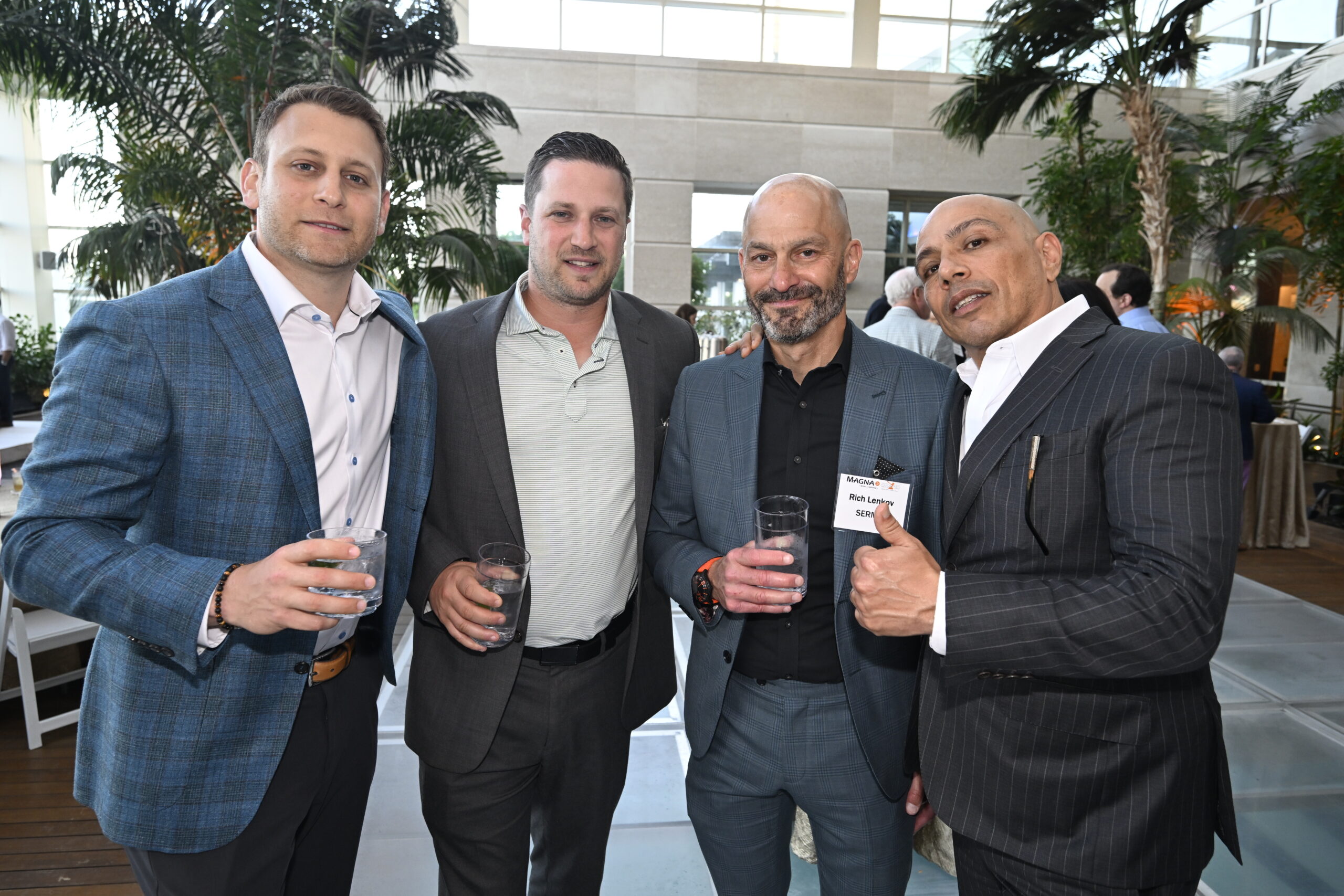
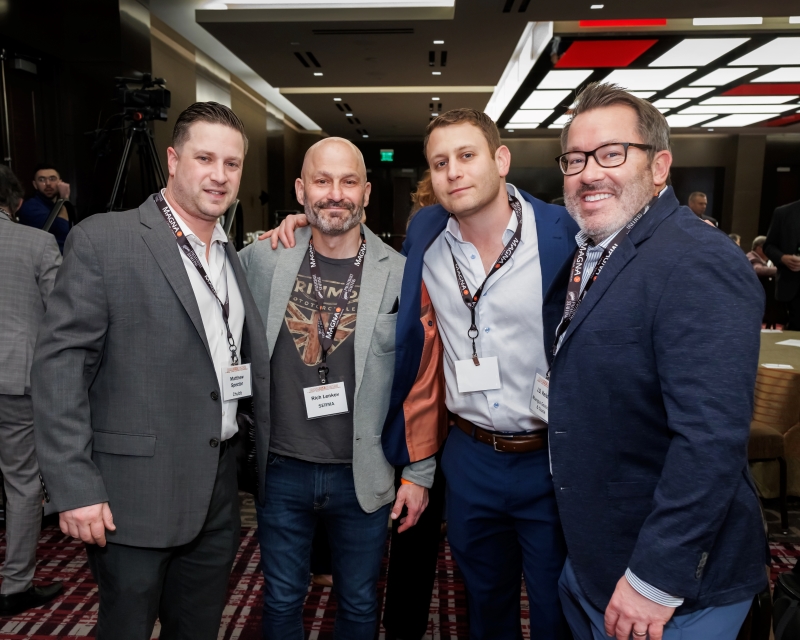
Rich Lenkov is equally at home in a sports stadium, a theater, or a courtroom.
As a Capital Member of Downey & Lenkov LLC, the Chicago-based entertainment attorney founded the Sports and Entertainment Risk Management Alliance (SERMA). He has also co-produced films ranging from “‘85: The Greatest Team in Football History” (starring Barack Obama, Bill Murray, Mike Ditka) to “John Wayne Gacy: Defending a Monster,” as well as theatre productions such as “Renegades,” a live production at Caesars Palace in Las Vegas (featuring legendary athletes Terrell Owens, Jim McMahon and Jose Canseco) and “Elvis Presley’s Heartbreak Hotel in Concert.” In his free time, he’s a diehard Bruce Springsteen fan.
Reading up on your background, I’m guessing you’re from Northern Illinois?
More north. From Montreal, Canada. I came here for law school as I was financing law school on my own and looking for an affordable law school. Northern Illinois University was, and still is, one of the most affordable and also a great legal education.
You do a little bit of everything now. What did you want to be growing up?
Point guard for the Boston Celtics. Everything was going as planned except for lack of height, speed and skill.
Like many aspiring lawyers, I took political science classes and thought I would pursue elected office. I also liked law from early on. It was a good way to articulate some positions I had, and I liked the friction that goes with the adversarial system. That’s a nice way of saying, “I’m aggressive.” And I was crappy at math. Still am.
How did you get into defense law?
I wanted to litigate, and I felt comfortable in the courtroom. During law school, I was in a program with the local prosecutor’s office that allowed students like me to litigate in court. So, for a year, I prosecuted cases. I had 100 trials under my belt by the time I graduated law school.
At that point, injury defense was a quick avenue to lots of courtroom time because the work was both voluminous and involved lots of litigation.
What is the next big thing in defense law?
The cliché is AI. But it’s true. It’s a game-changer in so many ways. But you have to be using AI efficiently and smartly as a spend for your client.
How did you first connect with Magna?
I was at a conference over 10 years ago and I saw a short, Jewish bald guy who was really good looking and well-dressed. And I thought, perhaps, I was looking in the mirror. When I realized it was not my own reflection, but Magna Co-Founder & Executive Vice President of Sales Pete Hecht, we hit it off.
I also got to know Magna Vice President of Business Development Kevin Grodnick well because we live in the same city and he is hustler like I am.
What do you use Magna for?
I use Magna for record retrieval, court reporting, investigative services, jury research and consulting and trial presentation. They are the best at what they do. They are also doing a great job using AI with depo summaries and records.
What is the next big thing in sports management?
Obviously, a big trend is the rise in college sports and how much money is being spent with name, image and likeness. The rise in the sheer volume of money is a game changer.
Along those same lines, pay equity is a big trend as we have seen in the WNBA and those athletes finally being paid what they are worth.
What is the next big thing in entertainment law?
Intellectual property theft continues to be a massive issue, especially as it collides with tech, streaming and the creator economy in ways we haven’t seen before. For example, generative AI tools scraping books, scripts, visual art without licenses are sparking billion-dollar lawsuits. Studios, music publishers and author groups are pushing for either licensing mandates or stronger fair use limits.
What is your biggest film/entertainment influence?
My favorite all-time play and movie Glengarry Glen Ross. It’s incredibly well written, precise and downright funny. Pete, Kevin and I reference it all the time.
It’s actually the best training manual, in a warped way, for what we all do. It’s about salesmen. I’m a salesman. The protagonists happen to be selling sham real estate, while I am selling legal services. But the film and play actually teach you a lot about what makes a great salesman: customer service, attention to detail. Knowing the product. Knowing the client. And of course, that coffee is for closers.
What is your biggest sports influence?
I have two. One is Guy Lafleur. Legendary “Le Démon Blond” forward for the Montreal Canadiens (from the ‘70s to the ‘90s). When I was a kid in Montreal, he was Gretzky before Gretzky. It was before everyone had to wear helmets and his long hair flew behind him. He had swagger.
I’m also a huge NBA fan. My team was always the Boston Celtics. In Montreal, we got our American TV from New England. At that time, it was the short shorts era, and the Celtics were champions.
My guy was Kevin McHale. He was a lunch-pail player. I admired the way he just went to work, especially in the post. Even in those days, you didn’t see a lot of guys playing with their back to the basket.
I liked the way he hustled and got dirty in the paint. He used three or four moves before making a basket. He paid attention to the details. All skills that apply to my job as a lawyer and a professional.
What is your biggest legal influence?
My father Abe. Even though he wasn’t a lawyer, he was the one who encouraged me to go to law school. And his work ethic certainly continues to influence me.
You’re involved in many organizations like the Northern Illinois University College Of Law Board of Visitors and Legal Prep Charter Academy Advisory Board. You also just joined the JINLAW Board Of Directors. Tell me more.
I’m so excited to join this incredible group of leaders to use our platform to combat antisemitism and racism and also simultaneously to provide a resource for industry networking and collaboration.
It’s a great way to give back during a very difficult period in history but also, frankly, to build my own business.
You’ve seen Bruce Springsteen in concert over 110 times. What is your favorite Springsteen song?
The easy answer is Thunder Road off the Born to Run album. 1975. It’s also my favorite song of all time. It starts off slowly like a ballad, then hits its power rock stride. Lots of layers.
Springsteen talks about leaving a situation you’re not thrilled with to make a better one. Kind of like me leaving Canada, even though I had a great upbringing there.
In concert, he does the song as an encore or near the end and he lets the audience sing a couple of key verses. It’s pretty cool to hear 50,000 people sing lyrics to a 50-plus year old song.